
-
Your next favorite book
is waiting.

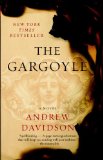
Andrew Davidson spent seven years writing his debut novel, The Gargoyle. In this interview he discusses how he researched and wrote this book.
Interview
You spent seven years writing The Gargoyle, a novel begun in your thirties. What was your starting point?
When I first moved to Japan, teaching English and writing for Japanese Web sites, I wrote a series of letters to a close friend. In these letters, a character started to pop up in the correspondence, taking it over whenever she could wrestle away control of my pen. She arrived with wild hair and blue-green eyes, ranting in front of a church, and her name arrived with her: Marianne Engel. She just kept jabbing at me until I consented to give her more attention. It was clear that she would inhabit a novel.
At the time I was struck with a curiosity about the treatment of severe burn survivors. I recognize that this might seem somewhat specialized and peculiar, but it was directly related to an idea I had for the starting point of a story. I imagine that everyone has had a relationship end and experienced the feeling of having “been burned.” It is a clichéd image, to be sure, but it is a cliché because it is apt and true. I was intrigued by the idea of a relationship that did not end with the feeling of being burned, but one that began with such a feeling–taken to the most literal level.
How did you tackle the research for The Gargoyle?
The story was not written and then supplemented with research as needed; no, I read widely and sometimes a single bit of new information twisted my novel in another direction. My research has been almost entirely based in written works, ranging from encyclopedias of medieval German life to medical journals on the latest burn research. As of this writing (July 2008), I have never been to Germany; in fact, I have never been to continental Europe. Similarly, I have never been to a burn ward.
An example of wandering research influencing the novel came in the entire portion of the book set in medieval Germany. There was no original intention to take the story to this place and time; the first draft had absolutely no mention of Sister Marianne’s life in the Middle Ages. It was not until I had been working on the novel for a year that I came across a reference to a monastery called Engelthal. As I mentioned, Marianne Engel arrived with her name fully intact, and while I knew her last name meant “angel” in German, I had never heard of the monastery. The medieval German section ultimately came into being because the character who had intruded into my personal letters arrived with the name Engel, and because I found the name of the monastery–“Engelthal” or “Valley of the Angels”–quite charming.
During his youth, the novel’s narrator found solace in his local library. When you were a child, was the same true for you?
I was the boy who bicycled down to the library and returned with my basket filled with books. I went through dozens each week; there was nothing better. Subject matter ran from biographies to science to myths to serious fiction–everything was of interest. When I was not reading, I liked to sit in the corner and listen to the adults talk, and I most enjoyed the tall tales. The more certain I was that the story was a lie, the more I enjoyed the telling of it.
When did you realize you wanted to become a writer?
Through my teen years, I concentrated on playing hockey. I was, after all, a Canadian boy. I was good but not nearly good enough. By the time I was sixteen, I realized that there would be no future in the National Hockey League for me. The timing coincided with an exceptional high school English teacher and from that age forward, all I ever wanted to do professionally was write.
You’ve experienced the sort of debut most writers dream of, with foreign rights sold in more than twenty countries and phenomenal pre-publication praise. What advice do you have for aspiring novelists?
I have taken many courses on writing and was often told that it is best to write about what one knows. I have always found this to be the worst possible advice. I would suggest that one should always write about what one wants to know, because there will be weeks, months, or even years of research. It is essential to find something that can hold one’s interest for such periods.
The process by which I write is to overwrite and then reduce. The novel as it stands, at approximately 154,000 words, was reduced from more than one million words that I wrote while trying to discover what I was writing about.
Unless otherwise stated, this interview was conducted at the time the book was first published, and is reproduced with permission of the publisher. This interview may not be reproduced or reprinted without permission in writing from the copyright holder.

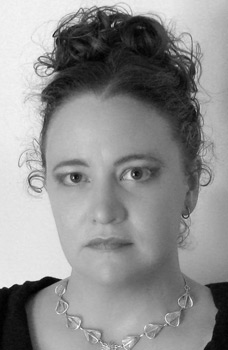
Susan Barker is the author of four books. Her third novel, The Incarnations, was a New York Times Editors' Choice and Notable Book, a Kirkus Reviews' Top Ten Book of the Year, and was shortlisted for the Kirkus Prize for ... (more)
If you enjoyed:
The Gargoyle
Try:
The Incarnations
by Susan Barker
Greenwood is a fourth-generation Kansan, one of seven sisters, and the daughter of a mostly reformed drug dealer. She earned a MA in Creative Writing from Kansas State University and continues to work in academia as an ... (more)
If you enjoyed:
The Gargoyle
Try:
All the Ugly and Wonderful Things
by Bryn Greenwood
We recommend 7 similar authors



Tread softly because you tread on my dreams.
Click Here to find out who said this, as well as discovering other famous literary quotes!

Can you name the title?
Test your book knowledge with our daily trivia challenge!
Your guide toexceptional books
BookBrowse seeks out and recommends the best in contemporary fiction and nonfiction—books that not only engage and entertain but also deepen our understanding of ourselves and the world around us.
