
-
Your next favorite book
is waiting.

Nancy Horan discusses her first book Loving Frank, which explores the life of Mamah Borthwick Cheney and her infamous love affair with Frank Lloyd Wright.
How did you become interested in Mamah Borthwick Cheney? Why
do you think that it has taken so long for her to begin to emerge from out of
the shadow of Frank Lloyd Wright and be seen as an interesting figure in her
own right?
Anyone who lives in Oak Park, Illinois, as I did for twenty-four
years, knows something about Frank Lloyd Wright. His home and studio complex
attracts busloads of visitors from around the world, and his prairie houses dot
the town.
One of those houses belonged to Mamah Borthwick Cheney, the client who became
his
lover. The house Wright built for her and her husband is on East Avenue, the
very street
I lived on. When I toured Wright's home and studio several times, I noticed the
guides
didn't say much about Mamah; understandably, their focus is on his work and
family life.
What little I learned about her piqued my interest, though. She was a highly
educated
woman, a wife and mother of young children at the time of her affair, a
feminist. Who
was she, and why did she risk so much? A couple of biographies about Wright
whetted
my appetite. The more I learned about her, the more I felt compelled to tell her
remarkable story.
Some scholars and Wright admirers have resisted discussing Mamah's role in
his
life, convinced that personal details they consider unsavory diminish his
architectural
achievements. Recently, though, a few scholars have taken a look at Wright's
architecture while he was involved with her and have acknowledged Mamah Cheney's
role in influencing the direction of his thinking.
I understand that you spent seven years writing this novel.
It took that long to complete the book. I should point out that I actually
wrote the
book twice. The first version, begun in 1999, included four points of view and
was not
very good. Two years into the project, when I decided to write from Mamah's
perspective, the research became more focused. There was limited material. I had
learned from Wright bios that no correspondence remained of Mamah Borthwick
Cheney. So I went to original and secondary sources of information, reading
newspaper
clips from 1900 to 1914 and scholars' works on Wright, as well as his own
writings. I
visited the places Mamah visited and lived, and read the books she translated. I
found
an amazing memoir, written by a woman who grew up in the house next door to the
Cheneys, in which the author reminisced about Mamah. Material on the Chicago
School
of Architecture proved captivating reading, as did books on the Modernism
movement,
which was happening in Europe at roughly the same time. Some primary research
also
turned up small details that illuminated her life, as well.
I came to see Mamah's time with Frank as a journey marked by a series of
dilemmas and choices along the way. In the absence of letters, I made educated
guesses about why she chose to do something, and the emotional consequences of
those decisions. Her character began to come alive. Then, in 2001, I learned
that nine
letters written by Mamah to Ellen Key, the woman whose work she translated, were
stored in the Ellen Key Collection in the Royal Library of Sweden in Copenhagen.
You
can imagine my joy when the library sent me copies of the letters. All along, I
had been
creating a character out of the pieces I could find to fit together, even
composing letters
she might have written. Suddenly, here was her actual voice, her actual
handwriting. To
my unending relief, I found her personality shining through in those letters.
And while
the content of her correspondence dealt largely with the business of
translating, she
included a number of paragraphs about her own life and mental outlook.
It sounds as though the writing and research went on simultaneously.
Yes, I researched heavily at the beginning, but continued to do so as I
wrote. New
discoveries found their way into the book. Last year, for example, a rare book
of
photographs of Taliesin in 1911 was auctioned on eBay and was purchased by a
group
of Wright devotees in Wisconsin. When the book went on display at the state
capitol, I
traveled to Madison to see it. Soon after, the album was in my novel.
I'm curious about your title. While loving Frank Lloyd Wright was
certainly
the catalyst for Mamah to radically change her life, the novel shows that
there was a lot more to her personal evolution than that. Why did you choose
to stress this particular aspect?
Mamah Cheney undoubtedly would have continued to evolve in interesting ways,
but it was the condition of loving Frank that launched her on a path she could
never
have foreseen. While the novel explores ideas about gender roles and marriage at
the
turn of the twentieth century, it is fundamentally a very human story about
loving
someone, and having that experience change your life.
The other great influence on Mamah's life was the Swedish feminist Ellen
Key, whom you mentioned a moment ago. Key is not a familiar figure to most
Americans—what made her such an important figure in Western history, and
in Mamah's history?
Ellen Key was a Swedish feminist philosopher whose teachings on free love,
the
rights of the individual and of children, the social value of motherhood,
whether in or
outside of marriage, and the need for divorce reform were highly influential in
Europe at
the turn of the 20th century. The Women's Movement, or Woman Movement as it was
then called, had its own personality there, compared to the movement in the
United
States. Ellen Key's ideas about the rights of unmarried mothers and their
children had
particular resonance for women in Germany and Sweden, while in the U.S., the
Woman
Movement had shaped itself more in terms of gaining equal rights to vote, work,
and
earn as men did.
Ellen Key appeared in Mamah's life at a critical moment. Her impact on Mamah
is
best expressed by Mamah in one of her letters to the Swedish philosopher: "You
have meant more to me than any other influence, but one, in my life. In your
writings we have met close together, closer than I have been to almost anyone in
the world."
That "but one" being Wright himself. But what of the reciprocal influence
that Mamah exerted on him?
I believe Mamah had a profound influence on Frank Lloyd Wright. She took a
leap
of faith with him that changed both of their lives forever. She introduced him
to Ellen
Key, whose dedication to educating young people may have inspired Wright to
devote
himself to creating his own school for aspiring architects. And I think it can
be argued
that Mamah was the love of his life.
Your writing is so assured, it's hard to believe Loving Frank is your
first
novel. What kind of work did you do previously, and what was your path to
publication?
I came to writing through journalism. I wrote newspaper and magazine pieces
on
subjects ranging from invasive Asian carp to Oprah's wardrobe to breast cancer,
and
eventually co-authored a book on garden design. About eight years ago, I took a
couple
of fiction-writing classes through the University of Chicago and found I loved
that form.
One of my instructors said to me after an assignment, "You could write a novel,
but you
haven't found your material yet." As it turned out, my material was right under
my nose
the whole time I was living in Oak Park. Eventually, the story of Mamah
Borthwick
Cheney and Frank Lloyd Wright took hold of me and wouldn't let go.
Although some aspects of Mamah's story, such as the scandal attached to
the notion of a divorce or separation, are very much reflective of their time,
nearly a century ago, other aspects, especially her struggle to balance
personal fulfillment with a fertile and loving connection to the lives around
her, seem quite contemporary. Have those things really changed so little for
women?
While researching Mamah's story, I was struck repeatedly by how similar the
struggles of early twentieth century women were compared to those of women
today.
Seeking fulfilling work was a relatively newfound possibility for women in those
days,
though the need to bring money into the household was nothing new. Whatever
their
motivation—economic necessity or the realization of their personal
potential—women
were very much concerned about the conflicts inherent in trying to manage both
work
and motherhood. It was a subject that was widely discussed and publicly debated,
and
feminist thinkers sought social solutions, such as collective child care or, in
the case of
Ellen Key, a state subsidy to the mother so she could stay home and take care of
her
children for a period of time.
Contemporary women have come a long way professionally, and have found
ways to adapt. But the struggle hasn't gone away, and the dialogue, I think,
tends to be
more internalized by women these days.
As a writer of historical fiction, how much leeway do you give yourself to
invent and improvise? Frank Lloyd Wright himself once said, "The truth is
more important than the facts." Do you agree?
I felt strongly bound to stay with the major facts I had regarding the
historical
outline of this story. Some writers might find that approach stifling, but I
found it
liberating because it provided a compelling framework from which to work, and
pushed
me to try to understand the characters' motivations for what they did. Yet not
all of the
"facts" were reliable. Some of the newspaper information was inconsistent or
clearly
invented; Frank Lloyd Wright's own account of his relationship with Mamah was
sketchy
(he never mentions her name in his autobiography); and comments by people of the
day have to be interpreted within the moral context of the times. While I
included a
number of characters based on real people in the novel besides Mamah and Frank,
I
also invented plenty of characters and certainly invented scenes. I took small
liberties
with matters of chronology, such as placing a speech by Frank Lloyd Wright in
1907
rather than when it was given, in 1909.
The beauty of fiction is that it allows a writer to get at truths of the
heart that
don't make it into history books or newspapers. In that sense, I agree with
Frank Lloyd
Wright's quote.
It's one thing to set out the facts of the past accurately, but how do you
enter with confidence into the inner, emotional life of a historical character?
What was the key to unlocking Mamah's inner life?
I entered into Mamah's emotional life by looking at the pressures and choices
she
made throughout her relationship with Frank Lloyd Wright. I was well on my way
to
imagining how Mamah felt and behaved during her journey when I found her
letters. In
them, I discovered a woman whose inner life was not so different from
contemporary
women. There are emotional experiences of the heart that were universal in 1909
and
remain so today. My own understandings about love, motherhood, loss, and the
need to
find one's personal strengths naturally found their way into Mamah's fictional
life.
Was it easier for you to find that key for Mamah than for Frank? I would
imagine that the wealth of historical documentation of Frank's life, both in his
own words and the words of others, might have served to obscure, rather
than to reveal, the man behind the legend.
Well, Frank did talk a lot. And write. And expound about architecture and all
kinds
of other matters. But on the subject of Mamah, his words were spare and
profound. I
paid attention to them. It's important to keep in mind that I was portraying the forty-year-old Frank Lloyd Wright. Much of the verbiage for which he is famous had yet to
be
spoken or written at the time this book takes place. In Loving Frank, he is a
complicated
person at a critical juncture in his life, and not yet famous in the way he is
today. By
looking at him through Mamah's eyes, my hope is that readers can see the
complexity of
the still-developing, younger man, rather than the stereotype of the grandiose, white haired
legend.
What would Mamah think of the condition of women in the United States
today? Would she be satisfied with the progress since her own day, or would
she believe there was still a long way to go?
Mamah would be delighted to see that girls have the opportunity, more than
ever
before, to "realize their personalities," as she would have put it. She would be
astounded by modern women's educational and career choices. I suspect, though, Mamah would be disappointed that the highly evolved culture of love that Ellen
Key
envisioned for the future has not panned out.
What's next for you? Will you stay with historical fiction?
I love the thrill of the hunt when I am trying to understand what really
happened in
the past. Some of the greatest satisfactions happen along the way. You come upon
things you weren't looking for that illuminate your story, and that's thrilling,
too. My next
novel will be historical, but it is a new enough idea that I'm not ready to talk
about it.
Unless otherwise stated, this interview was conducted at the time the book was first published, and is reproduced with permission of the publisher. This interview may not be reproduced or reprinted without permission in writing from the copyright holder.

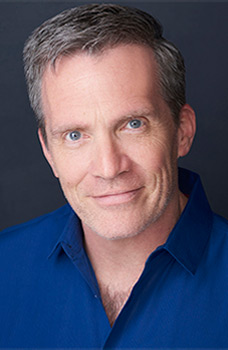
Louis Bayard is the critically acclaimed bestselling author of nine historical novels, including Jackie & Me and The Pale Blue Eye, which was adapted into the global #1 Netflix release starring Christian Bale. His articles, ... (more)
If you enjoyed:
Loving Frank
Try:
Courting Mr. Lincoln
by Louis Bayard
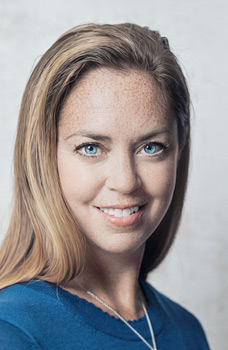
Marie Benedict is the New York Times and USA Today bestselling author of The Queens of Crime, The Mitford Affair, Her Hidden Genius, The Mystery of Mrs. Christie, The Only Woman in the Room, Lady Clementine, Carnegie's Maid, ... (more)
If you enjoyed:
Under the Wide and Starry Sky
Try:
The Mitford Affair
by Marie Benedict
We recommend 27 similar authors
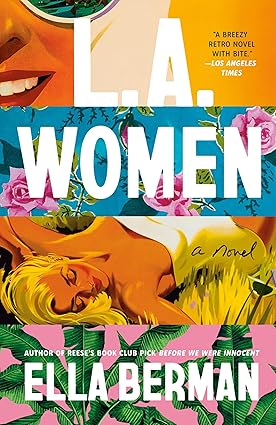
L.A. Women by Ella Berman
Two ambitious writers in 1960s LA face betrayal when one writes a novel based on the other's life.






Your guide toexceptional books
BookBrowse seeks out and recommends the best in contemporary fiction and nonfiction—books that not only engage and entertain but also deepen our understanding of ourselves and the world around us.

