
-
Your next favorite book
is waiting.

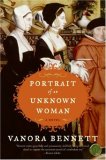
Vanora Bennett talks about the inspiration for her first novel, Portrait of an Unknown Woman which is set against the turmoil, intrigue and, tragedy of Henry VIII's court.
What was the inspiration for Portrait of an Unknown Woman?
The first glimmering of the idea for this book came from an exhibition of Holbein drawings at the National Portrait Gallery about 10 years ago.
I was fascinated both by his sheer skill and by the faces of the new Tudor aristocracy he was drawing, enriched by the very recent dissolution of the monasteries and getting fat on the spoils they'd looted. I was living in Boris Yeltsin's New Russia at the time, and the faces Holbein was drawing struck me as having a lot in common with the tough, aggressive, on-the-make faces of the successful new capitalists I saw all around me in Moscow every day.
So I bought the exhibition catalogue and read it from cover to cover in the plane back to Moscow. And in it I found a passing reference to an "ingenious" theory about two versions of Holbein's portrait of Thomas More's family. (The second version of the picture has an extra character in it). The theory had been dreamed up by a retired jeweller called Jack Leslau to explain who this extra character was and why he suddenly appeared in the second version of the group portrait. Leslau believed that the man was John Clement, the More children's
tutor, who had married Thomas More's adopted daughter, Margaret Giggs. The astonishing part of his theory was what followed. Taking clues from objects inside the picture, Leslau made the case that John Clement was not who he seemed – that he had a second, hidden identity, and had been watched over throughout his life by More, the loyal servant of and adviser to the Tudors, who knew his secret.
I was curious enough to spend some time looking into whether this could be possible. Although I've never been sure whether I'd say I completely believe the story myself, I soon realised that all the bits of the jigsaw Jack Leslau had so cleverly put together did fit.
So I decided to write a story taking this version of events as a given --
with a "John Clement" character whose past had been marked by war, trauma, and a change of identity but who had found a new self in the flourishing of intellectual life of the Renaissance. The novel was to show what happened to Thomas More's family, being pulled in different directions as Catholic-Protestant religious strife took hold of Europe.
The story begins with the painting of the first portrait, when More was
almost at the peak of his powers -- in which the mysterious John Clement doesn't figure -- and ends with the second portrait five years later, after the deeply Catholic More had lost his job and was being hunted down by his Protestant rivals at court. It developed a love triangle and my thoughts about how war and religious strife affect individuals. But it also remains an attempt to solve the conundrum of what changed inside the family in those years, and why Holbein, who
by 1532 was much closer to the family he'd befriended in 1527, now felt it was important to show them in a new light.
How much of the story is true?
This story is based on more historical fact than might be expected.
Thomas More’s first public role was as a pageboy in the household of
Archbishop John Morton, Henry VII’s right-hand man, who liked to tell dinner
guests that the witty, self-possessed child would one day be a great man.
After qualifying as a London barrister, the young More befriended the Dutch
humanist Erasmus and a circle of English humanists including Dean John Colet.
The group helped Dean Colet to set up a school for city children in the yard of
St Paul’s Cathedral -- which exists to this day, though in Barnes and
Hammersmith – and worked together to set an appropriate curriculum for bright
Renaissance children. More later set up a separate home school along the same
lines for his own children, who became famous across Europe for their learning.
More had a glittering political career, ending when he resigned as Henry
VIII’s Lord Chancellor in 1532. He is also remembered for two books. One is
Utopia, a playful and ambiguous description of a perfect land that cannot
exist. He explains in the book that this place has been described to him and an
assistant he calls his “boy John Clement” during a diplomatic mission by a
sailor who likes to tell tall tales. More’s second book is an unreliable but
gripping history of Richard III, the last Plantagenet king, who was killed in
battle by Henry Tudor when More was five. More’s history formed the basis for
Shakespeare’s later play about Richard III, which cast the Plantagenet king as a
scheming hunchbacked usurper who murdered his nephews, the Princes in the Tower,
so he could steal their throne for himself. More’s book has been denounced in
modern times as slanderous victor’s history but remains the basis of most
people’s thinking about Richard III.
More’s horror of heretics late in his career is well documented, both through
his written denunciations of Martin Luther and his Protestant followers and the
writings of contemporary friends and enemies.
His adopted daughter Meg Giggs was interested in medicine and was known in
the More family for having cured her father of tertian fever after reading the
medical writings of Galen. She married the former family tutor, John Clement, a
decade after he left the More household to lecture in Greek at Oxford and then
train as a physician in Italy. The Clements began their married life at the
Mores’ former family home in London, the Old Barge on Bucklersbury Street, from
where More (and, briefly, John Clement) was arrested in 1534 before being
executed a year later.
The Clement family, along with the Mores’ closest friends, the Rastells,
later left an increasingly Protestant England for the safety of the Catholic
enclave of Louvain in the Low Countries, where they lived out their days.
More’s eldest daughter Margaret married William Roper, who hero-worshipped
More and wrote an adoring biography of his father-in-law after More’s death.
Cecily More married Giles Heron, another child adopted by the family, who was
executed not long after More. The only one of the children to escape virtually
unscathed from the death of the family patriarch was More’s daughter Elizabeth,
whose husband William Dauncey’s political career continued smoothly.
Hans Holbein, a German painter, came to England in 1526 to make his fortune
as a portraitist. He spent several months living with the More family at their
new home in Chelsea and painted their family portrait. After returning to
Reformation Germany in 1528, where the churches were being whitewashed, Holbein
was unable to find enough work as a decorative artist to sustain his family. He
returned to England in 1532. A second portrait of the More family, which was
handed down through generations of Ropers and now hangs at Nostell Priory in
Yorkshire, is usually attributed to him even though it is signed “Rowlandas
Lockey”.
Hans Holbein remained in England till his death a decade after this book
ends. In that time, he became the King’s painter and made portraits of many
leading courtiers. He died, probably of plague, in 1542 and is buried in one of
the churches along Bishopsgate at the eastern end of the City of London.
Sweating sickness appeared in England for the first time in 1485, just after
Henry Tudor’s victory over Richard III and seizure of the English throne. It was
widely believed to be God’s sign that the Tudors were not a legitimate dynasty.
It struck half a dozen times while England was under Tudor rule before vanishing
forever.
No one knows what became of the Princes in the Tower.
Unless otherwise stated, this interview was conducted at the time the book was first published, and is reproduced with permission of the publisher. This interview may not be reproduced or reprinted without permission in writing from the copyright holder.

Jennifer N. Brown is a professor of English literature and a dean of Arts and Sciences who specializes in medieval literature written for and by women. She has published a lot on this topic but The Lost Book of Elizabeth ... (more)
If you enjoyed:
Portrait of an Unknown Woman
Try:
The Lost Book of Elizabeth Barton
by Jennifer N. Brown

Helen Castor is a historian of medieval England and a Bye-Fellow of Sidney Sussex College, Cambridge. Her first book, Blood and Roses, was long-listed for the Samuel Johnson Prize in 2005 and won the English Association's ... (more)
If you enjoyed:
The Queen's Lover
Try:
Joan of Arc
by Helen Castor
We recommend 22 similar authors



Flaming enthusiasm, backed up by horse sense and persistence, is the quality that most frequently makes for ...
Click Here to find out who said this, as well as discovering other famous literary quotes!

Can you name the title?
Test your book knowledge with our daily trivia challenge!
Your guide toexceptional books
BookBrowse seeks out and recommends the best in contemporary fiction and nonfiction—books that not only engage and entertain but also deepen our understanding of ourselves and the world around us.
