
-
Your next favorite book
is waiting.

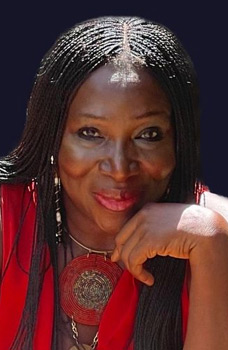
How to pronounce Chimamanda Ngozi Adichie: Chim-muh-MAHN-duh en-GOH-zee ah-DEECH-ee-(ay) The “ay” is soft, not quite a diphthong.
Chimamanda Ngozi Adichie talks about her interest in the 1960s Nigeria-Biafra civil war, which provides the background for her stunning novel Half of a Yellow Sun, and in what ways modern-day Nigeria is still influenced by the war.
What led you to write a book about the Nigeria-Biafra war?
I wrote this novel because I wanted to write about love and war,
because I lost both grandfathers in the Nigeria-Biafra war, because the
war changed the cause of Igbo history, because “Biafra” is still an
incredibly potent word in Nigeria today, because many of the issues
that led to the war remain unresolved, because my father has tears in
his eyes when he speaks of losing his father, and my mother has never
spoken at length about losing her father, because almost every Igbo
person alive in the 1960s was affected by the pre-war massacres,
because colonialism makes me angry, because the thought of the egos of
organizations and men leading to the unnecessary deaths of children
makes me angry, because I think we are in danger of forgetting.
I
have always been fascinated by Biafra. I have always wanted to write
about it. It was not just because my parents told so many stories of
how they lived through the Nigeria-Biafra war but because I realized
how central Biafra was to my history. Because I grew up in the shadow
of Biafra.
Given that, at the time of the war, you
hadn’t yet been born, what sort of research did you do to prepare for
writing this book? Was it important to you that you get all the “facts”
of the war correct for this work of fiction?
My parents’
stories formed the backbone of my research. And I read a lot of books
about the war. I talked to a lot of people. In the four years that it
took to finish the book, I would often ask older people I met, “Where
were you in 1967?” and then take it from there. It was from stories of
that sort that I found out tiny details that are important for fiction.
As far as adhering to the facts, I invented a train station in
Nsukka, invented a beach in Port Harcourt, changed the distance between
towns, but it was important that I get the facts that mattered right.
All the major political events in the book are “factually” correct. But
what was most important to me was emotional truth. I wanted this to be
a book about human beings, not a book about faceless political events.
For research, I have a lot of research notes that I did not end up
using because I did not want to be stifled by fact, did not want the
political events to overwhelm the human story.
You say you think “we are in danger of forgetting.”Can you talk further about how the war is treated in Nigeria today?
The war is still talked about, still a potent political issue. But I
find that it is often talked about in uninformed and unimaginative
ways–people repeat the same things they have heard and often don’t know
the full story. It also remains–surprisingly–very ethnically divisive.
The (brave enough) Igbo talk about it and the non-Igbo think the Igbo
should get over it.
There is a new movement called MASSOB, the
Movement for the Actualization of the Sovereign State of Biafra, which
in the past few years has captured the imagination of many Igbo people.
MASSOB is controversial; it is reported to advocate violence and its
leaders are routinely arrested and harassed by the government. I am not
exactly sure what the group stands for but I think that they have
managed to capture the imagination of so many Igbo–no matter how
inchoate their objectives–because there are a lot of unaddressed issues
that the country may have officially swept aside but which continue to
live in individual hearts.
The book focuses on the
experiences of a small set of people who are seeing the conflict from
very different points of view. When we step into their individual
worlds, one at a time, we don’t learn their every thought–the narrator
who follows them isn't omniscient–but rather we have a partial, or
selective, understanding of them. Can you describe your narrative style
and why you framed these characters the way you did?
I
have always been suspicious of the omniscient narrative. It has never
appealed to me, always seemed a little lazy and a little too easy. In
an introduction to Giovanni Verga’s novel, it is said about his
treatment of his characters that he “never lets them analyze their
impulses but simply lets them be driven by them.” I wanted to write
characters who are driven by impulses that they may not always be
consciously aware of–which I think is true for us human beings.
Besides, I didn’t want to bore my reader to death, exploring the
characters’ every thought.
The character of Richard is
a British white expatriate who considers himself Biafran, drawing a
certain amount of criticism for his self-proclaimed identity. Another
key narrator, Ugwu, is a thirteen-year-old houseboy who seems to react
rather than act. Each is and interesting choice of character for the
narrator to “shadow.” Why did you pick them?
Ugwu was
inspired in part by Mellitus, who was my parents’ houseboy during the
war; in part by Fide, who was our houseboy when I was growing up. And I
have always been interested in the less obvious narrators. When my mom
spoke about Mellitus, what a blessing he was, how much he helped her,
how she did not know what she would have done without him, I remember
being moved but also thinking that he could not possibly have been the
saint my mother painted, that he must have been flawed and human. And I
do think that Ugwu does come to act more and react less as we watch him
come into his own.
Richard was a more difficult choice. I very
much wanted somebody to be the Biafran “outsider” because I think that
outsiders played a major role in the war but I wanted him, also, to be
human and real (and needy!).
There is a conflict in
this story between what is traditional and tribal versus that which is
modern and bureaucratic. How has the conflict played itself out? What
is the mix today?
Cultures evolve and things change, of
course. What is worrisome is not that we have all learned to think in
English, but that our education devalues our culture, that we are not
taught to write Igbo and that middle-class parents don’t much care that
their children do not speak Igbo.
This is an exciting
moment for Nigerian writers; who are some of your favorites, and why do
you feel this worldwide resurgence in popularity for Nigerian writers
is happening now?
Tanure Ojaide writes beautifully. Sefi Atta has a delicious wit. Chris Abani is wonderfully astute. I didn’t know there was a worldwide popularity in Nigerian writers. I hope there will be.
What’s next for you?
The next book, and graduate school in the African Studies program at Yale.
Unless otherwise stated, this interview was conducted at the time the book was first published, and is reproduced with permission of the publisher. This interview may not be reproduced or reprinted without permission in writing from the copyright holder.



Aria Aber was born and raised in Germany and now lives in the United States. Her debut poetry collection, Hard Damage, won the Prairie Schooner Book Prize and the Whiting Award. She is a former ... (more)
If you enjoyed:
Americanah
Try:
Good Girl
by Aria Aber
Bisi Adjapon is the author of The Teller of Secrets (first published as Of Women and Frogs), A Washington Post, Essence, ALA, Boston Globe, Ms Magazine's top 20 novel in November 2021. Her second novel, Daughter in Exile, was... (more)
If you enjoyed:
Americanah
Try:
Daughter in Exile
by Bisi Adjapon
We recommend 52 similar authors



Be sincere, be brief, be seated
Click Here to find out who said this, as well as discovering other famous literary quotes!

Can you name the title?
Test your book knowledge with our daily trivia challenge!
Your guide toexceptional books
BookBrowse seeks out and recommends the best in contemporary fiction and nonfiction—books that not only engage and entertain but also deepen our understanding of ourselves and the world around us.
