
-
Your next favorite book
is waiting.
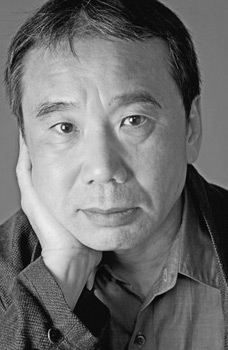
Haruki Murakami shares his views on myths, symbolism and post modernism, explains why cats and music make appearances in many of his books, and why he describes writing a novel as being in a dreamlike state.
What made you want to retell the Oedipus myth? Did you have a
plan to do this when you started Kafka On The Shore or did it come about
during the writing?
The Oedipus myth is just one of several motifs and isn't
necessarily the central element in the novel. From the start I planned to write
about about a fifteen-year-old boy who runs away from his sinister father and
sets off on a journey in search of his mother. This naturally linked up with the
Oedipus myth. But as I recall, I didn't have that myth in mind at the beginning.
Myths are the prototype for all stories. When we write a story on our own it
can't help but link up with all sorts of myths. Myths are like a reservoir
containing every story there is.
With the exception of Norwegian Wood, your novels,
especially this new one, have a very dreamlike fantasy element to them. What is
it that drives you into this realm?
Norwegian Wood is, as you've said, the only one
written in a realistic style. I did this intentionally, of course. I wanted to
prove to myself that I could write a 100% realistic novel. And I think this
experiment proved helpful later on. I gained the confidence I could write this
way; otherwise it would have been pretty hard to complete the work that came
afterwards. For me, writing a novel is like having a dream. Writing a novel lets
me intentionally dream while I'm still awake. I can continue yesterday's dream
today, something you can't normally do in everyday life. It's also a way of
descending deep into my own consciousness. So while I see it as dreamlike, it's
not fantasy. For me the dreamlike is very real.
A quick Google search shows off the many fans you have in
America, all eagerly awaiting your next novel. As a Japanese novelist, why do
you think your fiction resonates so strongly with this audience?
I think people who share my dreams can enjoy reading my
novels. And that's a wonderful thing. I said that myths are like a reservoir of
stories, and if I can act as a similar kind of "reservoir," albeit a
modest one, that would make me very happy.
What are some aspects of Japanese culture that you think a
reader can glean from your novels? Are there other characteristics that you wish
we Americans understood before we even picked up the books?
When I write a novel I put into play all the information
inside me. It might be Japanese information or it might be Western; I don't draw
a distinction between the two. I can't imagine how American readers will react
to this, but in a novel if the story is appealing it doesn't matter much if you
don't catch all the detail. I'm not too familiar with the geography of
nineteenth century London, for instance, but I still enjoy reading Dickens.
Before "postmodernism" became a buzzword, Franz
Kafka explored that particular condition of isolation associated with a
post-nuclear, new-millennium world. Did you name your protagonist after him to
draw out these themes, or were there other reasons?
It goes without saying that Kafka is one of my very favorite
writers. But I don't think my novels or characters are directly influenced by
him. What I mean is, Kafka's fictional world is already so complete that trying
to follow in his steps is not just pointless, but quite risky, too. What I see
myself doing, rather, is writing novels where, in my own way, I dismantle the
fictional world of Kafka that itself dismantled the existing novelistic system.
One could view this as a kind of homage to Kafka, I suppose. To tell the truth,
I don't really have a firm grasp of what's meant by postmodernism, but I do have
the sense that what I'm trying to do is slightly different. At any rate, what
I'd like to be is a unique writer who's different from everybody else. I want to
be a writer who tells stories unlike other writers'.
Throughout this book, you reference the "Rice Bowl Hill
incident," in which a group of children lost consciousness during a school
outing in the hills. Do the fictional investigations of this incident have a
basis in real historical events or news stories? Did your experience as a
journalist inform this part of the novel?
I'd rather not go into that.
Nakata, the other main character, is a lovable victim of the
school disaster who is unlike everyone around him. What led you to create this
sort of character?
I'm always interested in people who've dropped out of
society, those who've withdrawn from it. Most of the people in Kafka on the
Shore are, in one sense or another, outside the mainstream. Nakata is most
definitely one of them. Why did I create a character like him? It must be
because I like him. It's a long novel, and the author has to have at least one
character he loves unconditionally.
Cats appear frequently in your fiction, and in this book they
play a particularly memorable role, what with the detailed description of how a
deranged sculptor preys on cats. Why are cats so important to your characters
and your stories?
It must be because I'm personally fond of cats. I've always
had them around since I was little. But I don't know whether they have any other
significance.
Your protagonist Kafka discovers a song, "Kafka on the
Shore," and wonders if the woman who wrote it knew what the lyrics meant.
Another character says, "Not necessarily. Symbolism and meaning are two
separate things." Since your novel and the song share a title, how much
does this statement say about the the novel itself? Do its symbols point to a
larger meaning?
I don't know a whole lot about symbolism. There seems to me
to be a potential danger in symbolism. I feel more comfortable with metaphors
and similes. I don't really know what the lyrics of the song mean, or whether
they even have any meaning in the first place. It might be much easier to
understand if someone set the lyrics to music and sang it.
We hear that your Japanese publisher has actually produced a
website to help readers understand the meaning of this book. Since we won't be
able to read the site, can you tell us in your own words what some of the
"secrets" of the book are?
On this website in the space of three months I received over
8,000 questions from readers, and personally responded to over 1,200 of them. It
was a lot of work, but I really enjoyed it. What I concluded from this exchange
was that the key to understanding the novel lies in reading it multiple times.
This may sound self-serving, but it's true. I know people are busy and it
depends, too, on whether they feel like doing it, but if you have the time, I
suggest reading the novel more than once. Things should be clearer the second
time around. I've read it, of course, dozens of times as I rewrote it, and each
time I did, slowly but surely the whole started to come into sharper focus.
Kafka on the Shore contains several riddles, but there
aren't any solutions provided. Instead several of these riddles combine, and
through their interaction the possibility of a solution takes shape. And the
form this solution takes will be different for each reader. To put it another
way, the riddles function as part of the solution. It's hard to explain, but
that's the kind of novel I set out to write.
All of your characters, both in this book and in previous
novels, display a really interesting appreciation for jazz, classical, and rock
music. What musical pieces would you include on a Murakami playlist of sorts
that would represent the range of music in your books?
Music is an indispensable part of my life. Whenever I write a
novel, music just sort of naturally slips in (much like cats do, I suppose.)
When I was writing my newest novel, After Dark, the melody of Curtis
Fuller's "Five Spot After Dark" kept running through my head. Music
always stimulates my imagination. When I'm writing I usually have some Baroque
music on low in the background chamber music by Bach, Telemann, and the like.
Being an author who is read in translation, could you talk a
little bit about what you think makes a good translation?
I've translated a lot of American literature into Japanese,
and I think that what makes a good translator is, above all, a feel for language
(a pretty obvious point) and also a great affection for the work you're
translating. If one of those elements is missing the translation won't be worth
much. Unless I have to for some reason, I seldom reread my previous books (in
Japanese), but I do sometimes reread the English translations. I find it
enjoyable precisely because of the distance from the original text. In most
cases I really enjoy reading these.
What's next for you?
In the fall of 2004 I brought out a new novel, After Dark.
And in the U.S. in 2006 we'll publish my second short story collection in
English, my first since The Elephant Vanishes. So in anticipation of
that, I'll be working on some new short stories this fall and winter. On the
translation side, I'm presently translating a collection of Grace Paley's short
stories. I really like her work. Translating her stories is very difficult, but
I always do my very best.
Interview originally published at HarukiMurakami.com, and reproduced at BookBrowse by permission of the Knopf Publishing.
Unless otherwise stated, this interview was conducted at the time the book was first published, and is reproduced with permission of the publisher. This interview may not be reproduced or reprinted without permission in writing from the copyright holder.

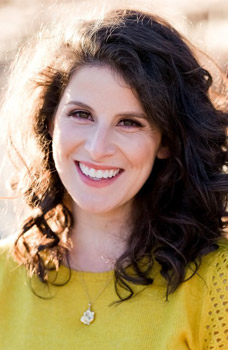
Megan Angelo grew up in Quakertown, Pennsylvania and graduated from Villanova University. Her writing has appeared in the New York Times, the Wall Street Journal, Glamour and Elle, among other publications. She lives in ... (more)
Muriel Barbery's novels include the New York Times bestseller, The Elegance of the Hedgehog (Europa, 2008), and Gourmet Rhapsody (Europa, 2009). She is also the author of The Writer's Cats, illustrated by Maria Guitart, a ... (more)
If you enjoyed:
Kafka on The Shore
Try:
The Elegance of the Hedgehog
by Muriel Barbery
We recommend 51 similar authors



We have to abandon the idea that schooling is something restricted to youth...
Click Here to find out who said this, as well as discovering other famous literary quotes!

Can you name the title?
Test your book knowledge with our daily trivia challenge!
Your guide toexceptional books
BookBrowse seeks out and recommends the best in contemporary fiction and nonfiction—books that not only engage and entertain but also deepen our understanding of ourselves and the world around us.
