
-
Your next favorite book
is waiting.
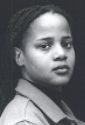
How to pronounce Edwidge Danticat: Edweedje Danticah
In two separate interviews, Edwidget Danticat discusses issues raised in her novels, The Dew Breaker and Breath, Eyes, Memory; including the nature of love and forgiveness and the immigrant experience.
Two separate interviews with Edwidge Danticat in which she discusses The Dew Breaker and Breath, Eyes, Memory.
A Conversation with Edwidge Danticat about The Dew Breaker
Q: Can you tell us about the title of your new book The Dew Breaker?
A: The title is my English translation of a Creole expression "choukèt
laroze," which during the twenty-nine year period (1957-1986) that Haiti was
ruled by the father and son dictators, François "Papa Doc" and Jean Claude "Baby Doc" Duvalier, referred to a rural chief, a brutal regional leader and
sometime torturer. I have always been fascinated by the poetic naming of such a
despicable authority figure and when I started writing about a former torturer,
I decided to translate the expression in the most serene sounding way I could.
And so we have the dew breaker. I could have chosen several other ways to
translate this, the dew shaker, the dew stomper, for example, but I like the way
the words dew breaker echo the American expression ball breaker, which is a more
fitting label for these kinds of people.
Q: Why did you decide to structure the telling of the book in the way that
you do? Do you feel that this book represents a departure from your previous
works? If so how?
A: I wanted the book to open up, as you read it, that is, with each new
character, each new situation, I wanted to add layers upon layers to the central
figure, the dew breaker. I wanted the reader to be introduced to the dew breaker
from different angles, and for those who love him, and even for him, to see
himself from various perspectives. This book is a departure for me in that I am
writing mostly about men. And I am writing about different time periods in a
non-linear way.
Q: What kind of research, if any, went into the writing of the book?
A: I read a lot about the twenty-nine year period of the dictatorship,
even though I have merged certain years and have moved certain events to fit the
period the book covers. I read a lot of personal narratives, academic texts, old
news accounts, spoke to a lot of people and asked them to share their memories
of growing up during the Duvaliers’ dictatorship. I was born in 1969, and
spent the first twelve years of my life under the dictatorships so I also used
my own memories. For example, there is an incident in the book where a minister
is arrested by Papa Doc’s henchmen. This really happened when I was growing
up. The minister was severely beaten as he was leaving his church one night and
was nearly killed, so I use my memories of that time. The real life minister
also had a radio program on Radio Lumière, the religious station mentioned in
the book, even though he never used the words my fictional minister uses in his radio and live sermons.
Q: Would you say that most of your characters attempt in some way to reinvent
themselves or escape their past? How successful are they?
A: Like all new immigrants, many of the characters have no choice but to
reinvent themselves in some way or other. Otherwise they would not survive their
new lives in America. They try to forget what haunts them and use what is useful
to them from their past, but ultimately, most of them find balancing these two
realities quite difficult. And like all immigrants, some of them succeed and
some of them fail.
Q: To what extent are you trying to inform people about Haitian politics and
people in your writing? What response do you expect to The Dew Breaker in the
Haitian-American community?
A: It’s hard to say how anyone will react to a book. You never know
until they read it, and if they choose to share their impressions with you,
react to it. There is not one Haitian-American community, but several
communities. I am really not sure how these communities will react. I hope, as I
do for all my books, that it will cause some reflection and healthy debate,
especially as Haiti celebrates two hundred years of independence in 2004, but
still finds itself mired in poverty and political quagmires. I hope with
everything I write that it will make people think of Haiti as a very complex
place. My greatest wish is that after reading my book, my readers will go out
and find many more books to read about Haiti.
Q: You have spent most of your life in America. What is it like for you to
write of a place which, though an integral part of your life, is no longer your
home? And do your memories of Haiti inform your writing?
A: My memories inform my writing a great deal, but since Haiti is a
lively place, a place that is changing all the time, I can’t afford to just
use my memories. I do a lot of research. I go to Haiti a lot, since I still have
family there. I observe. I listen. I blend the Haiti I see today with the Haiti
I once lived in and try to create interesting and complex situations for my
characters who are facing the current reality as well as the past. Though I
don’t live in Haiti, I feel very connected to it. It’s as much a part of me
as the United States, as much home for me–if in a more spiritual way
–as where I live now in Miami.
Q: At one point in the book, an aspiring journalist, Aline, thinks that she
"had never imagined that people like Beatrice (a bridal seamstress she is
interviewing in Queens) existed, men and women whose tremendous agonies filled
every blank space in their lives." Aline realizes that these are the people
she wanted to write about. Is the way Aline thinks of these men and women in
this passage similar to how you conjure the characters you write about?
A: Yes and no. I am indeed very much drawn to people who live in between
determined categories, people who are something between model immigrants and so
called deviant ones like Claude, a young man who is deported from the United
States for committing a horrible crime. I think all of us live nuanced and
complicated lives. I am not interested in writing about people who can be
defined too easily, who are either too good or too bad. I like to write about
those gray places, those "blank" spaces, if you will, the stuff in-between.
Q: "People here (in America) are more practical maybe," a
first-generation American character states "but there, in Haiti or the
Philippines, that’s where people see everything, even things they’re not
supposed to see. So I see a woman’s face in a rose, I’d think somebody drew
it there, but if you see it, Manman, you think it’s a miracle." Do you think
of this American "practicality" as a positive force? What would you say are
some of its repercussions, if any? And on the other hand, do you think that
poorer countries of the world may pay a price for holding on to tradition, or to
their spiritual beliefs?
A: In this scene, the dew breaker and his wife and daughter are on their
way to church. The mother likes to talk about miracles so she mentions this one
miracle she’s just read about a Filipino man who had seen the Madonna’s face
on a rose petal. Her daughter replies by trying to find a proper, an "American" explanation for this miracle–for instance maybe someone drew
the Madonna’s face on the rose petal. In an early draft, I had the mother
reply that on American money it says "In God We Trust" to show that
Americans have their traditions and firm beliefs too. The American Dream in
itself is a kind of miracle story, isn’t it? I think when you talk about
people from poorer countries, you have to realize that not all people from
poorer countries have the same beliefs. There are people from Haiti or the
Philippines, for example, who would reply the same way as this first generation
American woman. So the dichotomies are not always so clear cut. We all have our
traditions, which have both positive and negative repercussions. It all depends
on how we integrate them in our lives and whether they serve us or hold us back.
But I don’t believe there’s anything wrong with having faith, as long as it
does not become a crutch. On some level the preacher in the book is being
punished for preaching liberation theology, because he’s basically saying that
tradition and faith can be used to oppress a nation. In the most evil hands,
traditions can be used like a weapon against a people. In some other instance
it’s the very thing that liberates them.
Q: Some of the Haitian characters in your book are portrayed as trying to
create a tiny version of their home country in America, never quite stepping
wholly outside that world. How do you think this affects their experiences as
immigrants?
A: I think we’re all a little cautious when we move to a new place. We
all retreat to familiar versions of our old lives and try to recreate that in
the new place. Many of the characters eventually move into their new society,
but for some of them it takes much longer than others. Having just left a
dictatorship, most of the characters are fearful as they try to navigate a new
situation they barely understand. They seek comfort in each other. Sometimes one
has to do that to survive. If you don’t speak the language, naturally you’re
going to try to find other people like you, people who might be able to help you
go to the doctor, get a job. So sometimes that first period of insularity is not
a choice, but a necessity.
Q: Anne, the wife of the "Dew Breaker" is able to remain married to a man
she knows to have committed unspeakable acts, while a village embraces a man who
has killed one of their own. What does this say about the nature of love and
forgiveness?
A: This is the part of the book I wrestled with the most. How do we love
people who have done such horrible things? When I was younger, I was always
confused that the dictators’ foot soldiers, who were so brutal with other
people had wives and children, whom I assumed they loved. This is something I
could never clearly explain to myself. I am not saying that everyone should be
forgiven and loved after having done such terrible things. I think people like
this should be punished as severely as justice allows. But we have those cases
where the mothers of murdered children befriend the killers. Where former
victims in South Africa embrace their torturers. I can’t explain that, but I
think somehow people can and do reach deep inside themselves to make that
happen, so that they can move on with their own lives. But for people whose
fathers and mothers committed these crimes, I will often hear them say, "That
is not the same person I knew. That is not my mother, my father, my brother, my
sister." Perhaps there is a part of that person that the loved one will always
hate, but there is also a part of them that they’re somehow able to love, the
part who tucked them in at night and walked them to school in the morning. I
think it’s an incredible act of love, to love someone whom you know, on some
level, is not at all worthy of anyone’s love.
Q: What’s next for you?
A: I hope to start another novel soon. I just finished a young adult book
called Anacaona, Golden Flower. It’s about a Taino queen named Anacaona. She
ruled over a part of Haiti, Léogâne, where my family is from. She was a
warrior, a dancer, a storyteller, and a fantastic potter and has been my (s)hero
since I was a little girl.
A Conversation with Edwidge Danticat about Breath, Eyes, Memory
Q: Why did you decide to write Breath, Eyes, Memory?
A: I started Breath, Eyes, Memory when I was still in high school after writing an article for a New York City teen newspaper about my leaving Haiti and coming to the United States as a child. After the article was done I felt there was more to the story, so I decided to write a short story about a young girl who leaves Haiti to come to the United States to be reunited with her mother, who she doesn't really know. The story just grew and grew and as it grew I began to weave more and more fictional elements into it and added some themes that concerned me.
Q: What would you say those themes are?
A: One of the most important themes is migration, the separation of families, and how much that affects the parents and children who live through that experience. My father left Haiti to come to New York seeking a better life--economically and politically--when I was only two years old, and my mother when I was four years old. I was raised by my aunt and uncle, and even though I understood, I think, early on the great sacrifices that my parents were making, I still missed them very much. But having formed parental-type relationships with my aunt and uncle, I was really torn and heartbroken when I had to leave them to be reunited with my parents in New York. So I wanted to deal with that from the point of view of a child who's faced with this situation. I wanted to include some of the political realities of Haiti--as a young girl felt and interpreted them--and how that affected ordinary people, the way that people tried to carry on their daily lives even under a dictatorship or post-dictatorship. Finally, I wanted to deal with mother-daughter relationships and the way that mothers sometimes attempt to make themselves the guardians of their daughter's sexuality.
Q: Do you think that the mothers' concern with their daughters' sexuality, the concern for virginity as expressed in the book, is something that is particularly and singularly Haitian?
A: Oh no. Not at all. The "testing" in the book for example, goes back to the Virgin Mary. If you look at the apocryphal gospels, after the Virgin Mary gives birth to the Christ child, a midwife comes and tries to test her virginity by insertion, if you can imagine. The family in the book was never meant to be a "typical" Haitian family, if there is ever a typical family in any culture. The family is very much Haitian, but they live their own internal and individual matriarchal reality and they worship the Virgin Mary and the Haitian goddess Erzulie in many interesting forms. The essential thing to all the mothers in the book is to try, in their own way, to be the best mothers they can be, given their circumstances, because they want their daughters to go further in life than they did themselves.
Q: What was it like for you to come to the United States as a child?
A: It was all so very different. I didn't speak the language. I felt very lost and I withdrew into myself, became much more shy than I already was. I sought solace in books, read a lot, and kept journals written in fragmented Creole, French, and English. I think it's very difficult for every child who comes here from another culture. I tried to deal with some of these adjustment issues in the book: the whole idea of learning another language and getting used to a completely new environment. Part of the reason that
Breath, Eyes, Memory is told in these four fragments is that Sophie, the narrator, is a recent speaker of English, and in telling a story in English she would definitely try to be economical with her words. Her voice would have less novelistic artifice, for example. She would mostly get to the important events, right to the point. She would also get some things wrong, sometimes, but it would all come back to the story, what she wants to tell you.
Q: How much of your book is autobiographical?
A: The book is more emotionally autobiographical than anything else. It's a collage of fictional and real-life events and people. To quote a wonderful Haitian-American writer who came before me, a man named Assotto Saint, "I wanted to write a carefree poem for my childhood lost too fast...
somewhere in the air between Port-au-Prince & New York City." But I also wanted to tell a story in the very basic sense of the word, create a narrative that would keep you interested in the lives of the characters.
Q: Why do you write in English and not in French or Creole?
A: I came to the United States at an interesting time in my life, at twelve years old, on the cusp of adolescence. I think if we had moved to Spain, I probably would have written in Spanish. My primary language was Haitian Creole, which at the time that I was in school in Haiti was not taught in a consistent written form. My instruction was done in French, which I only spoke in school and not at home. When I came here I was completely between languages. It's not unusual for me to run into young people, for example, who have been here for a year and stutter through both their primary language and English because the new language is settling into them in a very obvious way. I came to English at a time when I was not adept enough at French to write creatively in French and did not know how to write in Creole because it had not been taught to me in school, so my writing in English was as much an act of personal translation as it was an act of creative collaboration with the new place I was in. My writing in English is a consequence of my migration, in the same way that immigrant children speaking to each other in English is a consequence of their migration.
Q: How often do you go back to Haiti?
A: I go back as often as I can. For family visits and other things. I still have a lot of family in Haiti and going back is often linked to family affairs.
Q: Do you think about being a role model, a representative for your culture?
A: I come from a very rich, strong, proud, and varied culture. There are so many aspects to Haitian culture that one person could not ever ever represent them all, and humbly and respectfully I don't believe that this task is mine. I'm a weaver a tales. I tell stories. Speaking on national culture, Frantz Fanon says that "Each generation must out of relative obscurity discover its mission, fulfill it, or betray it." I'm simply trying to fulfill mine. What I do is neither sociology, nor anthropology, nor history. I think artists have to be allowed to be just that: people who create, who make things up. However, as Ralph Ellison writes at the end of Invisible Man, "Who knows but that, on the lower frequencies, I speak for you?" I hope to speak for the individuals who might identify with the stories I tell. However, I think it would be disrespectful of me to reduce the expression of an entire culture to one voice, whether that voice be mine or any other individual's. There are many great and powerful role models and representatives in Haitian life. There are millions and millions of Haitian voices. Mine is only one. My greatest hope is that mine becomes one voice in a giant chorus that is trying to understand and express artistically what it's like to be a Haitian immigrant in the United States.
A Conversation with Edwidge Danticat about Claire of the Sea Light
Q: Claire of the Sea Light centers around a man who is faced with the question of whether or not to give his much beloved daughter away to a woman he feels will give her a better life. How did the idea of this heart-wrenching choice come to you?
A: A few years ago, I was watching a program on television about some Haitian children who were placed in foreign-run orphanages in Haiti, even though their parents were still alive. These are parents, who, for economic reasons, were unable to care for their children, and so put them in orphanages, hoping that their children
would have a better life. In some cases, the parents visited their children on a regular basis and brought them things—whatever they could. I have a dear friend who grew up this way. He eventually reconciled with his birth family as an adult.
In the program I was watching, someone—an aid worker—commented on this situation, saying that Haitians are not as attached to their children; otherwise they wouldn't just give them away. That comment stayed with me for a very long time. I didn't grow up in a nuclear family. My brother and I spent the early part of our lives with my aunt and uncle in a house full of cousins, many of whose parents like ours, were not with us, because they had to go abroad to find work. I knew how difficult that choice was for my parents and for my friend's parents: You keep your child with you and you both suffer, or you take a huge leap of faith and you leave your children--for a while or forever--hoping that they will have a slightly better future. I wanted to try to write about someone having to make that choice. And I wanted to show that moment of choice from three different perspectives: the parent, the child, and the potential new parent. I also wanted to explore the ways that different members of a community can be linked, loosely or closely, to one particular child.
Q: While this book moves back and forth though time and over many years, its main action all takes place in the course of the one evening that Claire goes missing. What made you decide to structure the book this way?
A: I think of this book as one single moment that keeps expanding in space and time, backwards, forward, and into the present. I wanted to tell Claire's story, but also the story of this small town and its dynamics, and a few of its remarkable inhabitants and visitors. The simplest and yet most urgent way I could think of doing this was to have much of the action take place during one night—a night when people are either looking for Claire or waiting, hoping for her to come back. Something tragic had happened early that morning, and as the book progresses there's potential for more tragedy in the evening. Unifying time this way in the book gave me a structure to work with, to think on, moments in a day and night to return to over and over, which was very helpful in a book where I wanted to write about and explore so many different characters.
Q: The radio plays a key part in the book's events. I know you've said in an interview that you have thought of the book in some ways like a radio show that unfolds in episodes. Can you talk a bit about this?
A: Initially, I wanted to write a book about a radio show in which each chapter, each story if you will, was an episode of that show. And though that is not quite what happens now, the radio plays a key role in the story at various junctures. For example there is a radio show hostess named Louise George, who is also an aspiring
writer trying to write a book about the town—a collage of a book, kind of like mine. Radio is an important medium in Haiti, one that nearly everyone listens to. The radio can be used to do many things, including expose injustice, exact justice, or settle scores, as Louise does via her show.
Q. You really convey how intertwined lives are in small communities like Ville Rose. Not to mention how many secrets there are! Was the town where you grew up similar?
A: My mother's name is Rose. Ville Rose, which I first wrote about in my second book, a story collection called Krik? Krak!, is very loosely based on the town where my mother grew up, Léogâne, which is about twenty miles from the capital. Within that town is a smaller place called Cité Napoleon, which was named after my mother's family. My mother's people were better off than my father's people and were really grounded in that place. When I was little I used to visit my mother's mother there. The place has changed a lot over the years and now we only have two close cousins who are still there. Ville Rose is a mixture of that place and many other seaside towns I have visited or spent time in over the course of my life.
Q. This is your first work of fiction in nine years. Do you approach writing fiction any differently than your nonfiction?
A: I really enjoy writing both fiction and nonfiction. With nonfiction, the story, if you will, already exists. The hard part is organizing it in a way that is engaging and interesting and artful. Having written fiction has helped me a lot with nonfiction. I never forget, for example, that I am telling a story and that it needs to have good pacing, etc...Having written nonfiction also makes me less afraid to write non-traditional fiction.
Q: You have two daughters, one close in age to Claire, and you were also recently involved in a wonderful documentary that aired on CNN called Girl Rising. Does Claire's character owe anything to the amazing girls in your own life?
A: The book is dedicated to my mother and my two daughters. It was definitely written with all three of them in mind. I spent eight of the first twelve years of my life without my mother. I was the age that my youngest daughter is now when my mother left Haiti to join my father in New York, to try to make a better life for us.
A lot of my vision of Claire comes from having spent the last eight years in the company of my two daughters. Wadley, the sweet little girl I wrote about in the documentary Girl Rising is almost the same age as my oldest daughter, Mira. Among the many things that the documentary and the book have in common is that they both try to tell a larger story via a small window into the life of one little girl.
Q: This book opens with an act of nature—a freak wave in the ocean outside Ville Rose that claims the life of a local fisherman—and the natural world is very much a character here (without giving anything away, the sea plays an important role at the end of this book as well.) Can you talk about how the natural world informs your writing and the lives of your characters?
A: Nature is indeed a character in this book, especially the sea. The sea gives. The sea takes, then takes again. When you live on an island, it's very easy to be vulnerable to nature's wrath. And if you add to that fact that your island is now considered seismic, you increase your vulnerability. I wanted to also show environmental vulnerability in Ville Rose, the way certain things—including whole species of animals—are disappearing or
dying off.
Sometimes political and other man-made realities force people to make difficult choices vis-a-vis the environment. One also can't ignore the effect that global economic policies, which destroy the natural environment and financial independence of poor people in the developing world, have in making it nearly impossible for
some to have decent lives, to maintain their sovereignty and dignity, and in some cases, to even keep their children with them. So yes, the natural world plays a really large role in the book. It is essentially one of the book's main characters.
Unless otherwise stated, this interview was conducted at the time the book was first published, and is reproduced with permission of the publisher. This interview may not be reproduced or reprinted without permission in writing from the copyright holder.
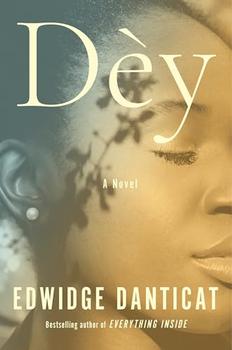



Leila Aboulela won the first Caine Prize for African Writing and is the author of many novels. Minaret was longlisted for the 2006 Orange Prize. The Translator was one of The New York Times 100 Notable Books of the Year. ... (more)
If you enjoyed:
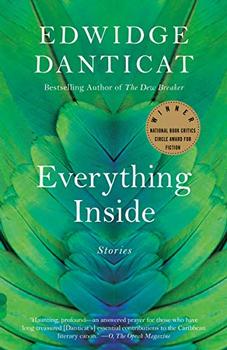
Everything Inside
Try:
Elsewhere Home
by Leila Aboulela
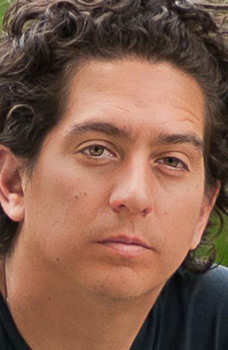
Born in Lima, Peru in 1977, Alarcón was raised in Birmingham, Alabama. He is Associate Editor of Etiqueta Negra, an award-winning magazine published in his native Peru, and in 2013 served as a Fellow in the Investigative... (more)
If you enjoyed:
Everything Inside
Try:
The King Is Always Above the People
by Daniel Alarcon
We recommend 57 similar authors
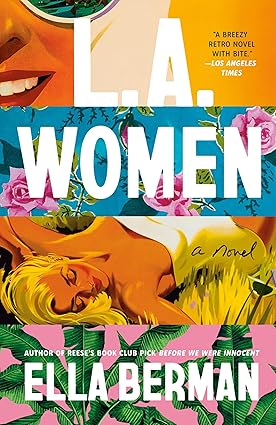
L.A. Women by Ella Berman
Two ambitious writers in 1960s LA face betrayal when one writes a novel based on the other's life.






Your guide toexceptional books
BookBrowse seeks out and recommends the best in contemporary fiction and nonfiction—books that not only engage and entertain but also deepen our understanding of ourselves and the world around us.

