
-
Your next favorite book
is waiting.
Summary | Excerpt | Reviews | Beyond the book | Read-Alikes | Genres & Themes | Author Bio
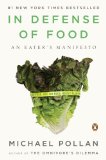
An Eater's Manifesto
by Michael Pollan Book Reviewed by:
"Eat food. Not too much. Mostly plants." These simple words go to the heart of Michael Pollan's In Defense of Food, the well-considered answers he provides to the questions posed in the bestselling The Omnivore's Dilemma.
Humans used to know how to eat well, Pollan argues. But the balanced dietary lessons that were once passed down through generations have been confused, complicated, and distorted by food industry marketers, nutritional scientists, and journalists-all of whom have much to gain from our dietary confusion. As a result, we face today a complex culinary landscape dense with bad advice and
foods that are not "real." These "edible foodlike substances" are often packaged with labels bearing health claims that are typically false or misleading.
Indeed, real food is fast disappearing from the marketplace, to be replaced by "nutrients," and plain old eating by an obsession with nutrition that is, paradoxically, ruining our health, not to mention our meals. Michael Pollan's sensible and decidedly counterintuitive advice is: "Don't eat anything that your
great-great grandmother would not recognize as food."
Writing In Defense of Food, and affirming the joy of eating, Pollan suggests that if we would pay more for better, well-grown food, but buy less of it, we'll benefit ourselves, our communities, and the environment at large.
Taking a clear-eyed look at what science does and does not know about the links between diet and health, he proposes a new way to think about the question of what to eat that is informed by ecology and tradition rather than by the prevailing nutrient-by-nutrient approach.
In Defense of Food reminds us that, despite the daunting dietary landscape Americans confront in the modern supermarket, the solutions to the current omnivore's dilemma can be found all around us.
In looking toward traditional diets the world over, as well as the foods our families-and regions-historically enjoyed, we can recover a more balanced, reasonable, and pleasurable approach to food. Michael Pollan's bracing and eloquent manifesto shows us how we might start making thoughtful food choices that will enrich our lives and enlarge our sense of what it means to be healthy.
In the years following the 1977 Dietary Goals and the 1982 National Academy of Sciences report on diet and cancer, the food industry, armed with its regulatory absolution, set about reengineering thousands of popular food products to contain more of the nutrients that science and government had deemed the good ones and fewer of the bad. A golden age for food science dawned. Hyphens sprouted like dandelions in the supermarket aisles: low-fat, no-cholesterol, high-fiber. Ingredients labels on formerly two- or three-ingredient foods such as mayonnaise and bread and yogurt ballooned with lengthy lists of new additives — what in a more benighted age would have been called adulterants. The Year of Eating Oat Bran — also known as 1988 — served as a kind of coming-out party for the food scientists, who succeeded in getting the material into nearly every processed food sold in America. Oat bran's moment on the dietary stage didn't last long, but the ...
Rather than presenting a faddish list of do's and don'ts that might change next year, Pollan presents a concept of food and eating that shakes out as remarkably sound and sustainable – not just for ourselves, but also for our environment and fellow man. With a small but impassioned return to whole foods, free-range meats, and fair, local farming brewing among foodies, Pollan will inevitably preach to the choir, but some of his research is sure to get even the most thoughtful eaters scratching their heads and changing the way they shop, cook, and think about one of their most basic needs and pleasures...continued
Full Review
 (565 words)
(Reviewed by Lucia Silva).
The Slow Food movement began in Italy as a thoughtful protest against the arrival of American fast food in Rome in the 1980's. Seeking to promote an alternative to the Western diet and way of eating, eating slowly in the Slow Food sense means to eat with a full understanding and appreciation of every single step involved in bringing food from seed to table. This means a respect for the land and the labor, as well as for cooking and dining, that values quality over quantity and seeks to rebuild our connection to food that has been erased by modern production practices. The Slow Food movement promotes local, organic farming, local food cultures, and helps preserve heirloom varieties of produce and animals that have all but ...
If you liked In Defense of Food, try these:
by Jeff Gordinier
Published 2020
A food critic chronicles four years spent traveling with renowned chef René Redzepi in search of the most tantalizing flavors the world has to offer.
by Ted Genoways
Published 2018
Is there still a place for the farm in today's America?
by Mary Beard
Published 2017
"A modern feminist classic." - The Guardian
From the internationally acclaimed classicist and New York Times best-selling author comes this timely manifesto on women and power.




Don't join the book burners. Don't think you are going to conceal faults by concealing evidence that they ever ...
Click Here to find out who said this, as well as discovering other famous literary quotes!

Can you name the title?
Test your book knowledge with our daily trivia challenge!