return to home
 
 
          Bookmark and Share        Email
 
  This Week's Recommendations    |     Hardcovers Coming Soon    |     Paperbacks Coming Soon    |     Recent Hardcovers    |     Recent Paperbacks
   Genres   |    Settings   |    Time Periods   |    Themes   |    Favorites   |    Award Winners   |    Book Finder   |    Surprise Me!   |    Tag cloud
   Recent Interviews    |     All Interviews    |     Author Bios    |     Author Websites    |     Pronunciation Guide
   Free Newsletters   |    Wordplay   |    Book Giveaway   |    BookBrowse Polls   |    Literary Quotes   |    Personality Quiz   |    Gift Membership
   Recent Membership Magazines    |     Magazine Archives     |     Invite the Author    |     My Reading List    |     First Impressions    |     My Account
   Editor's Blog    |     Best Reader Reviews    |     Book News    |     Meet the Reviewers    |     Stay In Touch
   About Us   |    Tour   |    Member Benefits   |    Join   |    Gift Memberships   |    Library Subscriptions   |    FAQ   |    People Say   |    Contact Us
Search BookBrowse
Suggested Links
This Book's Themes:
Free Twice-Monthly Newsletters
The Guernsey Literary & Potato Peel Pie Society

Win This Book!


Cherries in Winter jacket

Cherries in Winter
by Suzan Colón


'A charming, satisfying memoir of food, family and overcoming hard times.'

Enter To Win Now!


wordplay
Solve this clue:
"M H While T S S"

and be entered to win....
New Author
Interviews
Peter Ackroyd
A short essay by Peter Ackroyd about his 2009 novel The Casebook of Victor Frankenstein
Hilary Mantel
Hilary Mantel, author of Wolf Hall, discusses her Booker shortlisted novel at the the London bookstore, Daunt Books (3 part video)
William Kamkwamba
A short video about William Kamkwamba, author of The Boy Who Harnessed the Wind
Louis Bayard
An essay by Louis Bayard about The Black Tower, an historical mystery set in the early 19th century
   Reading Guides

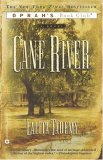
Cane River by Lalita Tademy: Questions, plus a reading group guide, with links to reviews, excerpt, author interview and author biography at BookBrowse.com.

Cane River Cane River
by Lalita Tademy
Hardcover: Apr 2001,
418 pages.
Paperback: Apr 2002,
560 pages.

Publication information
Summary and Book Reviews
Read an Excerpt
Reader Reviews

Author Biography
Author Interview
Books by this Author
Critics' Opinion:  
Readers' Rating: 
About BookBrowse Rankings
Buy This Book
Themes Members Only Read-Alikes Members Only Add to Reading List  Members Only

Reading Guide Questions

 Printer Friendly Guide

Caution! It is likely that the following questions will reveal, or at least allude to, key plot details. Therefore, if you haven’t yet read this book, but are planning on doing so, you may wish to proceed with caution to avoid spoiling your later enjoyment.

  1. Philomene says that to be a slave was "to have nothing but still have something left to lose." Discuss the profound, but different, losses suffered by each generation of women.

  2. The relationships between Suzette, Philomene and Emily and the white fathers of their children range from flat-out rape, to calculated financial arrangements cemented by childbearing, to real, if forbidden and dangerous love. What did you find most surprising about these often complex relationships?

  3. Do you think Doralise was in a position to help Suzette and Philomene more than she did?

  4. Cane River dramatizes the roots of turmoil within America's black community on issues of skin color. Emily, for example, is described by the author as being "color-struck." In what ways does color-consciousness continue to afflict black and mixed-race societies today? How, in Cane River, was the color-struck attitude a help or hindrance in successive generations' rising fortunes?

  5. During the course of researching Cane River, as she kept unearthing tender relationships in unexpected situations, Tademy found herself frequently being forced to rethink some long-held beliefs about slavery. What, if anything, surprised you most about the relationships described in the book? In which ways did you find Tademy's depictions believable? Upsetting? Eye-opening?

  6. Cane River was a community made up of French planters, slaves and gens de couleur libre, or free people of color who "had accumulated a great deal of land and wealth and were just as likely to be slave owners as their white neighbors." How do you think the free people of color justified playing a willful role in their kinsmen's oppression?

  7. The free people of color considered themselves neither black nor white. Can you think of any parallels in today's society?

  8. Each of the four women in the book approached life differently and handled the relationships to the men and children in their lives very differently. Discuss the differences.

  9. Do you think that each of the women was a good mother? Was there more that any one of them could have done for their children than they did?

  10. How -- or did -- each of the women fight against the oppression of their lives? Do you think there was more that Elisabeth or Suzette in particular could have done?

  11. Philomene seems to be the strongest of the women. If you agree with this statement, what do you think accounts for her unusual strength? If you disagree, why -- and who do you think was actually the strongest? The weakest?

  12. Philomene coldly made a choice to stay with Narcisse Fredieu after he returned to Cane River following the Civil War. At this point, she was now free. Why, then, would she make this decision?

  13. Suzette changed her last name three times. Why was this so significant to her?

  14. Did Joseph Billes do everything he could to protect Emily and their children? Did Emily do everything possible to protect her children?

  15. Elisabeth called all of her descendants to her bedside when she knew she was dying? What were the long-term repercussions of this act for her family?

  16. Sunday dinners were a major event in Cane River. What made them so important? Family dinners, in which generations come together on a regular basis, seem to be a dying tradition in this country. What effect do you think this has on families today?

  17. Cane River was a community with both rigid hierarchies and notable exceptions to these hierarchies. Do you think that Cane River's historical divisions of class, race and gender have contemporary parallels?

  18. What are the similarities and differences between Cane River of the l800s and the United States today?

  19. In many ways, Cane River, a rural farming community established by French Catholics, was unlike other southern communities of the time. What did you find most surprising about the community and its leading citizens?

  20. Each of the four major women characters in Cane River was born a slave, but even so, each made distinct choices regarding how she was going to live her life. What were their choices? What were the other options they might have chosen?

  21. When Madame slaps Suzette in the cookhouse, Elisabeth doesn't interfere, nor does she have a heart-to-heart conversation afterward with her daughter about what happened? Why not? Was this realistic?

  22. What do you think would have happened to each of the main characters if they has not been so deeply rooted in family?

  23. Which living situation do you think was easier: big house or quarter?

  24. Emily, in the very last scene in the book, takes a seat in the front row of the bus to return home from her trip to town. Is this something you believe she would do? Why or why not?

  25. Elisabeth, Suzette and Philomene don't talk about slavery with Emily, who was too young to remember slave life. In fact, they don't talk much about those times with one another. How does this avoidance shape them and affect the younger generation?

  26. When Joseph moves Emily out of the house where they raised their children in order to marry a white woman, Emily asks to take only those things she considers to be her possessions. Was this foolish pride that possibly deprived her children of a larger inheritance?

  27. Joseph stays close to Emily in his later years. Why do you think Emily continued to allow Joseph into her life after he kicked her out of their home and married another woman?

  28. Emily's daughters Mary and Josephine never marry, and her son T.O. married a woman radically different than his mother. What do you think this says about the long-reaching effects of Emily's choices and behavior as a mother?

  29. Elisabeth says that everyone along Cane River was 'waiting for the spider to come home." What did she mean?

  30. The author of Cane River made the decision to turn her family's story into a work of fiction rather than nonfiction? What do you think motivated her to do so, and do you think it was the right decision?


Unless otherwise stated, this discussion guide is reprinted with the permission of Grand Central Publishing. Any page references refer to a USA edition of the book, usually the trade paperback version, and may vary in other editions.

This Book's Themes:
Read-Alikes:
Other books by this author
Buy This Book:

Become a Member
One Month Free
Editor's Choice
  •  Nov 19 
  •  Nov 17 
  •  Nov 15 
Nocturnes
Kazuo Ishiguro
One of the most celebrated writers of our time gives us his first cycle of short fiction: five brilliantly etched, interconnected stories in which music is a vivid and essential character.
Invisible
Paul Auster
“One of America’s greatest novelists” dazzlingly reinvents the coming-of-age story in his most passionate and surprising book to date.
The Lacuna
Barbara Kingsolver
In her most accomplished novel, Barbara Kingsolver takes us on an epic journey from the Mexico City of artists Diego Rivera and Frida Kahlo to the America of Pearl Harbor, FDR, and J. Edgar Hoover. The Lacuna is a poignant story of a man pulled between two nations as they invent their...
Chronic City
Jonathan Lethem
The acclaimed author of Motherless Brooklyn and The Fortress of Solitude returns with a roar with this gorgeous, searing portrayal of Manhattanites wrapped in their own delusions, desires, and lies.
Manhood for Amateurs
Michael Chabon
The Pulitzer Prize-winning author— "an immensely gifted writer and a magical prose stylist" (Michiko Kakutani, New York Times)—offers his first major work of nonfiction, an autobiographical narrative as inventive, beautiful, and powerful as his acclaimed, award-winning fiction.
Recent Reader Reviews
Zorro by Isabel Allende
Like Robin Hood, Zorro is a story that almost everyone knows, but few have read. The original book by Johnston McCulley is out of print and ... read more
Three Cups of Tea by David O. Relin
I'm 13 years old and my teacher handed me this book and told me to read and do a report on it. I looked at the cover, saw the title (which made no ... read more
Three Cups of Tea by Greg Mortenson
I'm 13 years old and my teacher handed me this book and told me to read and do a report on it. I looked at the cover, saw the title (which made no ... read more
RSS feed More...  
Most Viewed This Week
1. Brooklyn Bridge
Karen Hesse
2. The Glass Castle
Jeannette Walls
3. Three Cups of Tea
David O. Relin, Greg Mortenson
4. A Child Called It
Dave Pelzer
5. The Notebook
Nicholas Sparks
More...
Book Club Recommendations
The Wasted Vigil
by Nadeem Aslam
Paperback (Sep/09)
Graceling
by Kristin Cashore
Paperback (Sep/09)
The Given Day
by Dennis Lehane
Paperback (Sep/09)
The White Mary
by Kira Salak
Paperback (Sep/09)
More...
First Impressions
Members read and review books often months before they're published. See what they think in First Impressions!
State by State
by Matt Weiland & Sean Wilsey (editors)
           (Oct/09)
The Book of Illumination
by Mary Ann Winkowski
           (Oct/09)
The New Global Student
by Maya Frost
           (May/09)
More...
   Most Recent Blog Entries
So Many eReaders, Which to Choose?
Autumn Reading by Elizabeth Strout
It Takes All Kinds of Readers
Steampunk for Beginners by Cherie Priest
rss  RSS   rss  subscribe
  Latest BookBrowse News
The 2009 National Book Award Winners (Nov 19 2009)
The winners of the 2009 National Book Awards have been announced at the National Book Foundation's 60th National Book Awards Ceremony and Benefit... Full Story
Google Settlement Filed (Nov 13 2009)
After two delays, attorneys for the AAP, Authors Guild and Google filed an amended settlement agreement today in an effort to end litigation brought by the... Full Story
rss RSS feed More...
BookBrowse Poll
Q: When do you listen to audio books?
I don't listen to audio books
While walking
While doing household chores
While exercising
While working
In the car
At other times
Select Any That Apply
HOME Submissions | Advertising | Showcase | Library Subscriptions | Media Inquiries | Reviewers | Contact Us |   Email this page to a friend
addall.com - external link
Visit AddAll.com to compare and save at 41 bookstores!
Searching for used books? Search 20,000+ dealers!
 
Compare music prices  |  Compare movie prices
One Percent