Book Club Discussion Questions
In a book club? Subscribe to our Book Club Newsletter and get our best book club books of 2025!
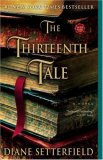
For supplemental discussion material see our Beyond the Book article, What is a Gothic Novel? and our BookBrowse Review of The Thirteenth Tale.
Please be aware that this discussion guide will contain spoilers!
Summary
Margaret Lea works in her father's antiquarian
bookshop where her fascination for the biographies of the
long-dead has led her to write them herself. She gets a letter
from one of the most famous authors of the day, the mysterious
Vida Winter, whose popularity as a writer has been in no way
diminished by her reclusiveness. Until now, Vida has toyed with
journalists who interview her, creating outlandish life
histories for herself -- all of them invention. Now she is old
and ailing, and at last she wants to tell the truth about her
extraordinary life. Her letter to Margaret is a summons.
Somewhat anxiously, the equally reclusive
Margaret travels to Yorkshire to meet her subject. Vida's
strange, gothic tale features the Angelfield family;
dark-hearted Charlie and his unbrotherly obsession with his
sister, the fascinating, devious, and willful Isabelle, and
Isabelle's daughters, the feral twins Adeline and Emmeline.
Margaret is captivated by the power of Vida's storytelling, but
she doesn't entirely trust Vida's account. She goes to check up
on the family, visiting their old home and piecing together
their story in her own way. What she discovers on her journey to
the truth is for Margaret a chilling and transforming
experience.
Questions for Discussion
- Much of the novel takes place in two grand estates --
Angelfield and then Miss Winter's. How are the houses
reflections of their inhabitants?
- As the story unfolds, we learn that Margaret and Miss
Winter are both twins. What else do they have in common?
- Margaret and her mother are bound by a singular loss --
the death of Margaret's twin sister. How has each woman
dealt with this loss, and how has it affected her life? If
her parents had told her the truth about her twin, would
Margaret still be haunted?
- Books play a major role in this novel. Margaret, for
example, sells books for a living. Miss Winter writes them.
Most of the important action of the story takes place in
libraries. There are stories within stories, all
inextricably intertwined. Discuss the various roles of
books, stories, and writing in this novel.
- Miss Winter asks Margaret if she'd like to hear a ghost
story -- in fact, there seem to be several ghost stories
weaving their way through. In what ways is The Thirteenth
Tale a classic, gothic novel?
- Miss Winter frequently changes points of view from third
to first person, from "they" to "we" to "I," in telling
Margaret her story. The first time she uses "I" is in the
recounting of Isabelle's death and Charlie's disappearance.
What did you make of this shifting when Margaret points it
out on page 204?
- Compare and contrast Margaret, Miss Winter, and Aurelius
-- the three "ghosts" of the novel who are also each haunted
by their pasts.
- It is a classic writer's axiom that a symbol must appear
at least three times in a story so that the reader knows
that you meant it as a symbol. In The Thirteenth Tale,
the novel Jane Eyre appears several times. Discuss
the appearances and allusions to Jane Eyre and how
this novel echoes that one.
- The story shifts significantly after the death of Mrs.
Dunne and John Digence. Adeline steps forward as
intelligent, well-spoken, and confident -- the "girl in the
mists" emerges. Did you believe this miraculous
transformation? If not, what did you suspect was really
going on?
- Dr. Clifton tells Margaret that she is "suffering from
an ailment that afflicts ladies of romantic imagination"
when he learns that she is an avid reader of novels such as
Wuthering Heights, Jane Eyre, and Sense and
Sensibility. What do you think he means by drawing such
a parallel? What other parallels exist between The
Thirteenth Tale and classic 19th century literature?
- When did you first suspect Miss Winter's true identity?
Whether you knew or not, looking back, what clues did she
give to Margaret (and what clues did the author give to
you)?
- Margaret tells Aurelius that her mother preferred
telling "weightless" stories in place of heavy ones, and
that sometimes it's better "not to know." Do you agree or
disagree?
- The title of this novel is taken from the title of Miss
Winter's first book, Thirteen Tales of Change and
Desperation, a collection of twelve stories with a
mysterious thirteenth left out at the last minute before
publication. How is this symbolic of the novel? What is the
thirteenth tale?
- When do you think The Thirteenth Tale takes
place? The narrator gives some hints, but never tells the
exact date. Which aspects of the book gave you a sense of
time, and which seemed timeless? Did the question of time
affect your experience with the novel?
Enhance Your Book Club Experience
- Ghost stories abound in The Thirteenth Tale, and
in many American towns and cities as well. Take your book
group on a haunted house tour. You can find a haunt near you
at
www.hauntedhouse.com.
- If you're the host, give everyone a gift of Charlotte
Bronte's Jane Eyre (or rent the movie).
- Research the Yorkshire Moors and the small market town
of Banbury, England, the general region of the fictional
Angelfield village and Miss Winter's private estate. You can
start with information and photos at
www.yorkshirenet.co.uk and
www.absoluteastronomy.com/reference/banbury.
- Discover hidden treasures by taking a group trip to an
antiquarian bookshop like the one Margaret's father owns.
You can find one near you by visiting
http://www.fearlessbooks.com/Antiquarians.html.
- Turn your next meeting into a traditional English tea
party. To sample some delicious recipes, visit
http://www.joyofbaking.com/EnglishTeaParty.html.
Margaret's
Recommended Reading List:
- The Case-book of Sherlock Holmes by Sir Arthur
Conan Doyle
Written around 1926, this collection is made up of the last
twelve stories featuring Sherlock Holmes and Dr. Watson.
- The Castle of Otranto by Horace Walpole
The Castle of Otranto, written in 1764 and set during
the Crusades, is considered to be the first English-language
Gothic novel. When a young man is killed mysteriously on his
wedding day, his father vows to marry his intended in his
place, to ensure his lineage. A series of supernatural
events, however, stops this from happening.
- Cinderella
Cinderella is the classic fairytale about the
beautiful Cinderella, her never-ending chores and her ugly
stepmother and stepsisters. Cinderella's fortunes take a
turn when she meets her Fairy Godmother and gets the chance
to attend the Prince's Ball, where she and the Prince share
a magical connection and live happily ever after.
- Doctor Jekyll and Mr. Hyde by Robert Louis
Stevenson
Originally published in 1866, this classic tale by Robert
Louis Stevenson follows the life of the mild-mannered Dr.
Jekyll and his frightening alter ego Mr. Hyde. The story
discusses the duality in all of us, and the continuous
struggle between good and evil that we confront every day.
- Emma by Jane Austen
This romantic story by Jane Austen follows Emma Woodhouse
through life's trials and tribulations -- and eventually
follows her to the love of her life, her brother-like
neighbor. As a matchmaker, Emma is clueless, but as a
heroine she is endearing and the love story is a
coming-of-age tale.
- The Eustace Diamonds by Anthony Trollope
First published in 1781, The Eustace Diamonds is the
third novel in Anthony Trollope's Palliser series, written
with his trademark wit. A beautiful young widow schemes to
keep her husband's family heirloom jewelry after his death.
- Germinie Lacerteux by the Goncourt brothers,
Edmond Louis Antoine Huot De Goncourt, Jules Alfred Huot De
Goncourt
The Goncourt brothers' Germinie Lacerteux follows the
life of a poor servant girl who steals from her employers to
fund after-hours trysts. Published in 1864, it is a study of
working class life, considered to be part of early French
Realism, and cited by many to be their most lasting novel.
- Hard Times by Charles Dickens
Always concerned with issues of class and social injustice,
Dickens shows in Hard Times, written in 1854, a
broader concern with the philosophies and economic movements
which underlie those issues, using three parallel storylines
to illustrate a society in which fact and reason are prized
above emotion.
- Jane Eyre by Charlotte Brontë
Charlotte Brontë's classic Gothic novel featuring the
orphaned heroine, Jane Eyre, and her position as a governess
at Thornfield Hall. Her forbidden love for Mr. Rochester
nearly ends in fire and blindness, but triumphs in the end.
Beneath the love story is Jane's search for a richer life
than is traditionally offered to women in Victorian society.
- Lady Audley's Secret by Mary Elizabeth Braddon
Mary Elizabeth Braddon's novel about a Victorian wife and
mother was first published in 1861. Lady Audley, formerly
Lucy Graham, seems like the perfect new wife for Sir Audley.
The secrets in Lady Audley's past, however, set her apart
from the traditional Victorian woman -- she is a violent
criminal who has not only attempted to commit murder, but
abandoned her children and kept up a respectable façade in
the process.
- Middlemarch by George Eliot
Published by Mary Ann Evans under the pseudonym George
Eliot, Middlemarch is widely considered one of the
best Victorian-era novels. The central character, Dorothea
Brooke, marries a clergyman she believes will improve her
life and breadth of knowledge, but is unhappy and falls in
love with his cousin. Upon her husband's death, she inherits
his large fortune, but discovers that she must give it up if
she wishes to marry his cousin. In the end, she chooses love
over money and lives out her life in marital bliss.
- Northanger Abbey by Jane Austen
Published in 1817, after Jane Austen's death, Northanger
Abbey is a story involving the young, love-struck
Catherine Morland and her family friends. The tale revolves
around her increasing admiration for Mr. Henry Tilney and
the unwelcome advances she receives from John Thorpe. In the
end, it is Catherine's visit to the Tilney's home,
Northanger Abbey that seals her fate and brings about her
marriage to her love, Mr. Tilney.
- Rebecca by Daphne du Maurier
Rebecca follows the life of Mrs. de Winter, the
second wife of Maximilian de Winter, and the effects that
their marriage has on the people surrounding them. Mr. de
Winter's first wife, Rebecca, was adored by the household
staff, especially the housekeeper Mrs. Danvers, who is
fiercely loyal to Rebecca's memory. In a tragic series of
events, the new Mrs. de Winter is nearly ruined socially and
physically, until the truth about Rebecca's tragic death is
revealed.
- Sense and Sensibility by Jane Austen
First published in 1811, Jane Austen's classic novel has
been loved by readers since its release. The plot focuses on
three sisters and their mother, recently having lost their
father, and the trials and tribulations they face while
trying to move on after his death. In the end, Marianne
(representing sensibility) and Elinor (as sense), the eldest
sisters, find love and happiness through marriage after
failed attempts and heartbreak.
- Shirley by Charlotte Brontë
Charlotte Brontë's follow-up to Jane Eyre is part
social commentary, part love story. Shirley tells the story
of contrasting characters Shirley and Caroline, and the men
they love, set against a background of economic and
political unrest.
- Snow White
Snow White is the classic fairy tale that has been
rewritten and adapted over and over. A beautiful young
maiden is plagued by her evil stepmother and finds refuge in
the forest amongst seven dwarves. She is tempted to eat
poison apples and (in some versions) has her dress tightened
until she passes out, but in the end Snow White finds true
love with her Prince and lives happily ever after.
- The Turn of the Screw by Henry James
In this chilling story, a governess begins to suspect there
are sinister forces at work in the house, endangering her
two young charges.
- Villette by Charlotte Brontë
Villette, published in 1853, is Charlotte Brontë's
last and most autobiographical novel. Left alone by a family
tragedy, Lucy Snowe becomes a teacher in an all-girls
school, where she must learn to manage both her students and
her own unfamiliar emotions.
- The Woman in White by Wilkie Collins
Wilkie Collins could be considered the father of suspense
fiction. In this gripping Victorian mystery, readers are
faced with secrets, mistaken identities, surprise
revelations, amnesia, locked rooms and locked asylums, and
an unorthodox villain, as its likeable young heroine
searches for answers.
- Wuthering Heights by Emily Brontë
Wuthering Heights was Emily Brontë's only novel,
published in 1847. Through the narration of the story line
from a dying man to his housekeeper, Brontë's novel tells
the tale of Catherine and Heathcliff, their all-encompassing
love for one another, and how this unresolved passion
eventually destroys them both.
Unless otherwise stated, this discussion guide is reprinted with the permission of Washington Square Press.
Any page references refer to a USA edition of the book, usually the trade paperback version, and may vary in other editions.

 Book Reviewed by:
.png)


