Book Club Discussion Questions
In a book club? Subscribe to our Book Club Newsletter and get our best book club books of 2025!
For supplemental discussion material see our Beyond the Book article, A Short History of Biafra and Nigeria and our BookBrowse Review of Half of a Yellow Sun.
Please be aware that this discussion guide will contain spoilers!
About This Guide
The questions, discussion topics, and suggestions for further reading that
follow are intended to enhance your group's conversation about
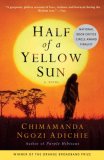
Half of a
Yellow Sun, a richly imagined story of the disastrous war between Nigeria
and Biafra, largely forgotten in the West, which won the 2007 Orange Prize in
Britain and was a finalist for the National Book Critics Circle Award.
About This Book
Half of a Yellow Sun returns to a critical moment in the modern history
of Nigeria, a time shortly after gaining their independence from Britain when,
following a massacre of their people, the Igbo tribes of the southeast seceded
and established The Republic of Biafra. Three years of civil war followed as
Biafra was slowly strangled into submission by violence and famine. Over a
million people died, including Chimamanda Ngozi Adichie's two grandfathers.
With astonishing empathy and the effortless grace of a natural storyteller,
Adichie weaves together the lives of three characters swept up in the turbulence
of the war. Thirteen-year-old Ugwu is employed as a houseboy for Odenigbo, a
pan-Africanist university professor full of revolutionary zeal. His beautiful
girlfriend Olanna is the London-educated daughter of a tribal chief turned
businessman, who has abandoned her life of privilege in Lagos for the charisma
of her new lover. And Richard Churchill is a shy but handsome English writer in
love with Olanna's cool, sardonic, and less beautiful twin sister Kainene. As
Nigerian troops advance and the characters must flee from murderous armies,
their ideals are severely tested, as are their loyalties to one another.
Epic, ambitious, and triumphantly realized,
Half of a Yellow Sun is a
remarkable novel about moral responsibility, the end of colonialism, ethnic
allegiances, class and race–and the ways in which love can complicate them all. Adichie
brilliantly evokes the promise and the devastating disappointments that marked
this time and place, bringing us one of the most powerful, dramatic, and
intensely emotional pictures of modern Africa that we have ever had.
Reader's Guide
- Ugwu is only thirteen when he begins working as a houseboy for Odenigbo,
but he is one of the most intelligent and observant characters in the novel.
How well does Ugwu manage the transition from village life to the
intellectual and privileged world of his employers? How does his presence
throughout affect the reader's experience of the story?
- About her attraction to Odenigbo, Olanna thinks, "The intensity had not
abated after two years, nor had her awe at his self-assured eccentricities
and his fierce moralities" [p. 36]. What is attractive about Odenigbo? How
does Adichie poke fun at certain aspects of his character? How does the war
change him?
- Adichie touches very lightly on a connection between the Holocaust and
the Biafran situation [p. 62]; why does she not stress this parallel more
strongly? Why are the Igbo massacred by the Hausa? What tribal resentments
and rivalries are expressed in the Nigerian-Biafran war? In what ways does
the novel make clear that these rivalries have been intensified by British
interference?
- Consider the conversation between Olanna and Kainene on pp.
130-131. What are the sources of the distance and distrust between the two
sisters, and how is the rift finally overcome? What is the effect of the
disappearance of Kainene on the ending of the story?
- Discuss the ways in which Adichie reveals the differences in social
class among her characters. What are the different cultural
assumptions—about themselves and others—made by educated Africans like
Odenigbo, nouveau riche Africans like Olanna's parents, uneducated
Africans like Odenigbo's mother, and British expatriates like Richard's
ex-girlfriend Susan?
- Excerpts from a book called The World Was Silent When We Died
appear on pp. 103, 146, 195, 256, 296, 324, 470, and 541. Who is writing
this book? What does it tell us? Why is it inserted into the story in parts?
- Adichie breaks the chronological sequence of her story so that she can
delay the revelation that Baby is not Olanna's child and that Olanna had a
brief liaison with Richard. What are the effects of this delay, and of these
revelations, on your reading experience?
- Susan Grenville-Pitts is a stereotype of the colonial occupier with her
assertion that "It's quite extraordinaryÉ how these people can't control
their hatred of each other... . Civilization teaches you control" [p.
194]. Richard, on the other hand, wants to be African, learns to speak Igbo,
and says "we" when he speaks of Biafra. What sort of person is Richard? How
do you explain his desires?
- Adichie makes a point of displaying Olanna's middle-class frame of mind:
she is disgusted at the cockroach eggs in her cousins' house reluctant to
let Baby mix with village children because they have lice, and so on. How is
her privileged outlook changed by the war?
- The poet Okeoma, in praise of the new Biafra, wrote, "If the sun refuses
to rise, we will make it rise" [p. 219]. Does Adichie seem to represent the
Biafran secession as a doomed exercise in political naiveté or as a
desperate bid for survival on the part of a besieged ethnic group? Given the
history of Nigeria and Britain's support during the war, is the defeat of
Biafra a foregone conclusion?
- The sisters' relationship is damaged further when Olanna seduces Richard
[p. 293]. Why does Olanna do this? If she is taking revenge upon Odenigbo
for his infidelity, why does she choose Richard? What does Kainene mean when
she bitterly calls Olanna "the good one" [p. 318]?
- How does being witnesses to violent death change people in the story—Olanna,
Kainene, Odenigbo, Ugwu? How does Adichie handle descriptions of scenes of
violence, death, and famine?
- What goes through Ugwu's mind as he participates in the rape of the bar
girl [p. 457]? How does he feel about it later, when he learns that his
sister was also gang-raped [pp. 497, 526]?
- The novel is structured in part around two love stories, between Olanna
and Odenigbo and between Kainene and Richard. It is "really a story of
love," Adichie has said (Financial Times, September 9, 2006). How
does Adichie handle romantic and sexual love? Why are these love plots so
important to a novel about a war?
- The story begins as Ugwu's aunty describes to Ugwu his new employer:
"Master was a little crazy; he had spent too many years reading books
overseas, talked to himself in his office, did not always return greetings,
and had too much hair" [p. 3]. It ends with Ugwu's dedication of his book: "For
Master, my good man" [p. 541]. Consider how Ugwu's relation to his
master has changed throughout the course of the story.
- How is it fitting that Ugwu, and not Richard, should be the one who
writes the story of the war and his people?
- In a recent interview Adichie said, "My family tells me that I must be
old. This is a book I had to write because it's my way of looking at this
history that defines me and making sense of it." (She recently turned
twenty-nine, and based parts of the story on her family's experiences during
that time and also on a great deal of reading.) "I didn't want to just write
about events," Adichie said. "I wanted to put a human face on them" (The
New York Times, September 23, 2006). Why is it remarkable that a woman
so young could write a novel of this scope and depth?
Suggested Reading
Chris Abani, Graceland; Chinua Achebe, Things Fall Apart;
William Boyd, A Good Man in Africa; Kiran Desai, The Inheritance of
Loss; Frederick Douglass, The Narrative of the Life of Frederick
Douglass, An American Slave; Dave Eggers, What Is the What; Amitav
Ghosh, The Shadow Lines; Graham Greene, The Heart of the Matter;
Barbara Kingsolver, The Poisonwood Bible; Rohinton Mistry, Family
Matters; V. S. Naipaul, A Bend in the River; Ben Okri, The
Famished Road; Wole Soyinka, The Man Died.
Unless otherwise stated, this discussion guide is reprinted with the permission of Anchor Books.
Any page references refer to a USA edition of the book, usually the trade paperback version, and may vary in other editions.

 Book Reviewed by:
.png)


