Book Club Discussion Questions
In a book club? Subscribe to our Book Club Newsletter and get our best book club books of 2025!
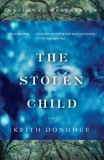
For supplemental discussion material see our Beyond the Book article, and our BookBrowse Review of The Stolen Child.
Please be aware that this discussion guide will contain spoilers!
Discussion Questions
- The very first words out of Henry Day's mouth are "Don't call me a fairy,"
and then he takes the reader on a quasi-scientific account of the differences
between fairies, hobgoblins, and other "sublunary spirits." Yet Aniday and the
rest of the changelings refer to themselves as faeries throughout the book. Why
does Henry insist on not being called a fairy? In what other ways does Henry
attempt to distance himself from his prior life?
- Twins and other twosomes figure predominantly in the book: Henry and Aniday,
Tess and Speck, Big Oscar and Little Oscar, Edward and Gustav, Mary and
Elizabeth. Other characters form pairs: Luchog and Smaolach, Kivi and Blomma,
Onions and Beka, George Knoll and Jimmy Cummings. What is the significance of
the doubles? In what ways can Henry and Aniday be read as two halves of one
being? How does the author, beyond using two alternating narrators, play with
the theme of doubles?
- Rather than each chapter echoing its counterpart, the two stories run at
different speeds until the end of the book. How does the author manage time in
the novel? Where in the narrative does he relate the same incident from
different perspectives and in different sequences?
- When Henry and his friends attempt to synchronize their watches before
looking for little Oscar Love, not one of them has the same time as the others.
At other points in the story, Henry or Aniday forget the time of day or, in some
cases, what year it is. What does that say about their place in time?
- In chapter 35, Ruth Day says "I knew all along, Henry." Similarly, Henry
dreams of Tess changing her form and saying that she, too, knows the truth. What
does Henry think they know about him?
- A critical event in the novel is Bill Day's suicide and Henry's muted
reaction. What did Bill come to understand about his son? Why do you think
Henry's mother, Ruth Day, didn't react in a similar manner?
- In the poem "The Stolen Child" by W.B. Yeats, the faeries attempt to entice
the child away "for the world's more full of weeping than you can understand."
In what ways could the fairyland in Donohue's novel be considered better than
the real world? In what ways could it be considered worse?
- The changeling legends, however, were cautionary tales meant to illustrate
the dangers of creatures that many people once believed in. And the changeling
legend, as McInnes points out in the novel, were also horrifying explanations
for "failure to thrive," physical deformities, or mental illness in children.
Are Henry's and Aniday's stories cautionary tales? What do you make of the
changeling who took the place of young Gustav Ungerland and never said another
word?
- What is the significance of music in Henry Day's transformation? Does the
final concert offer Henry a chance at redemption?
- What is the significance of books in Aniday's transformation? As Speck
teaches Aniday to read and write, does his understanding of the world change? Is
his memoir a chance at redemption?
- Aniday's predecessor is referred to as Chopin, but we never really know much
about Gustav Ungerland as a changeling. Similarly, once Igel and the others
depart the world, they are rarely discussed. Why do the faeries avoid mentioning
those that have departed?
- Why does Speck leave? What is the significance of her map on the ceiling? Do
you think Aniday finds Speck?
- The epigraph from "Nostos" by Louise Gluck states: "We see the world once in
childhood/The rest is memory." Why do you think the author chose it? How does it
relate to the novel?
- Is this book a fairy tale for adults? If so, what is the moral of the story?
Who, in the end, is the stolen child?
The Stolen Child by William Butler Yeats
Where dips the rocky highland
Of Sleuth Wood in the lake,
There lies a leafy island
Where flapping herons wake
The drowsy water-rats;
There we've hid our faery vats,
Full of berries
And of reddest stolen cherries.
Come away, O human child!
To the waters and the wild
With a faery, hand in hand,
For the world's more full of weeping than you can understand.
Where the wave of moonlight glosses
The dim grey sands with light,
Far off by furthest Rosses
We foot it all the night,
Weaving olden dances,
Mingling hands and mingling glances
Till the moon has taken flight;
To and fro we leap
And chase the frothy bubbles,
While the world is full of troubles
And is anxious in its sleep.
Come away, O human child!
To the waters and the wild
With a faery, hand in hand,
For the world's more full of weeping than you can understand.
Where the wandering water gushes
From the hills above Glen-Car,.
In pools among the rushes
That scarce could bathe a star,
We seek for slumbering trout
And whispering in their ears
Give them unquiet dreams;
Leaning softly out
From ferns that drop their tears
Over the young streams.
Come away, O human child!
To to waters and the wild
With a faery, hand in hand,
For the world's more full of weeping than you can understand.
Away with us he's going,
The solemn-eyed:
He'll hear no more the lowing
Of the calves on the warm hillside
Or the kettle on the hob
Sing peace into his breast,
Or see the brown mice bob
Round and round the oatmeal-chest.
For he comes, the human child,
To the waters and the wild
With a faery, hand in hand,
From a world more full of weeping than he can understand.
Unless otherwise stated, this discussion guide is reprinted with the permission of Anchor Books.
Any page references refer to a USA edition of the book, usually the trade paperback version, and may vary in other editions.

 Book Reviewed by:
.png)


