Book Club Discussion Questions
In a book club? Subscribe to our Book Club Newsletter and get our best book club books of 2025!
Please be aware that this discussion guide will contain spoilers!
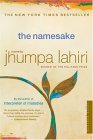
- The Namesake opens with Ashima Ganguli trying to make a spicy Indian snack from American ingredients — Rice Krispies and Planters peanuts — but "as usual, there's something missing." How does Ashima try and make over her home in Cambridge to remind her of what she's left behind in Calcutta? Throughout The Namesake, how does Jhumpa Lahiri use food and clothing to explore cultural transitions — especially through rituals, like the annaprasan, the rice ceremony? Some readers have said that Lahiri's writing makes them crave the meals she evokes so beautifully. What memories or desires does Lahiri bring up for you? Does her writing ever make you "hunger"?
- The title The Namesake reflects the struggles Gogol Ganguli goes through to identify with his unusual names. How does Gogol lose first his public name, his bhalonam, and then his private pet name, his daknam? How does he try to remake his identity, after choosing to rename himself, and what is the result? How do our names precede us in society, and how do they define us? Do you have a pet name, or a secret name — and has that name ever become publicly known? Do you have different names with different people? Did you ever wish for a new name? How are names chosen in your family?
- Newsweek said of Lahiri's Pulitzer Prize-winning collection of short stories, Interpreter of Maladies, "Jhumpa Lahiri writes such direct, translucent prose you almost forget you're reading." The Namesake is also subtle in style, elegant, and paced realistically. How are the events of the novel simultaneously dramatic and commonplace? What details made the characters real to you? Did you ever lose yourself in the story?
- When Gogol is born, the Gangulis meet other Bengali families with small children, and Ashima finds with the new baby that "perfect strangers, all Americans, suddenly take notice of her, smiling, congratulating her for what she's done." How, for all of us, do children change our place in the community, and what we expect from it? Have you ever connected with someone you may have otherwise never spoken with — of a different ethnic background or economic class — through their children or your own?
- In his youth, Ashoke Ganguli is saved from a massive train wreck in India. When his son Gogol is born, Ashoke thinks, "Being rescued from that shattered train had been the first miracle of his life. But here, now, reposing in his arms, weighing next to nothing but changing everything, is the second." Is Ashoke's love for his family more poignant because of his brush with death? Why do you think he hides his past from Gogol? What moments define us more — accidents or achievements, mourning or celebration?
- Lahiri has said, "The question of identity is always a difficult one, but especially for those who are culturally displaced, as immigrants are . . . who grow up in two worlds simultaneously." What do you think Gogol wants most from his life? How is it different from what his family wants for him, and what they wanted when they first came to America to start a family? How have expectations changed between generations in your own family? Do you want something different for your own children from what your parents wanted for you?
- Jhumpa Lahiri has said of The Namesake, "America is a real presence in the book; the characters must struggle and come to terms with what it means to live here, to be brought up here, to belong and not belong here." Did The Namesake allow you to think of America in a new way? Do you agree that "America is a real presence" in The Namesake? How is India also a "presence" in the book?
- The marriage of Ashima and Ashoke is arranged by their families. The closest intimacy they share before their wedding is when Ashima steps briefly, secretly, into Ashoke's shoes. Gogol's romantic encounters are very different from what his parents experienced or expected for their son. What draws Gogol to his many lovers, especially to Ruth, Maxine, and eventually Moushima? What draws them to him? From where do you think we take our notions of romantic love — from our family and friends, or from society and the media? How much does your cultural heritage define your ideas and experience of love?
- Lahiri explores in several ways the difficulty of reconciling cross-cultural rituals around death and dying. For instance, Ashima refuses to display the rubbings of gravestones young Gogol makes with his classmates. And when Gogol's father suddenly dies, Gogol's relationship with Maxine is strained and quickly ends. Why do you think their love affair can't survive Gogol's grief? How does the loss of Gogol's father turn him back toward his family? How does it also change Sonia and Ashima's relationship?
- Did you find the ending of The Namesake surprising? What did you expect from Moushima and Gogol's marriage? Do you think Moushima is entirely to blame for her infidelity? Is Gogol a victim at the end of the book? In the last few pages of The Namesake, Gogol begins to read The Overcoat for the first time — the book his father gave him, by his "namesake." Where do you imagine Gogol will go from here?
Unless otherwise stated, this discussion guide is reprinted with the permission of Mariner Books.
Any page references refer to a USA edition of the book, usually the trade paperback version, and may vary in other editions.

.png)


