Book Club Discussion Questions
In a book club? Subscribe to our Book Club Newsletter and get our best book club books of 2025!
Please be aware that this discussion guide will contain spoilers!
About This Book
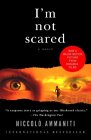
When Michele Amitrano stumbles onto a boy held prisoner in a hole deep in the Italian countryside, he begins a journey that will lead him to a series of startling discoveries.
I'm Not Scared explores the playful and volatile world of childhood through the eyes of nine-year-old Michele, who is forced, again and again, to make the hard choices that will define his character. As the book opens, he must choose between helping his younger sister or winning a race. Later, he must choose between letting his friend Barbara be humiliated or taking the punishment himself. And as the novel approaches its stunning climax, he must choose between obeying his father and fulfilling the oath he swore to him, or following his conscience and keeping his promise to Filippo, the boy who has been kidnapped. But the choices he makes bring him into serious danger, not from the monsters of his childish imagination but from the adults around him who are capable of violence and monstrosities that are all too real.
Written with an immediacy and poignancy which is itself evocative of childhood, I'm Not Scared is a powerful tale of how one boy finds the courage to overcome his fear, risk his life, and make wrenchingly difficult moral choices.
Reading Guide
- I'm Not Scared is preceded by an epigraph by Jack London: "That much he knew. He had fallen into darkness. And at the instant he knew, he ceased to know." Why has Niccolò Ammaniti chosen to begin his novel with this quote? How does it illuminate what happens in the story? What is the literal and symbolic significance, in terms of the novel, of falling into darkness?
- The novel opens with a scene in which Michele must choose between winning the race or helping his sister Maria. What conflicts and choices does this moment prefigure? What is revealed about Michele's character at this point?
- How does Ammaniti recreate the texture and atmosphere of childhood in his novel? What aspects of Michele's way of seeing himself and the world seem most authentically childlike?
- Michele first stumbles onto Filippo because of a sacrifice he makes to save his friend Barbara. What are the ultimate consequences of this decision? Where else does Michele demonstrate this generosity and willingness to sacrifice himself?
- Why does Michele identify with Filippo so strongly? Why does he think at first that Filippo is his brother? Why does he feel that Filippo "was mine and that they had taken him away from me" [p. 169]?
- Michele father's once told him to "Stop all this talk about monsters. . . . Monsters don't exist. It's men you should be afraid of, not monsters" [p. 170]. In what ways does the novel itself prove the truth of this statement? What does it say about Michele's father that he would offer this advice to his son?
- In the games they play and in their behavior toward one another, how do Michele and his group of friends—Salvatore, Skull, Remo, and Barbara—compare to the adults in the novel? In what ways are the children's minor cruelties mirrored in the adults' more serious crimes? In what way does Michele possess an integrity that the adults, and even the other children, lack?
- What motivates the kidnappers, Sergio, Felice, and Michele's father? Are readers meant to feel some sympathy for them? How do they manipulate and betray the innocence of childhood?
- When Michele is running in the night to try to find Filippo, he fights off his fears by asking himself what Tiger Jack, a fictional Navajo hero, would have done: "I must be brave. Tiger Jack. Think of Tiger Jack. The Indian would help me. Before making any move, I must think what the Indian would do in my place. That was the secret" [p. 183]. How does this moment illustrate the value of literature? How does Tiger Jack help him? How might I'm Not Scared itself serve as a kind of moral guide?
- Why does Michele break his oath to his father not to visit Filippo? "I wanted to turn back," he thinks, "but my legs pedaled and an irresistible force dragged me towards the hill" [p. 164]. What is that force?
- In the novel's final scene, Michele seems to be lead to the hole where Filippo is hidden by an owl whose nest he has accidentally knocked down. Should this be read as a kind of supernatural intervention, or simply as a chance occurrence?
- I'm Not Scared ends suddenly and dramatically, the details of which won't be revealed here. Often, such a climatic moment is followed by a dénouement, in which the story's loose ends are tied up and explained. Why has Ammaniti chosen to end his novel in this way? What does this ending achieve? What is likely to happen to Michele and his family in the aftermath of this moment?
- Ammaniti's novel can be described as a coming-of-age story. In what sense does Michele grow up during the course of the story? What hard lessons does he learn about the adult world?
Suggested Reading
Charles Dickens, Great Expectations; Italo Calvino, The Baron in the Trees; James Joyce, Portrait of the Artist as a Young Man; Peter Robinson, Close to Home; J. D. Salinger, The Catcher in the Rye; William Trevor, The Story of Lucy Gault; Mark Twain, The Adventures of Tom Sawyer.
Unless otherwise stated, this discussion guide is reprinted with the permission of Anchor Books.
Any page references refer to a USA edition of the book, usually the trade paperback version, and may vary in other editions.

.png)


