Reading Guide Questions

Please be aware that this discussion guide will contain spoilers!
FOR DISCUSSION
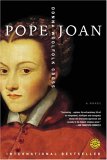
- Donna Woolfolk Cross wrote the story of Pope Joan as a work of fiction. Do you think there really was a Pope Joan?
- How important is it that Pope Joan actually existed? Are there lessons to be learned from this story whether it's true or not? What do you think those lessons are?
- One reviewer said, "After finishing Donna Cross' novelization of Joan's life, one may want her to be a real person, only because it is so gratifying to read about those rare heroes whose strength of vision enables them to ignore the almost overpowering messages of their own historical periods." In contrast, a professor of history said, "I think we shouldn't even think about [Pope Joan] at all. It's bunk." Referring to Joan's pregnancy, the professor also said, "The whole point of the story is 'If you let a woman in as pope, she'll goof up.' The story was invented for the purpose of saying, 'Women can't be trusted.'" Which interpretation do you agree with? Why?
- Many priests and nuns, in recent years, have urged the Vatican to ease restrictions on how far women may advance in the Church hierarchy. Women, they say, should be allowed to be ordained as priests. What are the implications of Pope Joan's story with regard to the limitations placed on women by the Church?
- One reviewer wrote, "Pope Joan--is a reminder that some things never change, only the stage and the players do." Although the position of women in society has changed dramatically since the middle ages, do you feel there are similarities between the way women live in various societies today and the way they lived in society then?
- According to the author, Joan's story was universally known and accepted until the seventeenth century. Why do you think that changed?
- Why do you think medieval society considered it unnatural and a sin for women to educate themselves or be educated?
- Why might medieval society have believed so strongly that education hampered a woman's ability to bear children? What purpose might that belief have served?
- One reviewer wrote, "Joan's ascendancy might not have been unusual in political spheres--many females in ancient and medieval times attained absolute or shared power. Joan earned disapproval because her intelligence and competence challenged prevailing male opinion that women lacked the ability for scholarly or clerical pursuits." Were there other females of ancient or medieval times who challenged this prevailing opinion? Do their stories give you insight into Joan's?
- What other strong female characters have you encountered in books? What are the similarities and differences between those characters and Joan?
- Did Joan make the right choice at that moment when she decided to disguise herself as her dead brother following the Viking attack? What would her life have been like had she chosen differently?
- What do we learn about medieval medicine, and the logic of the learned medieval mind, in Pope Joan?
- What happens to Joan when she tries to improve the lives of women and the poor? Why do you think Church and civic leaders were so resistant to such improvements?
- Discuss the inner conflicts Joan faces--between the pagan beliefs taught by her mother and the Christian beliefs she learns from religious instructors; between her mind and her heart; between faith and doubt. How do these conflicts affect the decisions she makes? Does she ever truly resolve those inner conflicts?
- Do you think Joan's secret would ever have been discovered had she not miscarried during the Papal procession or had she not become pregnant?
- According to one reviewer, "Joan has the kind of vices--stubbornness and outspokenness, for example--that turn out to be virtues." Do you agree? If so, why? If not, why not?
Reader's Guide copyright © 1997 by The Ballantine Publishing Group, a division of Random House, Inc.
Unless otherwise stated, this discussion guide is reprinted with the permission of Ballantine Books.
Any page references refer to a USA edition of the book, usually the trade paperback version, and may vary in other editions.