return to home
 
 
Member Login
Library Login
BookBrowse Mobile facebook      twitter      Bookmark and Share      mail to a friend  Email
 
  This Week's Recommendations    |     Hardcovers Coming Soon    |     Paperbacks Coming Soon    |     Recent Hardcovers    |     Recent Paperbacks
   Genres   |    Settings   |    Time Periods   |    Themes   |    Favorites   |    Award Winners   |    Book Finder   |    Surprise Me!   |    Tag cloud
   Recent Interviews    |     All Interviews    |     Author Bios    |     Author Websites    |     Pronunciation Guide
   Free Newsletters   |    Wordplay   |    Book Giveaway   |    BookBrowse Polls   |    Literary Quotes   |    Personality Quiz   |    Gift Membership
   Recent Membership Magazines    |     Magazine Archives     |     Invite the Author    |     My Reading List    |     First Impressions    |     My Account
   Editor's Blog    |     Best Reader Reviews    |     Book News    |     Meet the Reviewers    |     Stay In Touch
   About Us   |    Tour   |    Member Benefits   |    Join   |    Gift Memberships   |    Library Subscriptions   |    FAQ   |    People Say   |    Contact Us
PLA 2010
Search BookBrowse
Suggested Links
This Book's Themes:
Free Twice-Monthly Newsletters
The Irresistible Henry House
A Saint on Death Row

Win This Book!


The Girl With the Dragon Tattoo: Now a Major Motion Picture

Enter To Win Now!


wordplay
Solve this clue:
"T S I Willing B T F I W"

and be entered to win....
New Author
Interviews
Ingrid Law
Ingrid Law talks about the inspiration for Savvy
S.J. Parris
S.J. Parris writes about her inspiration for Heresy, which masterfully blends true events with fiction into a page-turning murder mystery set on the sixteenth-century Oxford University campus.
John Hart
In a letter to his readers, John Hart talks about becoming a writer and the challenges he faced in writing The Last Child.
Adam Haslett
A conversation with Adam Haslett, author of Union Atlantic, a deeply affecting portrait of the modern gilded age, the first decade of the twenty-first century.
No Stars
   Reading Guides

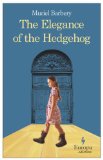
The Elegance of the Hedgehog by Muriel Barbery: Questions, plus a reading group guide, with links to reviews, excerpt, author interview and author biography at BookBrowse.com.

The Elegance of the Hedgehog The Elegance of the Hedgehog
by Muriel Barbery
Paperback: Sep 2008,
336 pages.

Publication information
Summary and Book Reviews
Read an Excerpt
Reader Reviews

Author Biography
Author Interview
Books by this Author
Critics' Opinion:   good
Readers' Rating:  Five Stars
About BookBrowse Rankings
Buy This Book
Themes Members Only Read-Alikes Members Only Add to Reading List  Members Only BookBrowse Review Members Only

Reading Guide Questions

 Printer Friendly Guide

Caution! It is likely that the following questions will reveal, or at least allude to, key plot details. Therefore, if you haven’t yet read this book, but are planning on doing so, you may wish to proceed with caution to avoid spoiling your later enjoyment.

  1. True life is elsewhere…
    One French critic called The Elegance of the Hedgehog "the ultimate celebration of every person's invisible part." How common is the feeling that a part of oneself is invisible to or ignored by others? How much does this "message" contribute to the book's popularity? Why is it sometimes difficult to show people what we really are and to have them appreciate us for it?
     
  2. This book will save your life…
    The Elegance of the Hedgehog has been described as "a toolbox one can look into to resolve life's problems," a "life-transforming read," and a "life-affirming book." Do you feel this is an accurate characterization of the novel? If so, what makes it thus: the story told, the characters and their ruminations, something else? Can things like style, handsome prose, well-turned phrases, etc. add up to a life-affirming book independently of the story told? To put it another way—Renée Michel's way—can an encounter with pure beauty change our lives?
     
  3. —a rose
    By any other name would smell as sweet.

    Both Renée and Paloma use stereotypes to their benefit, hiding behind the perceptions others have of their roles. Our understanding and appreciation of people is often limited to a superficial acknowledgement of their assigned roles, their social monikers—single mother, used car salesman, jock, investment banker, senior citizen, cashier… While we are accustomed to thinking of people as victims of stereotypes, is it possible that sometimes stereotypes can be useful? When, under what circumstances, and why, might we welcome an interpretation based on stereotypes of our actions or of who we are? Have you ever created a mise en place that conforms to some stereotype in order to hide a part of yourself?
     
  4. "One of the strengths I derive from my class background is that I am accustomed to contempt." (Dorothy Allison)
    Some critics call this novel a book about class. Barbery herself called Renée Michel, among other things, a vehicle for social criticism. Yet for many other readers and reviewers this aspect is marginal. In your reading, how integral is social critique to the novel? What kind of critique is made? Many pundits were doubtful about the book's prospects in the US for this very reason: a critique of French class-based society, however charming it may be, cannot succeed in a classless society. Is the US really a classless society? Are class prejudices and class boundaries less pronounced in the US than in other countries? Are the social critique elements in the book relevant to American society?
     
  5. Hope I die before I get old…
    Paloma, the book's young protagonist, tells us that she plans to commit suicide on the day of her thirteenth birthday. She cannot tolerate the idea of becoming an adult, when, she feels, one inevitably renounces ideals and subjugates passions and principles to pragmatism. Must we make compromises, renounce our ideals, and betray our youthful principles when we become adults? If so, why? Do these compromises and apostasies necessarily make us hypocrites? At the end of the book, has Paloma re-evaluated her opinion of the adult world or confirmed it?
     
  6.  
  7. Kigo: the 500 season words…
    Famously, the Japanese language counts twelve distinct seasons during the year, and in traditional Japanese poetry there are five hundred words to characterize different stages and attributes assigned to the seasons. As evidenced in its literature, art, and film, Japanese culture gives great attention to detail, subtle changes, and nuances. How essential is Kakuro's being Japanese to his role as the character that reveals others' hidden affinities? Or is it simply his fact of being an outsider that matters? Could he hail from Tasmania and have the same impact on the story?
     
  8. Circumstances maketh the woman…
    Adolescent children and the poor are perhaps those social groups most prone to feel themselves trapped in situations that they cannot get out of, that they did not choose, and that condition their entire outlook. Some readers have baulked at the inverse snobbery with which the main characters in The Elegance of the Hedgehog initially seem to view the world around them and the people who inhabit it. Is this disdain genuine or a well-honed defence mechanism provoked by their circumstances?  If the later, can it therefore be justified? Do Renée's and Paloma's views of the world and the people who surround them change throughout the book? Would Paloma and Renée be more prone to fraternal feelings if their circumstances were different?
     
  9. "Unprovided with original learning, unformed in the habits of thinking, unskilled in the arts of composition, I resolved to write a book." (Edward Gibbon)
    In one of the book's early chapters, Renée describes what it is like to be an autodidact. "There are days when I feel I have been able to grasp all there is to know in one single gaze, as if invisible branches suddenly spring out of nowhere, weaving together all the disparate strands of my reading—and then suddenly the meaning escapes, the essence evaporates, and no matter how often I reread the same lines, they seem to flee ever further with each subsequent reading, and I see myself as some mad old fool who thinks her stomach is full because she's been attentively reading the menu. Apparently this combination of ability and blindness is a symptom exclusive to the autodidact." How accurately does this describe sensations common to autodidacts? What are the advantages and disadvantages of being self-taught?
     
  10. The Philosopher's Stone…
    Much has been made of the book's philosophical bent. Some feel that the author's taste for philosophy and her having woven philosophical musings into her characters' ruminations, particularly those of Renée, hampers the plot; others seem to feel that it is one of the book's most appealing attributes. What effect did the philosophical elements in this book have on you and your reading? Can you think of other novels that make such overt philosophical references? Which, and how does Hedgehog resemble or differ from them?
     
  11. A Bridge across Generations…
    Renée is fifty-four years old. Paloma, the book's other main character, is twelve. Yet much of the book deals with these two ostensibly different people discovering their elective affinities. How much is this book about the possibilities of communication across generations? And what significance might the fact that Renée is slightly too old to be Paloma's mother, and slightly too young to be her grandmother have on this question of intergenerational communication?
     
  12. Some stories are universal…
    The Elegance of the Hedgehog
    has been published in thirty-five languages, in over twenty-five countries. It has been a bestseller in France, Spain, Germany, Italy, South Korea, and America. In many other countries, while it may not have made the bestseller lists, it nonetheless has enjoyed considerable success. In the majority of these cases, success has come despite modest marketing, despite the author's reticence to appear too often in public, and her refusal to appear in television, and despite relatively limited critical response. The novel has reached millions of readers largely thanks to word-of-mouth. What, in your opinion, makes this book so appealing to people? And why, even when compared to other beloved and successful books, is this one a book that people so frequently talk about, recommend to their friends, and give as gifts? And what, if anything, does the book's international success say about the universality of fictional stories today?
     
  13. "…a text written above all to be read and to arouse emotions in the reader."
    In a related question, The Elegance of the Hedgehog has been described as a "book for readers" as opposed to a book for critics, reviewers, and professors. What do you think is meant by this? And, if the idea is that it is a book that pleases readers but not critics, do you think this could be true? If so, why?


Unless otherwise stated, this discussion guide is reprinted with the permission of Europa Editions. Any page references refer to a USA edition of the book, usually the trade paperback version, and may vary in other editions.

This Book's Themes:
Read-Alikes:
Other books by this author
Buy This Book:
Addall Logo

Become a Member
Advertisement
Editor's Choice
  •  Mar 20 
  •  Mar 18 
  •  Mar 16 
Making Toast
Roger Rosenblatt
Making Toast Jacket When his daughter, Amy, died suddenly of a heart condition, Roger Rosenblatt and his wife moved in with their son-in-law and their three young grandchildren. His story tells how a family makes the possible out of the impossible.
Major Pettigrew's Last Stand
Helen Simonson
Major Pettigrew's Last Stand Jacket You are about to travel to Edgecombe St. Mary, a small village in the English countryside filled with rolling hills, thatched cottages, and a cast of characters both hilariously original and as familiar as the members of your own family.
The Postmistress
Sarah Blake
The Postmistress Jacket The Postmistress is an unforgettable tale of the secrets we must bear, or bury. It is about what happens to love during war­time, when those we cherish leave. And how every story-of love or war-is about looking left when we should have been looking right.
Heresy
S.J. Parris
Heresy Jacket Masterfully blending true events with fiction, this blockbuster historical thriller delivers a page-turning murder mystery set on the sixteenth-century Oxford University campus.
The Swan Thieves
Elizabeth Kostova
The Swan Thieves Jacket Kostova's masterful new novel travels from American cities to the coast of Normandy, from the late 19th century to the late 20th, from young love to last love. The Swan Thieves is a story of obsession, history's losses, and the power of art to preserve human hope.
The Birthday Present
Recent Reader Reviews
Wesley the Owl by Stacey O'Brien
I read this book in two days and found it so refreshing. Although you will learn a great deal about barn owls by reading it, the book is not just ... read more
The Lovely Bones by Alice Sebold
I enjoyed reading this book, however, feel that this is not completely her own ideas. This books remembers me of a cross between 'ghost','Sixth ... read more
Shanghai Girls by Lisa See
Lisa See has written a great book! This story is satisfying on many levels, some scenes horrifying, but seemingly truthful, and her handling of the ... read more
RSS RSS feed More...  
Most Viewed This Week
1. Brooklyn Bridge
Karen Hesse
2. Three Cups of Tea
David O. Relin, Greg Mortenson
3. The Glass Castle
Jeannette Walls
4. The Notebook
Nicholas Sparks
5. The Boy in the Striped Pajamas
John Boyne
More...
Book Club Recommendations
Shanghai Girls
by Lisa See
Paperback (Feb/10)
Lowboy
by John Wray
Paperback (Feb/10)
Honolulu
by Alan Brennert
Paperback (Feb/10)
When Will There Be Good News?
by Kate Atkinson
Paperback (Jan/10)
More...
First Impressions
Members read and review books often months before they're published. See what they think in First Impressions!
Secret Daughter
by Shilpi Somaya Gowda
4.5 Stars            (Mar/10)
The Journal Keeper
by Phyllis Theroux
4.5 Stars            (Mar/10)
The Queen's Lover
by Vanora Bennett
4.5 Stars            (Mar/10)
Arcadia Falls
by Carol Goodman
Four Stars            (Mar/10)
The Girl Who Fell from the Sky
by Heidi W. Durrow
4.5 Stars            (Feb/10)
Still Life
by Melissa Milgrom
3.5 Stars            (Mar/10)
More...
   Most Recent Blog Entries
Author as Advocate
The Story Behind "The Forty Rules of Love" by Elif Shafak
A Warm Welcome to Major Pettigrew
How Becoming Published Changed My Life (in ways I did not expect)
rss  RSS   rss  subscribe
  Latest BookBrowse News
Amazon 'buy button' rumors abound (Mar 18 2010)
Rumors swirled today that Amazon could revoke the buy buttons for books by Simon & Schuster, HarperCollins, Penguin, or Hachette if the major publishers can't... Full Story
Amazon's e-pricing threats (Mar 18 2010)
With Apple's iPad launch just weeks away, Amazon raised the stakes again when it threatened to stop directly selling the books of some publishers online... Full Story
rss RSS feed More...
BookBrowse Poll
Q: Did your parents/caregivers read to you regularly as a child? If so, how old were you when they stopped?
Younger than 5 years old
Around 5-7 years old
8-10 years old
11-13 years old
14 years or older
They never or rarely read to me
I don't remember
HOME Submissions | Advertising | Showcase | Library Subscriptions | Media Inquiries | Reviewers | Contact Us |   Email this page to a friend
addall.com - external link
Visit AddAll.com to compare and save at 41 bookstores!
Searching for used books? Search 20,000+ dealers!
 
Compare music prices  |  Compare movie prices
One Percent