Jasper Fforde
Three separate interviews in which Jasper Fforde discusses the Thursday Next series, his Nursery Crime novels and Shades of Grey, the first in a trilogy set in a future world recognizable as our own - but only just.
Abraham Verghese
An interview with Abraham Verghese about his life and writing and in particular about his extraordinary 2009 novel Cutting for Stone, set in 1960s and '70s Ethiopia and 1980s New York.
Martha A Sandweiss
An interview with Martha Sandweiss in which she discusses her book Passing Strange, a biography of Clarence King who lived a double lifeas the celebrated white explorer, geologist, and writer Clarence King and as a black Pullman porter named James Todd, married to Ada with whom he had five children.
Amy Greene
Amy Greene talks about her first novel, Bloodroot, which brings her native Appalachiaand the faith and fury of its peopleto rich and vivid life.
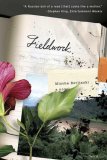
Fieldwork by Mischa Berlinski: Questions, plus a reading group guide, with links to reviews, excerpt, author interview and author biography at BookBrowse.com.
Fieldwork A Novel
by
Mischa Berlinski
Hardcover: Feb 2007,
336 pages.
Paperback: Jan 2008,
336 pages.
Caution! It is likely that the following questions will reveal, or at least allude to, key plot details. Therefore, if you haven’t yet read this book, but are planning on doing so, you may wish to proceed with caution to avoid spoiling your later enjoyment.
About this Guide
The following author biography and list of questions about Fieldwork are
intended as resources to aid individual readers and book groups who would like
to learn more about the author and this book. We hope that this guide will
provide you a starting place for discussion, and suggest a variety of
perspectives from which you might approach Fieldwork.
About the Book
When his girlfriend takes a job in Thailand, Mischa Berlinski goes along for the
ride, planning to enjoy himself and work as little as possible. But one evening
a fellow expatriate tips him off to a story: a charismatic American
anthropologist, Martiya van der Leun, has been found dead--a suicide--in the
Thai prison where she was serving a life sentence for murder. Curious at first,
Mischa is soon immersed in the details of her story. This brilliant, haunting
novel expands into a mystery set among the Thai hill tribes, whose way of life
became a battleground for the missionaries and the scientists living among them.
Discussion Questions
How does it affect your reading of the novel that the narrator's name is
the same as the author's? Do you imagine them to be the same person?
"A child needs the happy family," Elena tells Mischa (pg. 23) in an
attempt to describe why Martiya's life turned out as it did. It is the
base." Do you see a connection between Martiya's parents' marriage, the
atmosphere in which she was raised, and her desire to immerse herself in the
life of the Dyalo, or any of her other decisions as an adult?
How does it change the story to hear so much of Martiya's story from
other characters? Do those who tell Mischa about MartiyaTim Blair, for
example, or Josh O' Connorseem reliable to you?
Why do you think the author chose to include them in the story, rather than
just telling Martiya's story entirely from Mischa's perspective?
What was your opinion of the Walkers and their work among the Dyalo? Do
you think they were helping the Dyalo, or interfering with their native
culture? Did the book change your opinion of Christian missionary work, or
your opinion of anthropology?
What do you think happens in David's mind at the moment he decides to
return to his religious practice (pg. 170)? Do you think there is a
connection between David's devotion to the Grateful Dead and his passion for
Christianity and the mission?
What's your impression of Mischa, the narrator? Why do you think he
becomes so obsessed with Martiya's story? How does his pursuit of the story
change Mischa's own life and way of thinking over the course of the book?
Do you see any similarities between Mischa's relationship with Rachel,
their life together in Thailand, and Martiya's relationship to the Dyalo and
their village?
Why do you think the author includes the interlude about the
anthropologist Malinowski?
What does that story suggest to you about the difficulties and rewards of
anthropology?
Do you see Martiya's conversion to a belief in Rice, her investment in
the mystical elements of Dyalo life, as a conversion, a rational decision,
or a departure from sanity? Do you think she went crazy, or just went
native?
How do you interpret the book's epigraph? How do you think a belief in
spirits like those the Dyalo fear differs from a belief in an all-powerful
god?
Does the book suggest that there are any similarities between
anthropology and missionary work?
Do you think one or the other is more intrusive, or more beneficial? Which
would you rather do, if you had to choose?
To what extent do you think David and Martiya were products of their
upbringing? If each had been born into the other's family, do you think they
would've followed more or less the same paths?
For more information on Picador Reading Group Guides:
Call: 646-307-5259
Fax: 212-253-9627
E-mail: readinggroupguides@picadorusa.com
For a complete listing of reading group guides visit: www.picadorusa.com
Unless otherwise stated, this discussion guide is reprinted with the permission of Picador.
Any page references refer to a USA edition of the book, usually the trade paperback version, and may vary in other editions.
Named for a flower whose blood-red sap possesses the power both to heal and poison, Bloodroot is a stunning fiction debut about the legaciesof magic and madness, faith and secrets, passion and lossthat haunt one family across the generations, from the Great Depression to today.
Samara Taylor used to believe in miracles. But her mother is in rehab, and her father seems more interested in his congregation than his family. And when a young girl in her small town is kidnapped, her already-worn thread of faith begins to unravel.
When she's not digging up bones or other ancient objects, quirky, tart-tongued archaeologist Ruth Galloway lives happily alone in Norfolk. But when a child's bones are found on a desolate beach nearby, and Detective Chief Inspector Harry Nelson calls Galloway for help, Ruth finds herself in...
Few works of literature are as universally beloved as Alices Adventures in Wonderland. Now, in this spellbinding historical novel, we meet the young girl whose bright spirit sent her on an unforgettable trip down the rabbit hole and the grown woman whose story is no less...
The Coral Thief, as riveting and beautifully rendered as Ghostwalk, Rebecca Stotts first novel, is a provocative and tantalizing mix of history, philosophy, and suspense. It conjures up vividly both the feats of Napoleon and the accomplishments of those working without fame or...
I rarely read anything before this. Years ago I picked this one up and couldn't put it down. It changed me into a book nut. It was a wonderful ...
read more
I can't believe I waited so long to read this book. Shame on me. This book was wonderful, lyrical, entertaining - all the makings of a wonderful ...
read more
The book held so much for the reader but in the end I felt robbed. The evolution of Trudy was disturbing and somewhat insulting. She came across as ...
read more
Justice Department still has issues with Google Settlement(Feb 05 2010) The Department of Justice dealt a serious blow Thursday evening to the chances that the Google Book Search settlement will gain court approval later this...
Full Story
Hachette formally adopts 'agency model'(Feb 05 2010) Hachette Book Group USA became the second major U.S. publisher to officially announce its intention to move to an agency model for the sale of e-books....
Full Story