Page 1 of 1
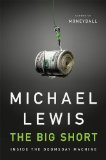
There are currently 3 reader reviews for The Big Short
Write your own review!
chetyarbrough.com
Greed
Michael Lewis details the collapse of the real estate industry. He identifies the seers that recognized “Quants” were packaging worthless pieces of paper into re-saleable financial instruments called derivatives. Victims care little about who the seer heroes were but they were ringing warning bells long before the real estate collapse occurred. Some seers by chance and some with foresight created “The Big Short” because they anticipated the coming real estate collapse. The seers became rich as the victims became poor. Regulation is not a perfect solution for control of bad actors in a free society. However, no regulation is worse.
Fritz
Were 'Smoke and Mirrors' necessary?
My biggest problem with the book was that the author failed to explain why even a sound mortgage would make an attractive investment instrument for buyers.
If you yourself were to buy such a mortgage, your investment would be tied up, up to thirty years, yield a low interest rate, as low or lower than 4.375, entail a lot of work in collecting the monthly payments and you would be paid back with increasingly cheaper dollars, because their value is bound to be eroded by inflation.
So where was the incentive? To answer this you have to understand how mortgages are generated. A bank, which is willing to lend the money, must first have itself access to “cheap” money, such as savings deposits, on which banks pay little or no interest. Another source is the government. Here banks can borrow money, presently at very little or almost no interest. Taking “cheap” money like this and lending it to homebuyers, generates a nice premium for the bank. On top of that, the bank collects additional income from processing such loans. Every imaginable expense is added at the closing, points for the ‘loan generator’, paperwork performed, lawyers fees, title insurance etc., etc.
The bank then quickly sells the mortgage, most likely because it is not worth the trouble to hold on to these instruments. The banks prefer to pay off their own obligations resulting from creating the mortgages and just to keep the profits they generated from writing the mortgages.
Next, whoever buys the mortgage will have to fork over cash for a piece of paper which will have not just risks but the work of collecting the monthly payments.
To sell these papers, the intermediaries between seller and buyer discovered that by ‘bundling’ the mortgages into instruments with high security ratings, they could do it.
Lewis explained in his book how this was done. True or not, the short sellers must have thought so too, because they put their money where their mouth was and they were able to collect big in the end.
But I still did not understand how or why it was done.
Or, maybe now I do after all.
First a correction is necessary. Just as the author contended that the fair city of Düsseldorf in Germany is a Dusseldorf (Dunceville), he would have us believe that banks generated flawed mortgages in response to a high demand for such instruments. This was not the case. Our own government had done it. To make houses available to unqualified buyers was a political scheme to buy votes with for the Democrats!
And where did the real demand for such mortgages come from? From money launderers who don’t mind taking a small loss? Not necessarily so either.
US Treasuries are bought by countries and people from all over the world. These bonds pay very little interest but are desirable for imagined safety reasons and therefore most likely for capital preservation. The yield on US Treasuries one month ago was .50 Two-Year Treasury Constant Maturity 0.37 0.50 0.95
All Wall street had to do was ‘bundle’ mortgages into bond-like instruments, get Moody to give them a AAA rating and voila, people who are buying US Treasuries would eagerly snap up seeming equally safe bonds, yielding a much higher rate of return!
What made some of these bonds worthless? (our heroes in the book had figured this out too: they began dumping their own short sales when the bubble burst.) As soon as it became obvious that this whole ‘derivative’ Ponzi scheme was in trouble, people stopped buying and began selling their mortgage ‘bonds’. With fewer buyers around, the price fell. Only after no buyers were left, did these ‘bonds’ become ‘worthless’ and this was the case in the ‘market’ only. The intrinsic value was still there!
Banks, which later bought these ‘bonds’ at prices adjusted to the new realities in the housing market, are able to sell the houses once more at a profit.
(The bank which had acquired the title to our son’s and his wife’s house, had to lower their initial asking price until buyers began to respond with offers. The bank finally sold the house for $305,000. It had sold new for $450,000 five years ago. The market is working again.)
Half of Lewis’s Book “The Big Short” tries to explain the “Smoke and Mirrors” which supposedly were used to make the whole ruse possible. I question their necessity. The whole house of cards would have collapsed as soon as no more buyers were available.
The curious thing though was that the big Wall street companies them selves wound up holding huge quantities of these derivative ‘bonds’. Uncle Sap had to bail some of them out to keep the entire financial infrastructure in the country from collapsing. Uncle Sam had to do it with more borrowed and printed money.
Now that will make an interesting subject for a book.
Fritz
Dunceville...
Just as in Liars Poker, Michael Lewis once again did a great job of explaining what happened during the recent financial meltdown. I am grateful for his insights and will try to remember them when making future investment decisions.
Being of German extraction I also could not help but notice his extensive use of "Deutsche Bank" and the word "Düsseldorf". The meaning of the word and the context it was used in seems to have escaped Mr. Lewis. What German traders most likely referred to was "Dusseldorf", with no "u-Umlaut" in the word. Dusseldorf can be translated as Dunceville, and that's what was being referred to. :-)))