
-
Your next favorite book
is waiting.
 Book Reviewed by:
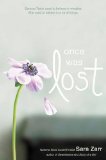
Once Was Lost is a difficult book for me to review right now because it hits a little too close to home. At its heart, it's a book about a girl living through family life so painful that it causes her to question her long-held faith in God. It feels true. I'd wager even the most existential, post-modern progressive when faced with real grief secretly asks, "How could you? Why would you?" as Samara asks God when Jody Shaw goes missing. There's something about deep, unfair, unreasonable pain that causes those of faith to doubt and those without faith to reach out to something more. "I don't know when God stopped being someone I saw as a true friend, and turned into something I'm mostly confused about," thinks Sam as she sits in the youth group of the church where her father is pastor.
As Christmas passed and I said goodbye to the troubled little boy I've helped raise and grown to love over the past year, I found myself asking many of the same questions as Samara: "Why does everything have to be broken right now?" "How would they react if I really did share [the painful things going on in my life]?" "Why should I even have to ask [for help]? You don't need to be all-powerful and all-knowing to figure out that this is a tragedy in need of divine intervention." "What would I want someone to say to me if a person I loved disappeared?" And, "I wonder if I expect too much?" Samara's questions are relevant to anyone in the thick of life at its ugliest.
This book is heartfelt, moving, and thought-provoking. Not that it's perfect:
the story line of the teen girl-gone-missing and the continued mystery of who-done-it
feels lifted from Norma Fox Mazer's The Missing Girl and placed on top of an already
full and complex emotional story-line. Also, after so much turmoil, I could have
used a bit more of an ending than the slight puff of fresh air and hope that Zarr
gives us. But the teen voice feels authentic, the family dynamics feel real, and
though it's definitely not a light book, it never feels so heavy that it drags,
and the main character almost never feels too over-involved in her own pain.
Once Was Lost is a good book for thinking and reflecting, for feeling and remembering. I recommend it to anyone who has lived through tough times and has found herself asking: Is there a God? And if so, where is he?
 This review was originally published in January 2010, and has been updated for the
January 2011 paperback release.
Click here to go to this issue.
This review was originally published in January 2010, and has been updated for the
January 2011 paperback release.
Click here to go to this issue.
Because the US Census doesn't collect information about religious affiliation, the American Religious Identification Survey (ARIS) began its own survey in 1990 with 113,000 interviews, and followed up with 54,000 in 2008.
According to the ARIS Survey, Nones make up 15% of the US adult population, up from 8% in 1990. So who are they? Nones are simply the growing number of folks who answer "none" when asked for their religious identity or affiliation. Which doesn't mean they're necessarily non-believers - only about 7% of Nones are atheists, a third identify as agnostic and over half believe in a higher power.
In the general US population, while the number of atheists and agnostics has more than tripled in the last two decades they still represent just 12% of the total population (2% atheist,10% agnostic). The vast majority of the US population believe in a higher power, with 70% identifying as deists and 12% theists.
Definitions
More Information
This review was originally published in January 2010, and has been updated for the
January 2011 paperback release.
Click here to go to this issue.
Your guide toexceptional books
BookBrowse seeks out and recommends the best in contemporary fiction and nonfiction—books that not only engage and entertain but also deepen our understanding of ourselves and the world around us.
