
-
Your next favorite book
is waiting.
 Book Reviewed by:
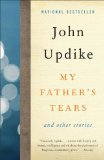
I had never read Updike before. He isn't force-fed to us in public school like Salinger or Fitzgerald. It was chic to snub the canon and all its modern masters in the multi-cultural daze of college. I've always thumbed past his lauded columns in the The New Yorker, and until this year, I remained skeptical of Updike for no other reason than he was still alive. How could a man regarded as one of the greatest American writers still pump out stories like artillery shells? After his death, the coast felt clear to make an honest assessment of Updike's last collection of short stories. After reading the first story in this collection, I remembered something Martin Amis wrote about Updike: "having read him once, you admit to yourself, almost with a sigh that you will have to read everything he writes."
Amis is absolutely right.
The title of this collection evokes the theme of the book: trials of masculinity. Each story is a referendum on the manhood of middle class men, men whose bodies and passions have been shaved down by age. Most of the stories are told as memories, so the groping messiness of self-discovery is absent. Updike chronicles the lives of widowers, divorcees, adulterers, fathers with lyrical accuracy and savory insight.
Stories and passages about the vulnerability and compression of travel make for some of the best reading in My Father’s Tears. Updike's narrators describe the male anxiety of having to be navigator, protector, interpreter, and provider of leisure for his brood. In the refracted light of old age, Updike's men can see the fault lines of their relationships mostly clearly when they’re abroad. In "Morocco," one of the book's best, a father waits with his family for a bus to take them away from their botched vacation. Updike writes,
We stood beside an empty road at noon, six stray Americans, chunky and vulnerable in our woolly English clothes with our suitcases full of continental sun togs bought at Lillywhite's and of Penguins for vacation reading. The sun beat upon us, and the wind. The road dissolved at either end in a pink shimmer. "I can't believe this," my wife said. "I could cry."
Updike’s men tend to feel suffocated by the needs of their travel companions in the moment, but with reflection they all long for the dependency that welded their families to them.
The travel stories are only matched by the stories of adultery. They are tales of emotions after an affair; specifically, what do older men owe their mistresses? Or themselves? Once the responsibilities of family life have been lifted, what is a man supposed to do with his sense of obligation? Devote it to the woman he loved, though disregarded for the sake of his family? Two fantastic stories revolve around this question. In "Free," my favorite story, a man whose wife has succumbed to cancer decides to visit a woman he left twenty years prior. He surveys her changes and his own with tremendous poignancy. In "Delicate Wives," Les, a well-bred stiff, is driven into a jealous fit when his former mistress's "repellent" husband drives her to the hospital for a bee-sting. When Les convinces her to meet for lunch ten years later, he’s confronted with a sexless situation that’s thick with hesitation and nostalgia:
The waitress came back, and they hastily ordered, and passed the rest of the lunch uncomfortably, running out of the small talk, the innocent sharing that for so long he had felt deprived of. The small talk had come, however, in bed in the languid aftermath of erotic fulfillment. Veronica was less apt now, Les sensed, to be languid; she carried her wide-hipped, rangy body warily, as if it might detonate. There was something incandescent about her like a filament forced full of current.
Les, like many of Updike's men, ache for the fleeting tenderness of women who desired them. But, like their old mistresses, the men seem unable to muster their youthful gusto.
 This review was originally published in July 2009, and has been updated for the
May 2010 paperback release.
Click here to go to this issue.
This review was originally published in July 2009, and has been updated for the
May 2010 paperback release.
Click here to go to this issue.
"I'd like to offer assurances that your reviewer is not one of these spleen-venting, spittle-spattering Updike-haters one encounters among literary readers under 40. The fact is that I am probably classifiable as one of very few actual sub-40 Updike fans."
This quote comes from an essay by David Foster Wallace, the upstart author of the late 90's, published in The New York Observer in 1997. Though Wallace's essay on Updike is not "spleen-venting" it is absolutely scalding and is the sacred document of the Anti-Updike faction on college campuses. It's considered the rallying cry that spurred the literary backlash against The Great White Male. According to Wallace, Updike was the chronicler and the voice of "the most self-absorbed generation since Louis XIV."
This review was originally published in July 2009, and has been updated for the
May 2010 paperback release.
Click here to go to this issue.
Your guide toexceptional books
BookBrowse seeks out and recommends the best in contemporary fiction and nonfiction—books that not only engage and entertain but also deepen our understanding of ourselves and the world around us.
