
-
Your next favorite book
is waiting.

A Novel
by Elizabeth Lowry Book Reviewed by:
Elizabeth Lowry’s Thomas Joseph Lynch can hold his own among the best fictional characters. Do we like him? Do we hate him? Is he a trustworthy narrator, a lying blackguard or simply addled? Can we admire his perseverance and determination, or is he so compulsively obsessed that we want to write him off as a crackpot?
That’s just the thing. At the beginning of any novel we all want to like our protagonist. He is, after all, the prism through which we will see the world for the next three hundred-plus pages. And without a doubt, we like Lynch from the get-go. He's smart, well-educated and has a sense of humor. But then he betrays such a cavalier attitude toward the young student with whom he had planned to share a bottle and a quickie that we begin to doubt his integrity. Furthermore, when his flagrant dalliances cost him his job as an art history professor at a New England college, he gives every indication that that damn bottle meant more to him than both the student and the job combined.
That's it then. Lynch likes the sauce. So he’s not perfect and he may not be the most trustworthy narrator. Except. Except there is this missing Bellini painting, a fabled Madonna that is perhaps the artist's final opus, that has suddenly become Lynch's raison de vivre. Having long proclaimed its existence, Lynch decides that since the door of his teaching career has slammed behind him now is the perfect opportunity to hunt the painting – plus certain fame and possible fortune – full-time. Ah, we think, here is something the man may put ahead of his lascivious yearnings for nubile partners and grappa. There is hope for him. At last he may set aside his love of wine and treat this pursuit with the respect a missing Renaissance objet d'art deserves. Maybe.
Maybe not. Because no sooner does he insinuate himself at Mawle, the decaying English country house where he suspects the painting resides, than he begins to fantasize about the mistress of the manor, Anna. Ostensibly he is there to inventory the family's valuable collection of antiques and works of art. Meanwhile he is secretly ransacking every nook and cranny, turning up every loose board, searching for the Bellini. That may be forgivable, but Lynch's reminiscences of his days at Mawle contain apologies to Anna for some unnamed harm he has done her, and we can't help but cynically assume it is sexual in nature. What's more, she serves him all the grappa he can swill.
Anna, it seems, may have motives of her own and plays her cards close to her vest too. But we can't be certain because Lynch's conversations with her and her deplorable mother who flits in and out of the action aren't forthright. Lynch holds back, not wanting to tip his hand and Anna – remember we only know what Anna says through Lynch's alcohol-induced haze – is equally guarded.
Compounding the deepening quagmire of deceit is Lynch's obtuseness. Not only does he miss clues to the Bellini's hiding place, he doesn't see Anna for anything that she truly is. The guy seems a total loser. And yet he's not. Besides, the story isn't about him so much as it is about obsession and the complicated relationships of people – generations of people – who either won't or can't be straightforward with each other.
In the end we do like Lynch but abhor certain aspects of his character. He may not be trustworthy but he is a hell of a storyteller and Lowry's elegant-on-steroids prose (Oxford English Dictionary editor, indeed) does as much to elevate Lynch to best-fictional-character status as do his actions. Crackpot or not (you decide) we would have Thomas Joseph Lynch over for dinner, but likely count the silver afterward.
 This review was originally published in June 2009, and has been updated for the
May 2010 paperback release.
Click here to go to this issue.
This review was originally published in June 2009, and has been updated for the
May 2010 paperback release.
Click here to go to this issue.
According to British journalist and art critic Jonathan Jones, "The most amazing thing is not how many masterpieces go missing or get destroyed but that something so fragile as art survives for any length of time at all."
Yet the lead character of The Bellini Madonna, Thomas Joseph Lynch, is counting on the fact that the mysterious work of art he so fanatically desires still exists several hundred years after it was painted. A rather high hope, especially when the United States Federal Bureau of Investigation says art theft constitutes as much as an $8 billion per annum industry and the Bureau has even assembled a thirteen-member crack team to staff their highly specialized Art Theft Program. What's more, there are reported to be over 160,000 art pieces listed on the international Art Loss Register.
Stolen items do not have to be small and easily portable like the tiny, postcard-sized portrait of Lucien Freud by Francis Bacon that went missing from the Neue Nationalgalerie in Berlin in 1988. Occasionally a work of art such as Henry Moore's 2-meter-high, two-ton bronze "Reclining Figure" disappears as if by the hand of magician David Copperfield.  Authorities feared that the $5.2 million sculpture was eventually melted down and sold for a meager $2,500 as a lump of raw bronze. More often artwork is selected to be stolen because it will garner the most cold, hard cash.
When Leonardo Da Vinci's Mona Lisa was stolen from the Louvre in 1911, it was supposedly for love of country. Although Pablo Picasso had once been a "person of interest" in the theft, the man eventually arrested for the crime was an Italian laborer who worked at the Louvre and wished to return La Giaconda to its country of origin.
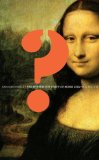 However, according to R.A. Scotti, author of the recently published Vanished Smile: The Mysterious Theft of Mona Lisa, the mystery of the beauty's almost two-year exile is far from being solved. Almost a hundred years later a rumor still buzzes about a well-organized team absconded with the beloved Renaissance portrait in order to create forgeries. Of course, this story is unsubstantiated and likely to stay so since all parties are deceased.
Finally, many works of art simply disappear without the aid of foul play: lost in someone's attic, crammed behind a wall in a room addition, or owned by a person who has no idea of the object's intrinsic value. In 2006 two paintings, part of an altarpiece painted by Renaissance artist Fra Angelico, were found behind a door in an apartment in Oxford, England. And everyone has heard of the occasional tag sale painting that turns out to be worth millions. One can always hope!
This review was originally published in June 2009, and has been updated for the
May 2010 paperback release.
Click here to go to this issue.
Your guide toexceptional books
BookBrowse seeks out and recommends the best in contemporary fiction and nonfiction—books that not only engage and entertain but also deepen our understanding of ourselves and the world around us.
