
-
Your next favorite book
is waiting.
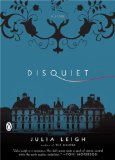
 Book Reviewed by:
Julia Leigh's second
work is a beautiful, gothic tale and
an intimate examination of
psychological pain. The novella
opens with Olivia's return to her
childhood home after a twelve-year
absence. Her two children trail
behind her. A sense of foreboding
and displacement takes root in the
first scene when Olivia tries to
open the gate to her mother's
chateau via the electronic keypad.
The gate will not open. Undeterred,
she and the children veer off the
path to the lawn, and Olivia tries
to enter the chateau's grounds
through, presumably, her "secret"
childhood entrance. This is closed
to her, too, until her son, Andy,
bloodies his shoulder in his effort
to force the door. As they walk
across the lawns to the main house,
the gardeners cut large hedges into
playful shapes – barbells, ice cream
cones – but the whimsical characters
of the plants seem odd in this cold,
closed world. Soon, Olivia's brother
Marcus returns home with his
disconsolate, depressed wife Sophie
and their stillborn child Alice.
Olivia and Marcus's mother
resignedly watches over all them. It
becomes clear that these characters
are plagued with deep sadness,
regret, and disquietude. Even the
children – Andy and Lucy – wrestle
with their own pain, as Lucy strives
to understand the disorientation of
her new life in this chilly house,
and Andy plots to return home to his
father.
At the center of this dismal group
is Olivia, a woman who has fled from
an abusive husband only to find
herself unmoored from the bearings
of her life. She pronounces to her
brother that she "is murdered" and
even offers her children to him,
desiring perhaps to unfetter her
life so she can leave it. Her body
is covered with yellow bruises and
her broken arm is in a sling. It
becomes obvious that the future of
her life will depend on her own
choices and ability to cope, none of
the adults – her brother, mother,
Sophie, or the housekeeper Ida –
will consciously help her.
This is not a warm family; secrets,
resentments, and deep fissures exist
here with the morning tea. There
will be no late night therapeutic
discussions, no sage advice about
how to handle the vicissitudes of
life. There are moments when various
characters attempt to reach out to
others, but the dysfunction is too
deep, the ceremony too ingrained for
there to be real connection.
Ultimately, Olivia's children,
particularly Andy, provide the
catalyst for her recovery.
Contrasted to Sophie, slowly dying
inside as she nurses her dead child,
Olivia is brought back to life by
the flesh-and-blood Andy, the child
that refuses to give up on her,
though she would give up on him.
This transformation is powerful, and
though some critics have argued that
Disquiet is light on plot,
Olivia's evolution is absorbing and
complex. Leigh is an artist working
at the top of her game, and the
success of this novella lies in her
ability to shave as much fat from
her narrative as possible, while
maintaining deep, profound
significance. Similar to a Rembrandt
sketch, this novella breathes
full-bodied life through only a few
deft, precise strokes. Like a poem,
each word carries a heavy load.
Leigh is a remarkable, stunning
writer and Disquiet is a
must-read.
 This review is from the November 12, 2008 issue of BookBrowse Recommends.
Click here to go to this issue.
This review is from the November 12, 2008 issue of BookBrowse Recommends.
Click here to go to this issue.
Disquiet
is Julia Leigh's
second work of
fiction, and it
took her nine
years to write.
When asked why
it took her so
long,
Leigh replies:
"There is a nice
quote I like
from poet
Elizabeth
Bishop,
something like
scientists and
artists are
alike in that
they are
prepared to
waste effort ...
When I am
exploring
things, when I
set out, I can't
be guaranteed of
a result."
Disquiet
follows her
first novel,
The Hunter,
which won
international
critical acclaim
and secured her
a spot on the
London
Observer's list,
21 writers to
watch in the 21st
century. The
strength of
The Hunter
also won her a
Rolex Mentor and
Protégée Arts
Initiative
scholarship that
included a year
of mentoring
with Nobel
Laureate Toni
Morrison, who
was an advocate
for Leigh's
novella. When
Leigh wanted to
turn to another
project,
Morrison
encouraged her
to stick with
Disquiet.
Leigh is
currently a Ph.D
candidate at the
University of
Adelaide and is
a law and
philosophy
graduate of the
University of
Sydney. She
currently splits
her time between
Australia and
New York, where
she teaches
creative writing
at Barnard
College.
Leigh's work can
be seen as a
mixture of
Hemingway and
Woolf:
Hemingway's
clean, plain
style writing
mixed with
Woolf's emphasis
on the
interiority of
her characters
over a plot
propelled by
action. Many
critics have
already
commented on the
resonance of
Woolf's To
the Lighthouse
in Leigh's
Disquiet.
Virginia
Woolf's impact
on the
development of
English
literature
cannot be
underestimated,
and, as
indicated by
Leigh's richly
emotionally but
pared down
prose, her work
is still
affecting
writers today.
To the
Lighthouse
was a new kind
of novel, one
that
de-emphasized
plot in order to
highlight and
investigate the
psychology of
the characters.
Woolf's novel is
considered one
of the greatest
examples of
modernist
literature and
one of the main
works to herald
a seismic shift
in the scope and
role of the
novel. As a
result of
Woolf's work,
along with that
of Joyce and
Proust, during
the 1910-1920s,
the novel was
now able to
explain the
small moments of
life, the bits
that happened in
between the
major, dramatic
parts. It was
not necessary to
write about
compelling
events; life, in
all of its
mundanity, was
compelling event
enough. This
breakthrough
made way for
Leigh's tiny
novella that
intimately
explores one
woman's journey
from the brink
of death back to
life.
This review is from the November 12, 2008 issue of BookBrowse Recommends.
Click here to go to this issue.
Your guide toexceptional books
BookBrowse seeks out and recommends the best in contemporary fiction and nonfiction—books that not only engage and entertain but also deepen our understanding of ourselves and the world around us.
