
-
Your next favorite book
is waiting.
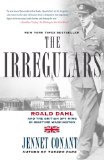
Roald Dahl and the British Spy Ring in Wartime Washington
by Jennet Conant Book Reviewed by:
 History pops right off the page in Jennet Conant's book about, of all things,
British spies operating in the United States consigned to produce, of all
things, propaganda that would shake Americans out of their isolationist lethargy
and come to the aid of Great Britain in their battle with Germany. What pops
most is the fact that one generally thinks of spies in terms of the famed James
Bond who infiltrated enemy camps to bring back or sabotage secret war
strategies. However, the US and Britain were not enemies. Nor were they allies –
yet. That is why Roald Dahl's group, overseen by the famous Anglo uber spymaster
Bill Stephenson, aka Intrepid, was charged with penetrating American circles of
power in order to bust the nation's neutrality on the issue of Hitler's threat.
History pops right off the page in Jennet Conant's book about, of all things,
British spies operating in the United States consigned to produce, of all
things, propaganda that would shake Americans out of their isolationist lethargy
and come to the aid of Great Britain in their battle with Germany. What pops
most is the fact that one generally thinks of spies in terms of the famed James
Bond who infiltrated enemy camps to bring back or sabotage secret war
strategies. However, the US and Britain were not enemies. Nor were they allies –
yet. That is why Roald Dahl's group, overseen by the famous Anglo uber spymaster
Bill Stephenson, aka Intrepid, was charged with penetrating American circles of
power in order to bust the nation's neutrality on the issue of Hitler's threat.
 It is a matter of historical record that America had to be practically
dragged, kicking and screaming, into war with Japan. It is also a matter of
historical record that the number of Americans siding with the likes of Charles
Lindbergh who believed the US ought not to get involved in any kind of conflict
on the European front outnumbered those who favored intervention -- at least in
the beginning. Lindbergh had numerous reasons for his beliefs but the British
judged that Hitler's threat to all democracies everywhere trumped any fears the
isolationists had. The British also knew they were running out of resources to
face off against Nazi military forces. Thus they embarked upon a plan to shake
up the sensibilities of Americans in high and powerful places, manipulating them
to get them involved.
It is a matter of historical record that America had to be practically
dragged, kicking and screaming, into war with Japan. It is also a matter of
historical record that the number of Americans siding with the likes of Charles
Lindbergh who believed the US ought not to get involved in any kind of conflict
on the European front outnumbered those who favored intervention -- at least in
the beginning. Lindbergh had numerous reasons for his beliefs but the British
judged that Hitler's threat to all democracies everywhere trumped any fears the
isolationists had. The British also knew they were running out of resources to
face off against Nazi military forces. Thus they embarked upon a plan to shake
up the sensibilities of Americans in high and powerful places, manipulating them
to get them involved.
 Their tactic was shear genius. Enlist the efforts of chaps such as the dashing
RAF fighter plane pilot Roald Dahl to wine and dine their way into Washington
DC's inner circle, plant specific (sympathetic to Britain) information into
hands that would, in turn, work it into newspapers and magazines, then deliver
American intelligence back to the British leadership. As Conant says, Dahl was
"a natural choice for their kind of work. He had a writer's ear for the telling
phrase and a talent for asking questions without appearing overly inquisitive.
As a pilot and author, he also had legitimate cover, which was always the best
kind…and was perfectly positioned to extend the BSC's [British Security
Coordination] network of well-placed Washington sources."
Their tactic was shear genius. Enlist the efforts of chaps such as the dashing
RAF fighter plane pilot Roald Dahl to wine and dine their way into Washington
DC's inner circle, plant specific (sympathetic to Britain) information into
hands that would, in turn, work it into newspapers and magazines, then deliver
American intelligence back to the British leadership. As Conant says, Dahl was
"a natural choice for their kind of work. He had a writer's ear for the telling
phrase and a talent for asking questions without appearing overly inquisitive.
As a pilot and author, he also had legitimate cover, which was always the best
kind…and was perfectly positioned to extend the BSC's [British Security
Coordination] network of well-placed Washington sources."
 Dahl had his marching orders – to do whatever was necessary to bring the muscle
of the mighty US military force into the European conflict. And he did, with
gusto. Rubbing shoulders with Eleanor, vacationing with Franklin, schmoozing
Winchell, Pearson and Walter Lippman, and sleeping with whoever could advance
his mission (plus a few just for fun) became his primary occupation for the
duration. He was accompanied by Ian Fleming (creator of aforementioned James
Bond), Noel Coward, David Ogilvy (of advertising fame) and several others, who
preferred to be called the Baker Street Irregulars – a nod to Sherlock Holmes'
ragtag gang of amateur sleuths – rather than BSC agents. As Stephenson used to
say, "our side has agents; the enemy has spies."
Dahl had his marching orders – to do whatever was necessary to bring the muscle
of the mighty US military force into the European conflict. And he did, with
gusto. Rubbing shoulders with Eleanor, vacationing with Franklin, schmoozing
Winchell, Pearson and Walter Lippman, and sleeping with whoever could advance
his mission (plus a few just for fun) became his primary occupation for the
duration. He was accompanied by Ian Fleming (creator of aforementioned James
Bond), Noel Coward, David Ogilvy (of advertising fame) and several others, who
preferred to be called the Baker Street Irregulars – a nod to Sherlock Holmes'
ragtag gang of amateur sleuths – rather than BSC agents. As Stephenson used to
say, "our side has agents; the enemy has spies."
Conant's spirited account brings all these characters and their wartime intrigue
to scintillating life as she drops names and exposes more extramarital affairs
among the nation's powerbrokers than today's religious right wingers could shake
a "shame-on-you stick" at.
 This review was originally published in September 2008, and has been updated for the
September 2009 paperback release.
Click here to go to this issue.
This review was originally published in September 2008, and has been updated for the
September 2009 paperback release.
Click here to go to this issue.
Very often a parent gives life to a rebellious child and the two of them
engage in a lifelong love-hate relationship - until, for health or other
reasons, that parent needs help. At that point the prodigal child often returns
to step in at the parent's hour of need; though not always without a little
coaxing. Such was the case with Britain and the United States at the outset of
World War II.
America had a large population of Anglophobes and isolationists due a rocky
history between the two nations that began with the Boston Tea Party. However,
when Europe, including Britain, was faced with almost certain annihilation at the hands of Hitler's troops, British Prime Minister Winston Churchill turned to the biggest kid on the block for support. And although American President Franklin Delano Roosevelt wasn't a confirmed isolationist, he was not altogether keen on involving his country in another all out world war either (World War I having ended barely 20 years before). So Churchill pulled out all the stops, adding his own personal touch to the behind-the-scenes work of Stephenson's gang at the British Security Coordination.
Even though he had been singularly unimpressed with Roosevelt when the pair met
some 20 years earlier, Churchill was more than willing to put all differences
aside when it became clear to him that Britain's – indeed all of Europe's – future was at stake. Britain desperately needed American military intervention. So he buried his pride. From almost pleading with Roosevelt to enter the war in the beginning to allowing the US President to tease him in public,
Churchill showed that personal sacrifice is not too much to ask of a statesman if
it will benefit his country.
To their credit the pair never allowed pettiness to supersede their shared
political goals, sometimes drawing on common personal ground – both had children in military service, both enjoyed good food and the cocktail hour – to strengthen an at-times fragile but internationally vital friendship.
Related Link: From materials such as personal correspondence and
interviews with surviving former staff and family members, John Meacham's
Franklin and Winston: An Intimate Portrait of an Epic Friendship paints a personal picture of the complicated relationship between these two powerful statesmen during the watershed years of The Great War.
This review was originally published in September 2008, and has been updated for the
September 2009 paperback release.
Click here to go to this issue.
Your guide toexceptional books
BookBrowse seeks out and recommends the best in contemporary fiction and nonfiction—books that not only engage and entertain but also deepen our understanding of ourselves and the world around us.
