
-
Your next favorite book
is waiting.
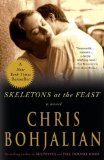
 Book Reviewed by:
Just when we thought we have read all there is to read about the
horrors of WWII, along comes this book which shows us yet another
perspective—that of civilian Germans—women, children and old people fleeing
their own country in an attempt to escape west ahead of the advancing Russian
army.
An editor of historical fiction once told me that history is simply human
stories and each story is made up of several stories. In Skeletons,
Mr.Bohjalian has captured stories that might not have ever been told but surely
deserve to be heard by all who value human tenacity and cherish freedom.
Another reason I believe he "got it right" is when you find yourself thinking
about a book and its characters for days, even weeks, after you have completed
it, you know it has made an impact on you. Skeletons at the Feast was
that kind of book for me. Although it is a work of fiction, one can't easily
forget that many of the horrific events were based on what happened to real
people - a sad reminder that truth is indeed stranger than fiction. One has a
sense that the disturbing details had to have come from actual diaries because
they seem too horrible for even the most creative writer to imagine.
One reason it continues to haunt me weeks after finishing the book might be the
message implied in the title. Apparently, it was an ancient custom in many
cultures to have a skeleton at the feast to remind guests of their own
mortality. Bohjalian chose the title for similar reasons, as "a reminder
that life is indeed short and nothing is forever."
As we see the lives of these innocent people shattered, we are reminded never to
take a day for granted and that the irritations most of us face in our daily
life today are nothing compared to what these people endured.
A book like this also raises questions in any person of conscience. How would I
survive and behave in this situation? What is the dearest possession I would
take with me on the run? At what point would I give up? How much compassion
would I have to share my meager food supply with others? This book caused me to
examine my life—both its abundance and its waste.
Aside from the gripping story, fans of Chris Bohjalian (I am a self-professed
groupie) will find this book quite a departure from his previous novels. First
of all, it is not set in his beloved New England, but half-way around the world.
However, there are familiar strains that other fans will recognize from
his earlier works, such as the role of the weather. I've always felt the
weather was a major character in many of his books (the storm in Midwives,
the flood in Buffalo Soldier). In Skeletons, the weather is once
again a major force, providing yet another challenge that the characters must
endure and overcome to survive.
By telling the story from many viewpoints, using characters in varying life
circumstances, (a POW, a Jew who escapes from the train to Auschwitz, a wealthy
landowner, a young Jewish women in a death march) the story is not only richer,
but symbolically it is a further reminder of the broad impact of this war on so
many races, nationalities and countries.
As disturbing as it was to read at times, it left one feeling hopeful for the
resiliency of the human race and how hope and goodness can not only endure but
flourish after tremendous loss and suffering.
 This review was originally published in May 2008, and has been updated for the
February 2009 paperback release.
Click here to go to this issue.
This review was originally published in May 2008, and has been updated for the
February 2009 paperback release.
Click here to go to this issue.
The Central European region known as Prussia extended from the
south-eastern coast of the Baltic Sea to the
Masurian Lake District which is now divided between Poland, Russia, and
Lithuania. East Prussia was a province in the Eastern part of the region
which, along with the rest of Prussia, became part of the German Empire during
the unification of Germany in 1871. In 1875, almost three-quarters of the
region were ethnically German, the remainder were Polish and Lithuanian.
As the Russian troops marched across Europe in the waning months of World War
II, many ethnic Germans evacuated or were forcibly expelled from territories claimed by Germany during the early years of World War II, such as Czechoslovakia and Poland, and also from parts of Germany.
The evacuation of East Prussia took place between January and March 1945. Although the German military had had evacuation plans in place for some months, the order to evacuate was delayed for
too long making an orderly evacuation impossible. The result was chaos for much
of the civilian population who, caught in the middle of the combat, were left to
make their own evacuation plans, traveling during a bitterly cold winter that
left many thousands dead.
The Soviet Union took control of East Prussia in May 1945. Although many
of the German civilians had managed to evacuate it is estimated that about
300,000 were killed during the Soviet offensive and many others were later
expelled. Census counts in 1950 showed 2.6 million Germans still living in
Eastern Europe, about 12% of pre-war totals.
Maps
This review was originally published in May 2008, and has been updated for the
February 2009 paperback release.
Click here to go to this issue.
Your guide toexceptional books
BookBrowse seeks out and recommends the best in contemporary fiction and nonfiction—books that not only engage and entertain but also deepen our understanding of ourselves and the world around us.
