Summary | Excerpt | Reading Guide | Reviews | Readalikes | Genres & Themes | Author Bio
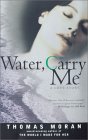
Critics' Opinion:
Readers' Opinion:
First Published:
Feb 2000, 269 pages
Paperback:
Mar 2001, 270 pages

Fallon was allowed to visit me at Rawney's one weekend just after I moved. Her father brought her in his big black Rover, and exchanged a few words with Rawney which left my grandda frowning. Fallon and I paid no mind, we had the beach and the docks to explore, the spindrift and the scudding clouds to dream on. Fallon we always called The Postcard Girl, for she should have been on one. The tourists would have bought her by the gross to mail back to America or Germany or Denmark, for she was their dream of an Irish lass. Emerald eyes and rich red hair and creamy skin with masses of freckles all over-even on her bum, that we saw in the school showers after field hockey. I thought she was the most beautiful girl in Ireland, I wanted so much to look even a little like her. We knew we'd be friends for life, we swore it at seven.
After that one visit, though, there was a sort of polite but unbreaking boycott of Cobh by the parents of my schoolmates. They had bad feelings about Rawney and his place, I think, though that was never said. There were only the usual excuses, time and again, why girls couldn't come to me. So I had always to go visit my friends at their Cork houses. I didn't mind at all, and only cried a bit the first time I saw our house had been taken over by a new family, two boys playing in our garden. I rode the bus the fifteen miles from Cobh to Cork morning and evening each weekday anyway. The bus driver greeted me with "A fair day, Miss Moss" no matter how miserable the weather, and on the return with "Good evenin' to yeh, Miss Moss. School go well today, it did, didn't it?"
I understood little of the complicated happenings after the funeral, except that my da's business was difficult to sell. Rawney fumed about it for months. No man in the county would so much as admit he might consider bidding on it, and the big firms from Dublin and even London, Rawney said, took a look at the factory and the books, talked to a few people, and walked away fast. Finally some Americans who liked the things my father'd made, liked his markets, liked the wages of the workers even better, paid what everyone said was too much. That went into my trust, joining everything else my parents had left, which was quite a bit. A very proper lawyer gentleman called Mister McGillicuddy (even by Rawney, who stood on no ceremony) of the Cork firm of Pearse, McGillicuddy, Lee & Regan, doled out monthly sums to my grandda, who'd been appointed my legal guardian. Rawney was put on a short leash, though, just household and clothing and food allowances. Mr. McGillicuddy took care of anything grander in the way of expenses, the main one being my education. I was to remain at the Nano Nagle School with the daughters of solicitors and judges, surgeons and businessmen, ranking civil servants married into private means and company directors; girls who'd always been my friends.
My grandda nursed a bone-deep grudge against our Mister McGillicuddy, starting soon as the terms of the trust were explained to him. "Tight bastard, is he," Rawney would mutter every month after we visited his office for our allowance and to see and sign the receipts for bills paid and so forth. "Damn Liam for not trustin' me to manage. I managed his bringing-up very nice, thank you. Not trustin' yer own da, that's raw." I didn't mind Mister McGillicuddy, who always asked politely how I was getting on in the same tone he used with grownups. But I didn't enjoy going to him. His office had nailed Chesterfields, the deep red leather creased and worn by times gone, and walls of big old books with cracked spines. There weredimmish paintings of hunters and steeplechase horses whose heads all looked too small. But the place didn't smell right. It didn't have the man smell, a little smoky and strong, that my father's study at home had had. It was always as if the charwomen had just been to Mister McGillicuddy's and swept all the well-used air out the windows.
Reprinted from WATER, CARRY ME by Thomas Moran by permission of G. P. Putnam's Sons, a member of Penguin Putnam Inc. Copyright © 1999 by Thomas Moran. All rights reserved. This excerpt, or any parts thereof, may not be reproduced in any form without permission.

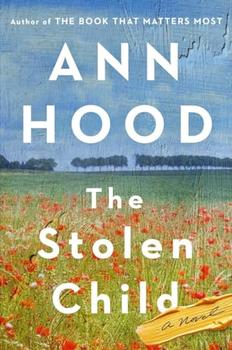
The Stolen Child
by Ann Hood
An unlikely duo ventures through France and Italy to solve the mystery of a child’s fate.
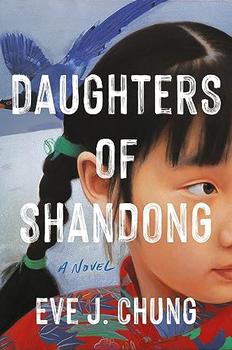
Daughters of Shandong
by Eve J. Chung
Eve J. Chung's debut novel recounts a family's flight to Taiwan during China's Communist revolution.
Harvard is the storehouse of knowledge because the freshmen bring so much in and the graduates take so little out.
Click Here to find out who said this, as well as discovering other famous literary quotes!
Your guide toexceptional books
BookBrowse seeks out and recommends the best in contemporary fiction and nonfiction—books that not only engage and entertain but also deepen our understanding of ourselves and the world around us.