Summary | Excerpt | Reviews | Beyond the Book | Readalikes | Genres & Themes | Author Bio
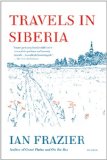
Critics' Opinion:
Readers' Opinion:
First Published:
Oct 2010, 544 pages
Paperback:
Sep 2011, 560 pages
 Book Reviewed by:
Jennifer G Wilder
Buy This Book

Chapter 1
Officially, there is no such place as Siberia. No political or territorial entity has Siberia as its name. In atlases, the word "Siberia" hovers across the northern third of Asia unconnected to any place in particular, as if designating a zone or a condition; it seems to show through like a watermark on the page. During Soviet times, revised maps erased the name entirely, in order to discourage Siberian regionalism. Despite this invisibility, one can assume that Siberia's traditional status as a threat did not improve.
A tiny fraction of the world's population lives in Siberia. About thirty-nine million Russians and native peoples inhabit that northern third of Asia. By contrast, the state of New Jersey, where I live, has about a fifth as many people on about .0015 as much land. For most people, Siberia is not the place itself but a figure of speech. In fashionable restaurants in New York and Los Angeles, Siberia is the section of less-desirable tables given to customers whom the maître d' does not especially like. In one of the most important places to be seen having lunch in midtown Manhattan, Siberia is the tables next to the ketchup room, where the condiments are stored.
Newspaper gossip columns take the word even more metaphorically. When an author writes a book about a Park Avenue apartment building, and the book offends some of the residents, and a neighbor who happens to be a friend of the author offers to throw him a book party in her apartment, and the people in the Park Avenue building hear about this plan, the party giver is risking "social Siberia," one of them warns.
In this respect (as in many others) Siberia and America are alike. Apart from their actual, physical selves, both exist as constructs, expressions of the mind. Once when I was in western Russia, a bottler of mineral water was showing my two Russian companions and me around his new dacha outside the city of Vologda. The time was late evening; darkness had fallen. The mineral-water bottler led us from room to room, throwing on all the lights and pointing out the amenities. When we got to the kitchen, he flipped the switch but the light did not go on. This seemed to upset him. He fooled with the switch, then hurried off and came back with a stepladder. Mounting it, he removed the glass globe from the overhead light and unscrewed the bulb. He climbed down, put globe and bulb on the counter, took a fresh bulb, and ascended again. He reached up and screwed the new bulb into the socket. After a few twists, the light came on. He turned to us and spread his arms wide, indicating the beams brightly filling the room. "Ahhh," he said triumphantly, "Amerika!"
Nobody has ever formally laid out the boundaries of the actual, physical Siberia. Rather, they were established by custom and accepted by general agreement. Siberia is, of course, huge. Three-fourths of Russia today is Siberia. Siberia takes up one-twelfth of all the land on earth. The United States from Maine to California stretches across four time zones; in Siberia there are eight. The contiguous United States plus most of Europe could fit inside it. Across the middle of Siberia, latitudinally for thirty-six hundred miles, runs the Russian taiga, the largest forest in the world.
The Ural Mountains, which cross Russia from the Arctic Ocean to Kazakhstan, are the western edge of Siberia. The Urals also separate Europe from Asia. As a mountain range with the big job of dividing two continents, the Urals aren't much. It is possible to drive over them, as I have done, and not know. In central Russia, the summits of the Urals average between one thousand and two thousand feet. But after you cross the Urals, the land opens out, the villages are farther apart, the concrete bus shelters along the highway become fewer, and suddenly you realize you're in Siberia.
To the east, about three thousand miles beyond the Urals, Siberia ends at the Pacific Ocean, in the form of the Sea of Japan, the Sea of Okhotsk, and the Bering Sea. Since Soviet times, Russians have called this part of Siberia the Russian Far East.
Excerpted from Travels in Siberia by Ian Frazier. Copyright © 2010 by Ian Frazier. Excerpted by permission of Farrar, Straus & Giroux. All rights reserved. No part of this excerpt may be reproduced or reprinted without permission in writing from the publisher.


The Flower Sisters
by Michelle Collins Anderson
From the new Fannie Flagg of the Ozarks, a richly-woven story of family, forgiveness, and reinvention.

The Stolen Child
by Ann Hood
An unlikely duo ventures through France and Italy to solve the mystery of a child’s fate.
It was one of the worst speeches I ever heard ... when a simple apology was all that was required.
Click Here to find out who said this, as well as discovering other famous literary quotes!
Your guide toexceptional books
BookBrowse seeks out and recommends the best in contemporary fiction and nonfiction—books that not only engage and entertain but also deepen our understanding of ourselves and the world around us.