
-
Your next favorite book
is waiting.
Summary | Excerpt | Reviews | Beyond the Book | Readalikes | Genres & Themes | Author Bio
 Book Reviewed by:
Preface
Anthologies are ill-fitting things - one size does not fit all. It’s no surprise
to find the authors in this volume, collected under the broad banner "European,"
voicing a consistently ornery resistance (with variations): "Well,
yes, I am European, Slovakian, actually, but I am also an individual, and
what really matters to me is Nabokov, Diderot and J. G. Ballard."
Which is as it should be. Good writing cannot permit itself to be contained
within checkpoints and borders. But still it’s tempting for readers
to seek a family resemblance and I’m not sure we’re wrong to do so. It
seems old fashioned to speak of a "Continental" or specifically "European"
style, and yet if the title of this book were to be removed and switched with
that of an anthology of the American short story, isn’t it true that only a
fool would be confused as to which was truly which?
It’s more than the obvious matter of foreign names and places. It’s hard
not to notice, for example, a strong tendency towards the metafictional.
Characters seem aware of their status as characters, stories complain
about the direction they’re heading in, and writers make literary characters
of themselves - and of other writers and artists. When the real Christine
Montalbetti (France) has breakfast with a notional Haruki Murakami
in a Japanese hotel, the fantastic threatens to overwhelm them ("leaves
were trembling behind the windowpanes, as if they were crouched, dying
to pounce") and we know for sure we’re not in Kansas anymore. Meanwhile
Goce Smilevski of Macedonia wants us to believe Gustav Klimt’s
fourteen illegitimate sons were all called Gustav, and Jean-Philippe Toussaint - in one of my favourite pieces - boldly enters the soul of Zinedine
Zidane to reveal the philosophical Weltschmerz hidden deep within that
footballer-enigma.
What else? An epigraphic, disjointed structure. Many of these already
short stories are cut into shorter, sub-titled sections, like verbal snapshots
laid randomly on top of each other - and they end abruptly. They seem to
come from a different family than those long anecdotes ending in epiphany,
popularized by O. Henry. And their authors name different progenitors,
too. Certainly no one mentions O. Henry. Or Hemingway. Laurels are
offered instead to the likes of John Barth and Donald Barthelme. Meanwhile
poor Dickens is dismissed in a single line by a young Icelandic experimentalist:
"I weep with boredom over every single page he’s written."
More likely to be name-checked: Beckett, Bernhard, Sebald, Claude Simon
and Kafka, who, "of course, is always there," as Josep M. Fonalleras (Catalonia)
asserts, and he’s right. Judging from this collection, Kafka is literary
Europe’s primary ghost and heaviest influence. He’s there in Antonio
Fian’s (Austria) concretely expressed dream-stories, and in David
Albahari’s (Serbia) frustrating trip through Lyon, with its many obstructions
and misdirections. And when this Kafkaesque respect for digression
unites, in an author, with the headier brews of Laurence Sterne and
Jorge Luis Borges, then we get baroque shaggy-dog tales like Julián Ríos’s
(Spain) "Revelation on the Boulevard of Crime," and Giedra Radvilavic
?iu¯te?’s (Lithuania) "The Allure of the Text," both of which offer mazy structures
in which readers may get blissfully lost.
Finally, in Europe the violent distortions of Dostoevsky seem to have
trumped the cool ironies of Tolstoy. In this vein I particularly enjoyed Peter
Terrin (Belgium), who revives the archetypal axe murderer in a banal
and futuristic landscape, and Micha Witkowski’s (Poland) "Didi," which
brings notes from the underground of hungry hustlers. Of course, sometimes
in Europe the reality outstrips all but the most garish literary fantasies
and so a satirist in the Gogol-mode need only touch upon his subject very lightly. Thus the masterful Russian, Victor Pelevin, finds the perfect
metaphor for the oligarch cash-grab of the 1990s, and the story seems
to write itself.
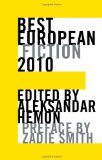
Excerpted from Best European Fiction 2010 by Aleksandar Hemon. Copyright © 2009 by Aleksandar Hemon. Excerpted by permission of Dalkey Archive Press. All rights reserved. No part of this excerpt may be reproduced or reprinted without permission in writing from the publisher.
Theo of Golden by Allen Levi
One spring morning, a stranger arrives in the small southern city of Golden. No one knows where he has come from…or why…






Your guide toexceptional books
BookBrowse seeks out and recommends the best in contemporary fiction and nonfiction—books that not only engage and entertain but also deepen our understanding of ourselves and the world around us.


