Summary | Excerpt | Reviews | Beyond the Book | Readalikes | Genres & Themes | Author Bio
Critics' Opinion:
Readers' Opinion:
First Published:
Jun 2006, 400 pages
Paperback:
Jun 2007, 400 pages
 Book Reviewed by:
BookBrowse Review Team
Buy This Book

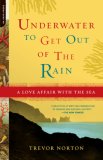
Seeing the Light
St Mary’s Island, Northumberland
We lived on the second floor and viewed the sea
through windows misted with salt. At night the beams from the lighthouse swept
my ceiling.
I was seven when we had the worst winter for a century. The
seaweed went stiff with rime and even the tide pools froze. A Greek freighter
was driven ashore to perch upright and drip rust on to the rocks.
Snow drifted in an arc right up to my bedroom window and, if
I’d had the courage, I could have slid down to the ground. Dad dug a tunnel out
from the front door and carried me to school on his shoulders through a deep
trench, and only I could see the surface of the sun-dazzled snow. For a few
weeks we lived at the North Pole and I expected Father Christmas to sleigh round
the corner at any moment. Then the myth melted, the streets turned to soiled
slush and Santa, I suppose, was out of the question.
The following summer we walked to Curry’s Point at the
northern edge of Whitley Bay, where I lived. Two hundred years earlier I would
have heard the clanking chains on the gibbet, where the corpse of a murderer,
Michael Curry, hung until it disintegrated. From the Point was a causeway
leading to St Mary’s Island, where the lighthouse stood.
The 120-foot tower was the first really big thing I had ever
seen close up, an immense rocket ship, white and wonderful. Inside, there were
no cosy rooms with curved walls, just a hollow with a staircase spiralling
around a central abyss. At the top, encased in a wilderness of prisms, was the
lamp, like a crystal from another planet, able to incandesce and brush aside
mere earthly darkness to explore my bedroom two miles away. The
four-and-a-half-ton lamp floated on a lake of mercury and the slightest nudge
from my finger would have made it revolve.
Lighthouses have shrunk a little since I grew, but I still
love the big, clean, white ones, vertical and virginal yet audaciously erect,
signals to sailors and signposts to God.
Whitley Bay was the last resort on the north-east coast of
England. It squatted beside Newcastle, to which it was unnecessary to carry coal
in those days. The words ‘Whitley Bay’ were on every visitor’s lips as they
sucked the sickly, lettered rock. Everything then seemed designed to damage your
teeth: the rock, the candyfloss, scuffles outside the boozer. The cautious often
removed their teeth as closing time approached.
The first time we went on holiday it was to Scarborough on
the Yorkshire coast. As far as I could tell it was exactly the same as Whitley
Bay, a land of leaky pails and broken spades and sandcastles that succumbed to
the tide. I peered into the pools and collected red rubbery lumps in the hope
they would blossom into anemones.
We stayed in a dishevelled hostel masquerading as a guest
house. It was painted hospital white on the outside, boarding-house brown
within. The landlady was firm but fair and had a face you could have abseiled
down. It was cheaper if guests brought their own food for her to cook. You paid
extra for a warm breakfast and a partial view of the sea, but you were locked
out until teatime, even when it rained. We knew how to enjoy ourselves in those
days.
Although I didn’t know it then, this was where the
British love affair with the seaside had begun and in a most unlikely way. In
1660, a local doctor had published a book extolling the virtues of sea water for
gout or ‘drying up superfluous humours, and preserving from putrefaction . . .
and all manner of worms’.
In France, medics forecast that sea bathing led to
‘immediate death’, but Scarborough’s beaches became infested with scrofula
sufferers and imaginary invalids, and bathing certainly lightened the load for
those suffering from the effects of dirt. Later books extended the menu of
afflictions amenable to salt-water cure to include ‘ruptures, rheumatism and
madness’, as well as ‘phrenzy and nymphomania’.
Copyright 2006, Trevor Norton. Reproduced with permission of the publisher, Da Capo press. All reights reserved.




Daughters of Shandong
by Eve J. Chung
Eve J. Chung's debut novel recounts a family's flight to Taiwan during China's Communist revolution.

The Flower Sisters
by Michelle Collins Anderson
From the new Fannie Flagg of the Ozarks, a richly-woven story of family, forgiveness, and reinvention.
The third-rate mind is only happy when it is thinking with the majority. The second-rate mind is only happy when it...
Click Here to find out who said this, as well as discovering other famous literary quotes!
Your guide toexceptional books
BookBrowse seeks out and recommends the best in contemporary fiction and nonfiction—books that not only engage and entertain but also deepen our understanding of ourselves and the world around us.