S.J. Parris
S.J. Parris writes about her inspiration for Heresy, which masterfully blends true events with fiction into a page-turning murder mystery set on the sixteenth-century Oxford University campus.
Adam Haslett
A conversation with Adam Haslett, author of Union Atlantic, a deeply affecting portrait of the modern gilded age, the first decade of the twenty-first century.
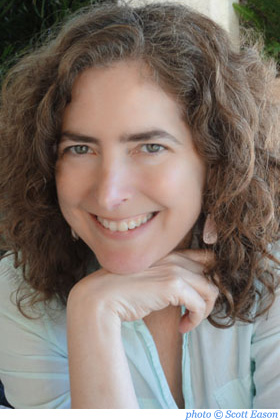
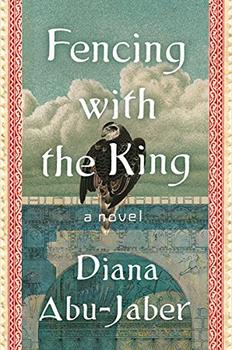
Diana Abu-Jaber is the author of the novels Arabian Jazz and Crescent. Crescent was awarded the 2004 PEN Center USA Award for Literary Fiction and the Before Columbus Foundation's American Book Award and was named one of the twenty best novels of 2003 by The Christian Science Monitor. Arabian Jazz won the 1994 Oregon Book Award and was nominated for the PEN/Faulkner Award.
She is also the author of a memoir, The Language of Baklava, and Origin (2007) the first in a new mystery series staring Lena, a highly gifted, intuitive fingerprint expert.
She teaches at Portland State University and divides her time between Portland and Miami.
In her own words .....
I grew up inside the shape of my father's stories. A
Jordanian immigrant, Dad regaled us with tales about himself, his country, and
his family that both entertained us and instructed us about the place he'd
come from and the way he saw the world. These stories exerted a powerful
influence on my imagination, in terms of what I chose to write about, the
style of my language, and the form my own stories took.
People often ask me about my American mother, and whether she also told
stories. Actually, my mother is not a native storyteller in the way my father
is, but it may be that she has taught me something even more valuable, which
is how to listen to stories. She made a space in our home for my father to
invent himself, and her attentiveness and focus showed me that sometimes being
quiet can be just as transformative as speaking.
I have two younger sisters and we grew up in little snow-bound houses in
Syracuse, New York, and then spent some time living among courtyards and
trellised jasmine and extended family in Amman, Jordan, before we all moved
back to Syracuse again. My father could not make up his mind about which
country we should live in. In America, he constantly reminded us that we were
good Arab girls; we weren't allowed to go out to parties or school dances. But
then he encouraged us to study singlemindedly, to compete as intensely as any
boy, and to always make our own way in the world.
My father's brothers are doctors and scholars and politicians. And it was
determined that I would receive my undergraduate degree from SUNY-Oswego
because one of my uncles taught there and could keep an eye on me while I
lived in a dormitory. When I finally struck out on my own to do my graduate
work, I instinctively sought out mentorsthe next best thing to uncles, in
my mindgoing for my M.A. at the University of Windsor, to study with Joyce
Carol Oates, and then my Ph.D. from SUNY-Binghamton, to work with John
Gardner.
In school, I started writing stories that I think shared a certain kinship
with my father's stories in that they gave me a way to imagine myself in the
world. After graduate school, I taught creative writing, film studies, and
contemporary literature at a number of different universities, including the
University of Nebraska, the University of Michigan, UCLA, and the University
of Oregon. All of these places had something new to teach me about being an
American. I moved around for work, but I think I also like to move. While
there's a certain rootlessness and solitude to nomadism, I suppose that I am,
as my father asserts, fundamentally a Bedouin. I am driven to exploration and
conversation despite my best efforts to sit quietly in one place. I would just
as happily host a dinner party as give a reading, and my chronically social
nature frequently disrupts anything like a real work ethic.
Even in my work, I am restlesswhile I'm prone to write novels, I am also
crazy about writing restaurant and film reviews, interviewing politicians and
profiling county fairs, and fantasizing about writing a Great Arab-American
Screenplay. My new idea is to live beside the ocean with my husband and my
nervous little Italian greyhound, and to work outside under an umbrella with a
pitcher of lemonade and a plate of cookies. Once again, I will attempt to
settle down and write for hours and hours at a time, the way I am told one
must. But I suppose that I will end up, as usual, inviting friends or family
over so I don't eat all the cookies myself. We will sit outside together,
contemplating our origins and destinations, and begin telling each other
stories again.
This biography was last updated on 07/05/2007.
A note about the biographies
We try to keep BookBrowse's biographies both up to date and accurate. However, with over 1,500 lives to keep track of it's inevitable that
some won't be as current or as complete as we would like. So, please help us - if the information about a particular author is out of date,
inaccurate or simply very short, and you know of a more complete source, please let us know. Authors and those connected with authors:
If you wish to make changes to your bio, please send your complete biography as you would like it displayed so that we replace the old with the new.
When his daughter, Amy, died suddenly of a heart condition, Roger Rosenblatt and his wife moved in with their son-in-law and their three young grandchildren. His story tells how a family makes the possible out of the impossible.
You are about to travel to Edgecombe St. Mary, a small village in the English countryside filled with rolling hills, thatched cottages, and a cast of characters both hilariously original and as familiar as the members of your own family.
The Postmistress is an unforgettable tale of the secrets we must bear, or bury. It is about what happens to love during wartime, when those we cherish leave. And how every story-of love or war-is about looking left when we should have been looking right.
Masterfully blending true events with fiction, this blockbuster historical thriller delivers a page-turning murder mystery set on the sixteenth-century Oxford University campus.
Kostova's masterful new novel travels from American cities to the coast of Normandy, from the late 19th century to the late 20th, from young love to last love. The Swan Thieves is a story of obsession, history's losses, and the power of art to preserve human hope.
I read this book in two days and found it so refreshing. Although you will learn a great deal about barn owls by reading it, the book is not just ...
read more
I enjoyed reading this book, however, feel that this is not completely her own ideas. This books remembers me of a cross between 'ghost','Sixth ...
read more
Lisa See has written a great book! This story is satisfying on many levels, some scenes horrifying, but seemingly truthful, and her handling of the ...
read more
Amazon 'buy button' rumors abound(Mar 18 2010) Rumors swirled today that Amazon could revoke the buy buttons for books by Simon & Schuster, HarperCollins, Penguin, or Hachette if the major publishers can't...
Full Story
Amazon's e-pricing threats(Mar 18 2010) With Apple's iPad launch just weeks away, Amazon raised the stakes again when it threatened to stop directly selling the books of some publishers online...
Full Story