The Beauty, Elegance, and Strangeness of Insect Societies
Readers' rating:
Published Nov 2008
576 pages
Genre: Science, Health and the Environment
Publication Information
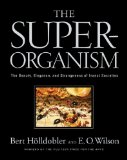
The Superorganism promises to be one of the most important scientific works published in this decade. Coming eighteen years after the publication of The Ants, this new volume expands our knowledge of the social insects (among them, ants, bees, wasps, and termites) and is based on remarkable research conducted mostly within the last two decades. These superorganisms—a tightly knit colony of individuals, formed by altruistic cooperation, complex communication, and division of labor—represent one of the basic stages of biological organization, midway between the organism and the entire species.
The study of the superorganism, as the authors demonstrate, has led to important advances in our understanding of how the transitions between such levels have occurred in evolution and how life as a whole has progressed from simple to complex forms. Ultimately, this book provides a deep look into a part of the living world hitherto glimpsed by only a very few. 110 color and 100 black-and-white illustrations.
"Starred Review. While the superorganism concept is not new, it has never been stated explicitly or explored on such a grand scale. Recommended for high school, academic, and public libraries and interested lay readers." - Library Journal.
This information about The Superorganism was first featured
in "The BookBrowse Review" - BookBrowse's membership magazine, and in our weekly "Publishing This Week" newsletter. Publication information is for the USA, and (unless stated otherwise) represents the first print edition. The reviews are necessarily limited to those that were available to us ahead of publication. If you are the publisher or author and feel that they do not properly reflect the range of media opinion now available, send us a message with the mainstream reviews that you would like to see added.
Any "Author Information" displayed below reflects the author's biography at the time this particular book was published.

Edward O. Wilson is the author of two Pulitzer Prize-winning books, On Human Nature (1978) and The Ants (1990, with Bert Hölldobler), as well as many other groundbreaking works, including Consilience, Naturalist, and Sociobiology. A recipient of many of the world's leading prizes in science and conservation, he was Pellegrino University Research Professor and Honorary Curator in Entomology of the Museum of Comparative Zoology at Harvard University.
After retiring from Harvard University in 2002, he published more than a dozen books, including a digital biology textbook for the iPad. In retirement, he continued to use his fame to draw attention to biodiversity. He died in December 2021 aged 92.

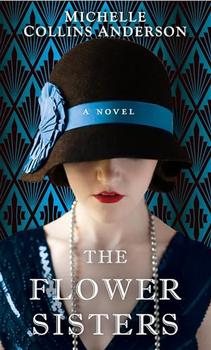
The Flower Sisters
by Michelle Collins Anderson
From the new Fannie Flagg of the Ozarks, a richly-woven story of family, forgiveness, and reinvention.
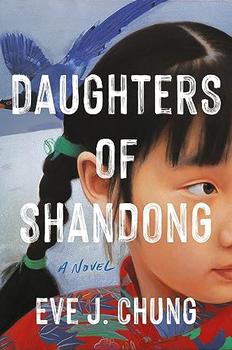
Daughters of Shandong
by Eve J. Chung
Eve J. Chung's debut novel recounts a family's flight to Taiwan during China's Communist revolution.
When men are not regretting that life is so short, they are doing something to kill time.
Click Here to find out who said this, as well as discovering other famous literary quotes!
Your guide toexceptional books
BookBrowse seeks out and recommends the best in contemporary fiction and nonfiction—books that not only engage and entertain but also deepen our understanding of ourselves and the world around us.