Timothy Egan discusses his National Book Award winning work of non-fiction, The Worst Hard Time: The Untold Story of Those Who Survived The Great American Dust Bowl; he talks about the people he interviewed, the trigger events that led up to the 10-year drought and whether history is likely to repeat itself.
Why a book on the Dust Bowl now?
The story of the people who lived through the nation's hardest economic
depression and its worst weather event is one of the great untold stories of the
Greatest Generation. To me, there was an urgency to get this story now because
the last of the people who lived through those dark years are in their final
days. It's their story, and I didn't want them to take this narrative of horror
and persistence to the grave. At the same time, this part of America — the rural
counties of the Great Plains — looks like it's dying. Our rural past seems so
distant, like Dorothy's Kansas in The Wizard of Oz. Yet it was within the
lifetime of people living today that nearly one in three Americans worked on a
farm. Now, the site of the old Dust Bowl — which covers parts of five states —
is largely devoid of young families and emptying out by the day. It's flyover
country to most Americans. But it holds this remarkable tale that should be a
larger part of our shared national story.
Do you see any parallels between the Dust Bowl and Hurricane Katrina, the
worst natural disaster of our time?
There are so many echoes of what happened in the 1930s and the hurricane that
hit the Gulf Coast in the summer of 2005. For starters, there were ample
warnings that a large part of the United States could be rendered uninhabitable
if people continued to live as they did — in this case, ripping up all the grass
that held the earth in place. In one sense, the prairie grass was like the
levees around New Orleans; the grass protected the land against ferocious winds,
cycles of drought, and storms. Then after the big dusters hit, you had a massive
exodus: more than a quarter million people left their homes and fled. Never
before or since had so many Americans been on the move because of a single
weather event — until Hurricane Katrina. And finally there was the whole
restoration effort: President Franklin Roosevelt thought he could restore the
land to grass, plant trees, and maybe bring it back.
What about the people? Did they ever return?
Not really. The southern plains never fully recovered from the ravages of the
Dust Bowl. There was a fascinating debate within the Roosevelt administration
about whether to even try to lure people back. Many thought it was futile, that
the whole settlement of the area had been a mistake. One pundit, H. L. Mencken,
said the people who lived there were too stupid and should be sterilized. "They
are simply inferior men," he wrote.
But there was another, more optimistic impulse — reclaim the land to its
original state, and then get people to farm in a different fashion. At one
point, Hugh Bennett, who led the soil conservation effort, told his restoration
army, "We are not merely crusaders, but soldiers on the firing line of defending
the vital substance of our homeland."
Beyond the hurricane, what is the relevance of the Dust Bowl to our times?
Remember what Lincoln said: We cannot escape history. That goes for the
natural world as well. The Dust Bowl story is a parable, in a way, about what
happens when people push the limits of the land. Many people think what happened
in the 1930s — with drought, endless hot days, white skies, plants dying and the
earth blowing — is a precursor to what could happen as the climate continues to
change and the earth heats up.
Yes, you hear a lot of references about a "new Dust Bowl."
But thus far, there has been nothing like the one that took hold of a big
part of our country seventy years ago and lasted nearly a decade. Some of these
folks I interviewed, they fought in World War II, saw the worst kind of carnage
that human beings can inflict on each other, and they say the Dust Bowl was more
traumatic.
Why is that?
I think it was because of the uncertainty. The world they had known was
changing before their eyes, dying, being swept away. They didn't know what has
happening. Many thought the end was near, and not just the Biblical end. It was
a risk to your life just to step outside on some days. It was risk simply to
take a breath. People wore masks and rubbed Vaseline in their noses as filters.
At the same time, twenty-five percent of adults were out of work. If you could
find a job, you were lucky to make two dollars a day, which is barely enough to
feed a family.
What do you mean when you call the Dust Bowl "the great untold story of the
Greatest Generation"?
We know a lot about the Dust Bowl refugees, the so-called Okies and Arkies
who migrated west to California and into the Pacific Northwest in the 1930s.
Much of this we know from John Steinbeck's masterpiece The Grapes of Wrath, and
from the government photographers and writers who did a terrific job of
recording this migration. But very little is known about the people who did not
leave the Dust Bowl. And as it turns out, most people never moved away. Nearly
two-thirds of the Dust Bowl inhabitants hunkered down and lived through the
Dirty Thirties. How did they get by? There was no food from the land, no jobs
during the Depression, no money from the government until much later. This was
my starting point.
And what kind of story is it?
It's a story of survival, of perseverance, of the most corrosive poverty. Of
days when the sky turned ink-black at noon, and times when parents gave up their
children because they feared they would starve. Of days with no Social Security,
no accurate weather forecasts. Most of the Dust Bowlers didn't even have
electricity. They ate things like tumbleweeds — salted and canned — or roadkill,
cooked over an open fire. And when they would slaughter a pig, as one woman told
me, "We ate everything but the squeal."
What kind of peril did the Dust Bowlers face?
Everything the sky could throw at them, it did. In addition to the usual
horrors — violent thunderstorms that produced hail the size of baseballs,
wildfires that swept over the prairie, tornadoes that could level a town in the
blink of an eye — there were these massive, almost otherworldly dust storms. A
typical duster was a corrosive mix of sand and high-velocity air that could make
cattle go blind and people cough until it hurt. The sky would blacken as these
great waves of dust rose up and fell. Sometimes the leading edge of one of these
storms was a mile-high. Charles Lindbergh, the greatest aviator of his age, got
stuck at the edge of one of these storms and had to make an emergency landing.
He said it was the most frightful thing he ever saw as a pilot. And the storms
could be lethal. Makeshift hospitals were set up in school gyms for children who
fell ill and then died suddenly from something the doctors called "dust
pneumonia."
What caused the Dust Bowl?
Most of the people who lived through it say it was a human tragedy — one part
hubris, one part greed, one part bad luck — not some freak of nature. When you
look at the relevant weather data and compare it to the historical record, it's
very revealing. The wind speeds were about the same as always. The high
temperatures in summer and the lows in winter were not that much out of the
norm. Yes, there was a terrible drought. But the Great Plains has always had
these elements — high winds, heat, cold, and drought. There was not some
extraordinary combination of rare and traumatic weather.
So what was different?
The grass — "North America's characteristic landscape," as the poet Walt
Whitman called it — was wiped off the face of the southern plains. This great
sea of green had anchored the Great Plains for eternity, covering nearly
one-fourth of the continent.
The southern plains was a frontier well into the twentieth century. It was
the last place to be truly settled by Anglos during the western expansion. Then
suddenly came a gold rush of sorts — a gold rush for grain. The price of wheat
doubled, tripled, and quadrupled, prompting a stampede to rip up the prairie
grass and replace it with wheat. When grain prices crashed, people walked away,
or stopped planting. Then the land was barren, with no grass, and it started to
blow.
By 1935, more than eight hundred-fifty million tons of topsoil had blown off
the southern plains - nearly eight tons of dirt for every resident of the United
States. More than one hundred million acres, an area about the size of
Pennsylvania, lie in ruin. One of these storms fell on New York, and another one
blew dust into the White House and out to ships at sea in the Atlantic.
Do you blame the people who farmed the southern plains for bringing this
disaster on themselves?
No. The people who dug up this hard sod, who lived in dirt houses for a
while, or underground in homes they called dugouts, who built churches and
schools from the raw scraps of the ground, who raised large families and
prospered, for a time — these people were doing what Americans have always done.
These were Last Chancers: persecuted Germans from Russia, Scots-Irish from the
South, Mexicans who platted out homesteads. The southern plains was the last
chance for them to own something. But they were encouraged by the railroads and
the government to take unrealistic risks. They were told to take out cheap loans
and plant as much wheat as possible as a patriotic act. In the same way that
people in the cities were speculating, wildly, in the stock market, these
farmers took a gamble that the price of wheat would only go up. They took land
that was suited for grass and animals that eat grass and turned it into
something else. Only a few cowboys and some defeated Comanche Indians tried to
warn them off.
Tell us a little bit about the people in your story.
There's a part-Apache cowboy family we follow throughout the story. The
father loved horses and empty sky and the grasslands. What happened to the land
broke his heart. Some days, he'd come home to see his wife in tears, trembling
in the corner of their tiny house, muttering, "The dust, I just can't take it
anymore."
There's a woman named Hazel Lucas, with southern charm and a big heart. We
see her first as a teenage bride, teaching kids in a one-room sodhouse, and then
we watch her try to raise a family and keep her dignity through these awful
storms.
There's a hero of the New Deal, Big Hugh Bennett, a farm boy from the south
who tried to save the grass in the Dust Bowl and convince people that the
grasslands could be restored.
There's an extraordinary, pioneering Jewish family, the Herzsteins, who tried
to maintain the rituals of daily life even after they lost a beloved uncle to a
gunslinger.
There's a town booster and newspaper man, John McCarty, who tried to make a
virtue of the dust storms.
And there was a free-spirited kid, one of nine children living in a hole in
the ground, whose only goal was to make it to his senior year in high school.
People do some strange things during the worst years. Tell us about that.
The land was sick, and I think that had an effect on how people lived and
acted. Towns would hold rabbit-clubbing rallies. Basically, they'd get everybody
out on a Sunday afternoon with clubs and round up thousands of rabbits and club
them to death. Strangely, rabbits flourished during the Dust Bowl, living on
bugs. And speaking of bugs, some states had to call out the National Guard to
try to control the locusts and other pests that descended on this desperate
land.
You've written a lot about the Pacific Northwest, where you live. What was it
like to shift your focus to the southern plains?
Like going from one planet to the other. I'm used to green — forests, rain
country, grass that never turns brown but for the driest month of the year. When
I was in the southern plains, I suffered from brownshock! But it's fascinating.
For me, like visiting a foreign country. The Plains have a wondrous, savage
beauty, but you have to take the time to let it get in your bones, to feel a
little bit of the haunt and tease and risk of the land. In some respects, it has
the worst weather in the world — tornadoes, whiteout blizzards, flash floods,
soul-sapping heat waves. But it's lovely, in its way, especially in the early
part of the day before the wind kicks up. I also like the drama of the land —
the thunderstorms that come out of nowhere, the sky the stretches to infinity,
the sense of being alone, even lost in the eternity of the flatness.
What about the grasslands? Is there anything left?
Yes. And this was one of the big surprises. The land really has healed — in
places, at least. When I used to see a "national grassland" on the map, I
wondered if it was some kind of joke. It's heartening to see some restoration,
but the scars of the Dust Bowl are big, and deep, and lasting.
Unless otherwise stated, this interview was conducted at the time the book was first published, and is reproduced with permission of the publisher. This interview may not be reproduced or reprinted without permission in writing from the copyright holder.
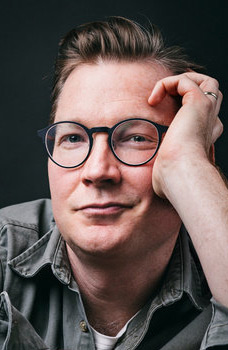
Mark Adams is the author of the New York Times bestsellers Meet Me in Atlantis and Turn Right at Machu Picchu. A writer for many national magazines, including GQ, Men's Journal, and New York, he lives near New York City with ... (more)
If you enjoyed:
Short Nights of the Shadow Catcher
Try:
Tip of the Iceberg
by Mark Adams
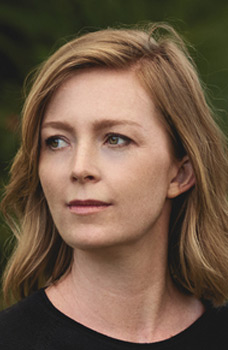
C. Morgan Babst is a native of New Orleans. She studied writing at NOCCA, Yale, and NYU, and her essays and short fiction have appeared in Garden and Gun, The Oxford American, Guernica, the Harvard Review, Lenny Letter, and ... (more)
If you enjoyed:
The Worst Hard Time
Try:
The Floating World
by C. Morgan Babst
We recommend 23 similar authors
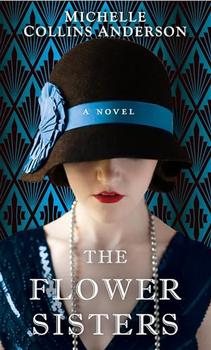
The Flower Sisters
by Michelle Collins Anderson
From the new Fannie Flagg of the Ozarks, a richly-woven story of family, forgiveness, and reinvention.
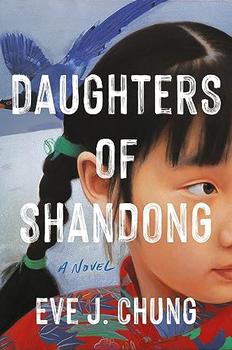
Daughters of Shandong
by Eve J. Chung
Eve J. Chung's debut novel recounts a family's flight to Taiwan during China's Communist revolution.
There is no such thing as a moral or immoral book. Books are either well written or badly written. That is all.
Click Here to find out who said this, as well as discovering other famous literary quotes!
Your guide toexceptional books
BookBrowse seeks out and recommends the best in contemporary fiction and nonfiction—books that not only engage and entertain but also deepen our understanding of ourselves and the world around us.