
-
Your next favorite book
is waiting.
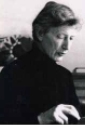
Peter Dickinson, author of more than 50 children's books, answers frequently asked questions in a most unusual manner, and offers a persuasive argument as to why children should be allowed to read 'rubbish' books, in an essay that should be required reading for all parents!
The danger of living in a golden age of children’s literature is that not
enough rubbish is being produced.
Nobody who has not spent a whole sunny afternoon under his bed rereading a
pile of comics left over from the previous holidays has any real idea of the
meaning of intellectual freedom.
Nobody who has not written comic strips can really understand the phrase,
economy of words. It’s like trying to write Paradise Lost in haiku.
The above remarks, and a few more like them, have now
haunted me for five years. They were part of a digression in a talk I gave to
the 1970 Exeter conference on children’s literature, and if I’d realised
then what a powder-keg I was throwing my fag-end of thought into I would have
kept my trap shut. I’ve no wish to be type-cast as the man who likes rubbish.
On the other hand I did (and do) believe what I said then, and what follows is a
more serious attempt to formulate my ideas.
I have always believed that children ought to be allowed to read a certain
amount of rubbish. Sometimes quite a high proportion of their reading matter can
healthfully consist of things that no sane adult would actually encourage them
to read. But I had not, until people started asking me what I really meant,
attempted to defend my position or to think it out in any detail.
Definition: by rubbish I mean all forms of reading matter which contain to
the adult eye no visible value, either aesthetic or educational.
First, I believe that it is very important that a child, or anybody for that
matter, should have a whole culture—at least one whole culture—at her
fingertips. We make no objection now to those adults who spent their youth going
two or three times a week to the cinema regardless of the merit of the films
shown. They have the whole of the Golden Age of the flicks at their fingertips
down to the last most trivial B film and it has immensely enriched their lives
and their outlook in a way which a diet which consisted solely of plums could
not possibly do. Nowadays one can say the same about the pop song culture. There
is good stuff on the discs, mixed in with an enormous amount of trash, but both
of these are necessary to a child who is taking a serious interest in pop. The
child may not realise that the interest is serious but when she grows up she
will then find, with luck, that it has been and that she is the better for it.
As one teacher expressed it to me at the conference, it is vital that children
should have 'all that stuff churning around in there’, and he rubbed his
belly.
Second it is also especially important that a child should belong, and feel
that he belongs, to the group of children among whom he finds himself and he
should feel that he shares in their culture. Inevitably the group interest will
be mostly rubbish. For instance, my son at the moment reads two football comics
a week. I love comics, but by the standard of comics these are not much cop.
Even so I do not discourage him because this gives him that essential sense of
belonging to a group. To remove these comics or to attempt to discourage their
reading in any way would be a socially divisive move. A child should feel that
he is an individual; but he must not, if possible, feel that he is somehow set
apart, especially by family taboos which are not shared by the families of the
group to which he belongs. Obviously one can carry this point too far, but in
the case of things like football comics I am sure that laissez-faire is the only
sensible attitude.
Third I am convinced of the importance of children discovering things for
themselves. However tactfully an adult may push them towards discoveries in
literature, these do not have quite the treasure trove value of the books picked
up wholly by accident. This can only be done by random sampling on the part of
the children, and it is inevitable that a high proportion of what they read will
be rubbish, by any standard. But in the process they will learn the art of
comparison and subconsciously acquire critical standards, so that in the world
they are discovering—even the world of football comics—they will begin to
work out why one strip is 'better’ than another and seems more fascinating
and is more eagerly looked forward to than another. They may even argue about
this with their friends and so make the beginning of an effort at rationalising
their appreciation or dislike of cultural objects.
Fourth comes a psychological point. Children have a very varying need of
security, but almost all children feel the need of security and reassurance some
time. For instance, in those families where boys are sent away to boarding
school it is often very noticeable that, in the first week of the holidays, the
boys do not read just the books they read last holidays, but books off their
younger brothers’ bookshelves. One can often tell how happy or insecure a
child is feeling simply by what she is reading. And sometimes she may need to
reread something well known but which makes absolutely no intellectual or
emotional demand. Rubbish has this negative virtue, and I would be very chary of
interfering with a child who felt an obvious need of rubbish.
My fifth point is more nebulous. There is no proof, or even arguing about it.
But I am fairly sure in my own mind that a diet of plums is bad for you, and
that any rational reading system needs to include a considerable amount of pap
or roughage—call it what you will. I know very few adults who do not have some
secret cultural vice, and they are all the better for it. I would instantly
suspect an adult all of whose cultural activities were high, remote and perfect.
Sixth, it may not be rubbish after all. The adult eye is not necessarily a
perfect instrument for discerning certain sorts of values. Elements—and this
particularly applies to science fiction—may be so obviously rubbishy that one
is tempted to dismiss the whole product as rubbish. But among those elements
there may be something new and strange to which one is not accustomed, and which
one may not be able to assimilate oneself, as an adult, because of the sheer
awfulness of the rest of the stuff; but the innocence—I suppose there is no
other word—of the child’s eye can take or leave in a way that I feel an
adult cannot, and can acquire valuable stimuli from things which appear
otherwise overgrown with a mass of weeds and nonsense.
I am not of course advocating a total lack of censorship. I have no doubt in
my own mind that there are certain sorts of reading which are deleterious, and
from which a child should be discouraged. Rubbish does not have this quality. It
has absolutely no quality. It is neutral.
Nor am I advocating that children should be encouraged to read
rubbish. None of the ones I know need much encouragement. All I am asking is
that they should not be discouraged from reading it.
The question remains of the children whose diet appears to consist solely of
rubbish. Obviously, as far as possible, they should be slightly weaned. But not
totally weaned. And besides, if they did not have this diet they would not be
reading at all, and in a verbal culture I think it is better that the child
should read something than read nothing. And perhaps, long after the child is
out of the hands of parents or teacher, the habit of reading—even the habit of
reading rubbish—may somehow evoke a tendency to read things which are not
rubbish. I know two or three of my contemporaries who were, by cultural
standards, total philistines in their boyhood, but they used to read a
considerable amount of rubbish and have now, from the habit of reading, become
considerably more literate than I.
Peter Dickinson discusses how he never became a writer
Peter says he didn’t become a writer. He just is
one, and always has been, ever since he can remember, the way a goldfish is a
goldfish and can’t be anything else. Go to a zoo and look at one of the big
birds, a condor, say, a creature made to soar above the Andes. They’ve
probably clipped one of its wings so that it can’t hurt itself trying to fly
around its cage, but it’s still a creature made to soar above the Andes. If
you somehow stopped Peter writing, he’d still be a writer
But he was a poet and a journalist before he started on books. He tried a
murder story first, but got stuck half way through. Then he had a science-fictiony
kind of nightmare, and decided to turn it into a children’s story, mainly to
see if writing it would unstick the other book. (It did. That book won a prize
for the best murder story of the year, and the children’s book is now being
made into a TV film, though it was written over thirty years ago.)
Since then he’s written getting on fifty books, almost all of them on a
little old portable typewriter – one draft, to see what he’s got, and what
else he needs to know and so on; then a bit of research; then a complete
rewrite, beginning to end; and then, if all’s well, only a bit more tinkering.
Sometimes it takes a few month, sometimes a year or more. He’s just moved over
to a PC. He’s still getting used it. It makes writing seem a very different
kind of process – easier in some ways, harder in others
The ideas come from all over the place – day-dreams, sometimes, or a kid on
a long car-trip saying "Tell us a new story, dad." Or something he’s
heard or read – a voice on the radio saying "Even a hardened government
soldier may hesitate a fatal half-second before he guns down a child."
(That book was AK, about a boy guerrilla in Africa.) For the best of
them it feels as if the book had knocked on the door of his mind and said
"Write me." Then he’ll spend half a year or more letting the
stranger in and finding who or what it is.
He writes all sorts of books. One
of his recent books is a long exotic fantasy –
magicians and unicorns and so on – called The Ropemaker. Also,
his wife, Robin McKinley, and he recently published their first collaboration
called Water; Tales of the Elemental Spirits, in which each of
them has written three stories about some of the magical creatures that inhabit
our rivers and seas. (They hope to do the other three elements over the next few
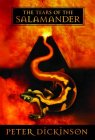
years.) A story Peter was working on for the Fire volume insisted
on expanding to book length with the title The Tears of the Salamander
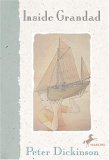
which was published in 2003. Now he's working on a short book called Inside
Grandad, about a modern boy who... but no, he’d better find out who
the stranger is before he starts talking about him.
Peter Dickinson Answers Some Frequently Asked Questions
If you're upon a School Assignment
You won't be wanting this refinement.
Cheer up! There's stuff about each book
Elsewhere, if you
would care to look.
Where Do You Get Your Ideas?
A money spider hanging in mid air.
Like a retinal fleck it dangles from the lamp
In the blank bathroom, neither here nor there.
You reach to take the thread. Your fingers clamp
On nothing – nothing to feel or see – and yet
The thread is there, because the spider heaves
Beneath your hand. You take and loose it at
The sill, to live what life a spider lives.
A symbol surely, or a metaphor
At least. The groping mind grasps nothing. Still,
Some line of thought must have existed, for
This fleck now dangles here, this page its sill.
How did you become a writer?
It isn't something I became —
It is the only life I know.
If you could somehow dam the flow
I'd be a writer just the same.
The condor in your local zoo,
Caged, wing-clipped, fed — what is it for?
It is a creature made to soar,
A dot on the enormous blue.
What is your favourite book?
What is your favourite kind of food? say I.
If you have one — just one — you're worth a sigh.
Have you any advice for a young writer?
Perfection? There is no such stuff.
But good enough is not enough.
Do you put people you know into your books?
Where was she from, the woman in the tower?
I pushed a doorway on the winding stair,
Stole hesitantly in, and she was there,
An absolute presence, filling the room with power,
Her life a moment in my sleeping brain —
I know her, though we never meet again.
By contrast, those I see from day to day
I know by fits and snatches at the most,
A fluid jigsaw, many pieces lost.
What their real self is, who am I to say?
Though she's the one with whom I share my life,
Can I be truly said to know my wife?
Peter Dickinson discusses books that mattered to him when he was young
St George for England by G.A. Henty
I came across a copy of this not long ago and was
astonished to find how bad it is, mostly undigested chunks of history about the
Hundred Years’ War, with our hero popping up from time to time to have an
adventure. Early on he rescues the girl who becomes his childhood sweetheart.
You don’t hear about her again till near the end, when you find he’s married
to her, and gets to rescue her again. None of this mattered, because I was
really into knights in armour. I read it every school holidays, which didn’t
take long because I knew which bits to skip.
Ivanhoe by Walter Scott
Ditto, really, except that it’s a much better book, and
you only need to skip the first fifty pages. You get Robin Hood as well as the
knights in armour.
The Radium Seekers by Fenton Ash
This must have been one of my father’s books. I (and my
brothers) read it whenever we stayed with my grandparents. I was given a copy
recently, and it all came back. Early science fiction, a cult classic, wildly
racist, but enjoyable tosh. Our hero and his friends go to South America to look
for radium, which has anti-gravity properties, and battle with a race of cruel
Inca-type people who use the radium to fly, and disguise themselves as giant
birds and terrorise the locals.
King Solomon’s Mines by Rider Haggard
Same sort of thing, but in Africa and with diamonds instead
of radium, but one of the great myth-making books, which still affects the way
we think about Africa, I’m afraid. The witch Gagool was one of my regular
nightmares.
The Jungle Books by Rudyard Kipling
Anything by Kipling, in fact. We had a complete run of
them, and I read the lot. A truly great writer, despite his hideous opinions. I
wouldn’t write the way I do if it weren’t for him.
Copyright © 2002 by Peter M. Dickinson. Reproduced at BookBrowse.com with the permission of Peter Dickinson
Unless otherwise stated, this interview was conducted at the time the book was first published, and is reproduced with permission of the publisher. This interview may not be reproduced or reprinted without permission in writing from the copyright holder.


David Almond, in his own words:
I was born in Newcastle and I grew up in a big Catholic family in
Felling-on-Tyne. I had four sisters and a brother and lots of relatives in the
streets nearby. My dad had been in Burma ...
(more)
If you enjoyed:
Inside Grandad
Try:
My Dad's A Birdman
by David Almond

It's a pipe dream of many an aspiring author: publish your debut novel, claim a spot on the New York Times bestseller list, and rack up an astonishing array of awards, including a Newbery Honor. For Kate DiCamillo, ... (more)
If you enjoyed:
Inside Grandad
Try:
The Tiger Rising
by Kate DiCamillo
We recommend 14 similar authors

L.A. Women by Ella Berman
Two ambitious writers in 1960s LA face betrayal when one writes a novel based on the other's life.






Your guide toexceptional books
BookBrowse seeks out and recommends the best in contemporary fiction and nonfiction—books that not only engage and entertain but also deepen our understanding of ourselves and the world around us.

