
-
Your next favorite book
is waiting.

Amongst other things, Mary Roach talks about why she got interested in the 'lives' of human cadavers in the first place and whether there are any 'bad' uses for dead bodies.
What got you interested in the "lives" of human cadavers in
the first place?
One day I was talking to a man who designs crash test dummies. He told me
that actual humans--both living and dead--have also been used by automotive
safety researchers. He explained that you not only need to know how much
force an impact is unleashing on a body (dummies tell you that); you also
need to know what kind of damage that much force will cause to an actual
body. And for anything other than very minor impacts, you would want that
body to be dead.
Anyway, I began to realize there's this whole work force of donated
cadavers out there, being put through their paces in labs and
universities. Like any new and foreign world, it was fascinating to me and
I wanted to know more.
What was the creepiest place you visited during your research?
I visited a lab where plastic surgeons were practicing new techniques. I
remember walking in, and there were these 40 heads, set up in pans on
tabletops, all in a row. Your brain doesn't really know what to do with
this. Mine chose to pretend we were in a rubber mask factory, and these
were just very realistic Halloween items being worked on.
When I began to talk to the surgeons and to see how useful it is for then
to have a chance to practice on someone who's not going to wake up and
look in the mirror anytime soon, what had started out seeming quite
ghoulish began to seem sensible and right. Even the fact that the heads
had been cut off -- this was done so that other doctors or researchers
could make use of the rest of the body. When you donate your remains,
nothing is wasted.
So do you plan to donate your body when you die?
I haven't signed any papers, but I do like the idea. You get to feel
really virtuous and righteous about yourself. I mean, if you've ever felt
undervalued as a human being, this might be a good thing for you. Lab
specimens are really valued. Everyone wants a piece of you.
One thing that appeals to me -- if that word can be used -- is to have my
organs plastinated and used in classrooms. I could be happy as a kidney on
a shelf. Plastination is forever -- it's the closest thing to immortality
that I've come across. And there's no icky formaldehyde. No muss, no fuss.
Of course, in reality, you don't get the luxury of pre-ordering what's
done with you. You go where you're needed.
Do you think more people would donate their bodies to science if they
could choose what happened to them?
Yes, I think that what puts some people off is the element of the unknown,
the lack of control over the fate of their remains. You can specify things
that you DON'T want done to you, but you can't put in a request, for say,
a gig as the skeleton at the Harvard Med School anatomy lab. In fact, even
if you willed your body to Harvard Medical School, you might end up
someplace else, if Harvard happened to have a surplus of cadavers and a
nearby medical school was in need, off you'd go.
Have you encountered anyone so far who was offended that you wrote a
book about dead bodies? What was/would be your response to that?
Perplexed, maybe, but not offended. But I would understand. Cadavers evoke
a lot of complicated reactions and emotions. If someone had recently lost
a family member or close friend, I could imagine that a book about dead
bodies might remind them of what they'd just been through and therefore
evoke some negative feelings. It's certainly something that I've thought
about.
What was it like to spend so much time around dead bodies? Did it
change the way you feel about death?
It was less difficult than I'd anticipated. The dead -- and I'm talking
about the anonymous dead of science, not the bodies of loved ones -- are
fairly easy to be around. They're the same sort of company as people
across from you on subways or in airport lounges, there but not there.
Your eyes keep going back to them, because they're the most interesting
thing in the room, and then you feel bad for staring.
Did it change how I feel about death? I'm still plagued by all the same
questions - do we go somewhere else when we die? Looking at a body, you
are hit with this unwavering sense that the person whom this body used to
be, is simply and absolutely not there. Closed for business. Nobody home.
And it suddenly becomes even harder to imagine it all stopping there, with
this mass of inert tissue. It just seems like such an unjust anticlimax.
You very much want to believe that this person has simply shed one hull,
one motor housing, for another kind. And moved on.
Do you sense a trend in the fact that dead bodies seem to be discussed
and shown more in public than they used to be (for instance, on Six Feet
Under, and CSI)? If so, what do you think that says about society?
Certainly the interest and the fascination have always been there. I think
it's not so much a trend as an opening of the floodgates. I imagine plenty
of network execs had long wanted to air shows on these topics, but no one
wanted to go first. Once someone did, then everyone else felt free to
follow suit, and now you've got two dozen shows with bodies on slabs.
Why is it that most people are willing to donate their organs, but very
few want to donate their bodies to science once they're dead?
Sadly, most people actually aren't willing to donate organs. The majority
of families in a position to donate organs - i.e., those with a braindead
loved one being kept "alive" on a respirator -- will refuse.
Which is really tragic: There are some 80,000 people on the waiting list
for donated organs, and 17 die every day.
But you're right, more people feel positively about donating organs than
about willing their body to a medical school. I imagine most people simply
don't want to think about what might happen to them. It takes a special
kind of person, a very practical-minded person, to say, hey, who cares,
I'm not going to be there, divvy me up and do what you will. Especially
when you swap the immediate and known heroism of donating organs with the
unknowns of the anatomy or research lab. But if you can get past all that,
it's a noble thing to do. Besides, decomposing or burning up isn't
especially pretty either. Might as well do something useful.
In your opinion, are there any "bad" uses for dead bodies?
Historically, there've been plenty. There was a doctor in Paris in the
1930s who put cadavers up on a homemade cross in his lab, to try to prove
the authenticity of the Shroud of Turin. I'm sure there are religious
people out there for whom this might be their first choice as a body
donor, but it's hardly the sort of good-for-all-mankind research you
expect doctors to be involved in. This is the sort of thing for which you
want to have express, specific signed consent.
Some uses of bodies for cosmetic procedures are questionable. Tissue
donors' skin is sometimes used as wrinkle filler and I've even heard of it
being used to extend penises. I have no preconceived notions about the
hereafter, but I stand strong in my conviction that it should not take the
form of someone else's underpants. Perhaps there should be an option on
the willed body form that says "Not OK to use me for cosmetic
purposes."
But even applications that sound "bad," often turn out to be
quite justifiable. For instance, the only accurate, dependable way to test
protective footwear worn by landmine clearance teams is to expose an
actual leg to a landmine (for obvious reason, this is rarely done). Is
this "worse" or more horrific than cutting a leg up bit by bit
in a med school anatomy lab? I don't think so. Both are medically,
ethically conscionable uses of a donated body. One's just a bit harder, on
first presentation, to swallow.
Do you think human bodies will be disposed of differently in the
future (i.e. are there alternatives to cremation and burial)?
I think that what's been going on in Sweden - a new method of organic
composting of remains, which are then used to grow a memorial plant -
could catch on here eventually. Out in California first, of course. The
body is frozen and then broken down via ultrasound into small pieces,
which are then freeze-dried and buried in a biodegradable box, to become
compost. The Swedes are perhaps more practical than we are, and certainly
more environmentally aware. They don't like frou-frou funerals or
embalming, and they object to cremation because of the mercury from dental
fillings that gets into the atmosphere. And in polls, they seem to very
much like the idea of one's molecules being directly taken up into a
plant. Sort of a literal reincarnation. The inventor of the process has
already spoken to people in the U.S. who are interested in licensing the
process. It'll be a while though. The machinery is still being tested.
Unless otherwise stated, this interview was conducted at the time the book was first published, and is reproduced with permission of the publisher. This interview may not be reproduced or reprinted without permission in writing from the copyright holder.


Dr. Erica Brown is a writer and educator who works as the scholar-in-residence for the Jewish Federation of Greater Washington. She is the author of Inspired Jewish Leadership, a National Jewish Book Award finalist, and a ... (more)
If you enjoyed:
Stiff
Try:
Happier Endings
by Erica Brown
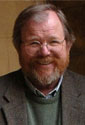
Bill Bryson was born in Des Moines, Iowa. He moved to England, where he worked for The Times and The Independent, and wrote for many major British and American publications.
Bill Bryson's bestselling books include A Walk ...
(more)
If you enjoyed:
Stiff
Try:
A Short History of Nearly Everything
by Bill Bryson
We recommend 24 similar authors

L.A. Women by Ella Berman
Two ambitious writers in 1960s LA face betrayal when one writes a novel based on the other's life.






Your guide toexceptional books
BookBrowse seeks out and recommends the best in contemporary fiction and nonfiction—books that not only engage and entertain but also deepen our understanding of ourselves and the world around us.

