
-
Your next favorite book
is waiting.

Peter Robinson discusses the childhood experiences that shaped Banks' inherent complexities in Close to Home
Inspector Banks is at once gruff and longing, intuitive and scientific, reckless and meticulous. Contradictory by definition, this rich character
has propelled his creator, Peter Robinson, to the top of bestseller lists
on both sides on the Atlantic. Now, readers will discover the childhood
experiences that shaped Banks' inherent complexities in Close to Home.
Peter Robinson's first novel, Gallows View, published in 1987,
was short-listed for a best first novel award in Canada and for the John
Creasey Award in the United Kingdom. Since then Robinson has followed with
another 12 novels, leading Banks through the arc of a marriage and
divorce, a successful career in police work, and increasingly dark and
suspenseful cases.
With his most recent novel, Close to Home, readers will delight
in Robinson's ability to capture an era -- the 1960s -- with complete
accuracy, including the sensations, sounds, and subversions that made it
different from any other time in history.
How and when was Detective Inspector Alan Banks born?
In the early 1980s I read a lot of British mysteries featuring a detective
and sidekick operating in various parts of the U.K., and I thought it
would be a good idea to do the same in Yorkshire, where I come from.
At the time, did you realize that you would still be writing about
him decades later?
No! And I have to tell you that it gets harder with each book, not easier.
Readers and critics alike admire your ability to enrich and deepen
Banks' character in each book. How do you, as a writer, approach this
evolution?
There's no master plan for Banks, but I like to dig a little deeper into
his feelings and his background each time around. This is one of the
things, if not the main thing, that helps keep the series fresh for me.
Though you were born and raised in England, you've lived your adult
life in Canada. However, the Inspector Banks novels are set firmly on
British soil. What is it about your childhood home that attracts you?
Well, I think at first there might have been an element of nostalgia. I
hadn't been away long when I started writing the Banks novels, so I still
knew England far better than I knew Canada, which made Yorkshire a natural
choice. I think I was feeling a bit homesick, too, so in a way writing
about the place made me feel closer to it, at least in my imagination. I
still have family and friends over there and go back frequently now.
Your books contain countless references to musical work --
everything from rock to opera to jazz. What role does music play in your
writing process and in character development in your latest installment of
the Inspector Bank series, Close to Home? More specifically, 60's
rock music?
In general, Banks' tastes have developed over the years to include
classical and jazz, but he started with 60's pop music, and in Close to
Home we revisit his adolescence, specifically the summer of 1965,
which he spent with his ear glued to his transistor radio and his eyes on
the passing girls. The music of that particular August anticipated the
experimentation and poetry of the later 60s, with the Beatles, the
Animals, the Byrds, the Yardbirds and Joan Baez all in the charts. Bob
Dylan's "Times They Are A-Changin'" and "Subterranean
Homesick Blues" had both been hits earlier that year, and "Like
a Rolling Stone" was to follow in September. The Beatles had begun
the transition from simple pop songs to more complex musical and lyrical
explorations when John Lennon entered his Dylan phase the previous summer,
and this was coming to fruition in the August 1965 album Help!, which
Banks and his friends spend a great deal of time listening to. Later that
year came Rubber Soul and, by the summer of 1966, Revolver. But simple pop
songs remained the staple of the times, and Tom Jones, Dusty Springfield,
Billy Fury and the Shadows, among others, were all in the charts. These
were mostly love songs, and they tended to reflect the complications of
adolescent love and lust, which Banks and his friends could certainly
relate to. So the music is central to the time, that mid-point of the 60s
when the world was full of possibility, especially if you were young, and
everything was about to change. In the midst of all this, Graham Marshall,
a friend of Banks', goes missing. If there's one pop tune that ties the
present to the past, it's Marcello Minerbi's "Zorba's Dance,"
which Banks hears at the beginning of the book around the same time he
finds out that his friend's bones have been unearthed in a field.
One of your tutors in your Master's program was Joyce Carol Oates.
Are there lessons you learned from her that still influence and shape your
work today?
I think the main thing I learned from Joyce Carol Oates was to take myself
seriously as a writer, to believe in myself. There are so many people
ready to discourage you in this business that it was really important to
have someone of her stature actually being very positive about what I was
doing. She didn't teach the nuts and bolts, and she wasn't dogmatic in her
criticism, but you always came away from discussions of your work knowing
where the strengths and weaknesses were.
You are noted for confronting gritty details and dark themes in your
work. Have you ever been shocked, or perhaps frightened, by the sinister
truths you explore?
Certainly Aftermath took its toll in sleepless nights. Generally,
at the end of the day, I'm able to put some distance between myself and my
subject, but obviously some explorations into the dark side haunt me more
than others, especially crimes involving children and young people in
general.
What do you like to do when you are not writing?
Travel. Watch movies. Read. Spend an hour or two in the pub. The trouble
is that being a writer comes to involve much more than writing if you are
at all successful. That means you have to act as your own bookkeeper,
secretary and accountant, too, so it leaves less spare time than people
might think. I also teach a couple of courses at the University of
Toronto, so that keeps me busy, too, along with the touring, readings and
other speaking engagements.
Many of the ideas for your book stem from real-life crimes. When you
are reading the paper or listening to the news, what is it that grabs you
about a particular news story and inspires you to write about it?
Inconclusiveness. I like newspaper stories that are incomplete, that give
me room to imagine the rest. It's no good to me reading about something
that's all neatly solved and wrapped up. That's why so many of my stories
revolve around human psychology, around why someone commits a certain
crime, or series of crimes. I don't profess to know the answers but I like
to explore the possibilities.
You've taught writing in many different settings. What are the three
essential lessons that you try to offer your students?
Put your bum on the chair and your fingers on the keyboard. I know that's
only two, but they're the essentials. I might add read widely, too. But
when my students fail it's usually nothing to do with lack of talent but
everything to do with lack of application. So many people want to be
writers, but few actually want to write!
Crime writing requires something of a morbid imagination. Is this
something you always possessed, and has it increased as you've plunged
deeper and deeper into your work?
Yes, I've always had a morbid imagination, and I'm only glad that I'm able
to share it with others. If I didn't have some sort of creative outlet for
it, lord knows what kind of shape I'd be in.
Your books, of course, investigate the effects that crimes have on
their victims. However, your writing also seems increasingly concerned
with the broader effects on families, friends, and communities. How do you
gauge those effects and capture them?
I suppose I dig back into my own experience and then subject it to my
imagination. I mean, Banks isn't me, but we share many of the same
memories of the 60s. I grew up on an estate much like the one Banks lives
on in the flashbacks in Close to Home. In some ways these estates,
at least back then, were rather like villages, worlds unto themselves, and
something like the disappearance of a child would cast a very long shadow
indeed. Also, because people lived so close to one another, there's every
chance that someone would know something, and someone else would be
keeping a secret. There's also a present day mystery in Close to Home
which deals with the disappearance of a boy named Luke Armitage, whose
real father, a well-known rock star, deserted his family when Luke was a
baby, and then killed himself soon after. Luke is talented, artistic,
moody and troubled, and because he's different, he's picked on a lot at
school. As I remember from my own school days, young boys and girls can be
extremely cruel. Luke's stepfather is an ex-footballer who doesn't have
much time for his son's artistic tendencies, so there's conflict at home,
too. Luke's and Graham's stories have many parallels, and past and present
connect on a number of levels. Because the two boys are not present to
speak for themselves, their stories are largely told through family,
friends and other members of the community.
With 13 volumes of Inspector Banks now behind you, could readers
hope for another 13?
Perhaps. Right now, I'll be happy just to get the number 14 on deadline!
Anyway, there's no end in sight yet, and people don't need to worry that
I'm going to kill off Banks in the near future. He might even stop
smoking.
Unless otherwise stated, this interview was conducted at the time the book was first published, and is reproduced with permission of the publisher. This interview may not be reproduced or reprinted without permission in writing from the copyright holder.

Crais is the author of the best-selling Elvis Cole novels. A native of Louisiana, he grew up on the banks of the Mississippi River in a blue collar family of oil refinery workers and police officers. He purchased a ... (more)
If you enjoyed:
Close To Home
Try:
The Forgotten Man
by Robert Crais

Steve Hamilton is the New York Times–bestselling author of twelve novels, most recently The Second Life of Nick Mason and Die a Stranger. His debut, A Cold Day in Paradise,won both an ... (more)
If you enjoyed:
Playing with Fire
Try:
Blood Is The Sky
by Steve Hamilton
We recommend 10 similar authors
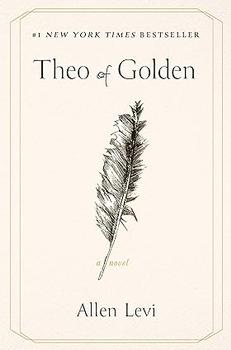
Theo of Golden by Allen Levi
One spring morning, a stranger arrives in the small southern city of Golden. No one knows where he has come from…or why…






Your guide toexceptional books
BookBrowse seeks out and recommends the best in contemporary fiction and nonfiction—books that not only engage and entertain but also deepen our understanding of ourselves and the world around us.

