
-
Your next favorite book
is waiting.
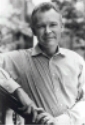
An interview with Terry Brooks in which he discusses his new fantasy series that begins with Armageddon's Children.
Question: Ever since the 1997 publication of Running with the Demon,
I've been fascinated by the implied connections between the present-day world of
the Word and Void series and the far-future world of the Shannara books. Now
you're making those connections explicit for the first time. How long have you
been planning to write this new series, how many books will comprise it, and how
long do you expect it to take you to complete?
Terry Brooks: This series could run as many as nine or ten books, and it
will take at least that many years to complete it. But I intend to break it
down into three different time periods with different sets of characters so that
a single storyline will conclude within three years of start up. That's my plan
just now, but it is subject to change without notice.
As for prior thought on this series, I haven't been thinking about it in
explicit terms for all that long. Only about two years.
Q: Can you talk about some of those connections without giving away any
spoilers? Did you always intend for the two series to be linked, or did you
only gradually come to that realization? How difficult has it been to mesh the
two mythologies?
TB: It was a gradual evolution in my thinking. There has always been a
strong demand from readers to go back in time to the Great Wars and write
something about the destruction of the old world and the beginning of the world
of the Four Lands. It was never anything I wanted to do, so I left it alone.
But after concluding the first three books of Word & Void, I began thinking
about where I would go next with the series and decided fairly early on that it
would go into the future of John Ross's dreams, when the nightmare would become
real. The parallels between the two series were always there; I just wasn't
paying close attention.
Q: Armageddon's Children is set some years after the events of Angel Fire
East, the final book in the Word and Void trilogy. Do readers need to be
familiar with that trilogy to follow the new series?
TB: No one really needs to have read anything of mine in advance of
reading this series. That was one of the challenges–to create a story that
would stand apart from the other books but would still resonate with prior
readers. No one wants to know going into a book that in order to understand the
story they have to go back and read fifteen other books first! So I gave it its
own space and time in which to develop.
Q: Tell us a little bit about the novel.
TB: A little bit, huh? Well, using Hollywoodspeak for a moment, this
is street kids meet Road Warrior. My usual approach to storytelling is to focus
on several different characters or groups of characters that gradually come
together in the course of the story. That is the case here, as well. The
Ghosts are a tribe of street kids living in a post-apocalyptic world, abandoned
and forgotten by nearly everyone. But one of them is something special,
possessing a talent that might be the salvation of humanity. A few others learn
of this and set out to do something about it–some for good and some for bad.
Q: Running with the Demon introduced the character of John Ross, a Knight of
the Word who fought against demons on behalf of a mysterious supernatural figure
called the Lady. Ross suffered nightmares each night of the degraded world that
would arise if he and the other Knights failed in their mission. Now, in
Armageddon's Children, the world of Ross's nightmares has come to pass, and
there are only two Knights left to face it. Can you describe what that world is
like. Do you think that we, in the real world, are moving toward something
similar?
TB: Well, I worry about this. I don't know too many people who are
happy with the way things are going in the world just now. But in the world of
the Ghosts, things are much, much worse. Plagues, wars and generally horrific
changes in the environment have altered the world so thoroughly that the
population has been reduced to a fraction of its present size. Most people in
this world live in compounds–walled fortresses where self-made governments
rule–or on the streets and in the countryside, like the Ghosts. Governments as
we know them no longer exist. The climate is completely changed. Food and
water are hard to come by. Life is dangerous and uncertain. Mutations have
occurred in all life forms, some of them very dangerous. Humans in various
forms hunt each other. Not an appealing situation.
Q: This brings up the question of the extent to which your fantasies are
enmeshed in the real world. Rather than being escapes from it, like many
fantasies, it seems to me that you are attempting to engage directly with
contemporary events, such as, for example, the accelerating pace of
environmental degradation and the refusal to face "the inconvenient truth" of
global warming. Rather than offering escapism, you seem to be issuing a call to
action. Do you feel a special responsibility to address these issues in your
work? Where does that sense of responsibility come from?
TB: One of the attractive aspects of fantasy literature is that it
provides a forum for looking at social issues in a different, less
confrontational light. By taking flashpoint subjects that many of us have
already made up our minds about and setting them in another world and a
different time, we allow space enough to reexamine our thinking. Good
storytelling is always the first and foremost requirement of successful fantasy,
but after that, there is almost a moral obligation to do something more with the
form. The Lord of the Rings, The Chronicles of Narnia and dozens of other
fantasy series have gone that route. I do feel a responsibility to take that
same path.
Q: One of the clearest connections to contemporary reality in the novel your
decision to name a character's dog after Vice President Cheney. Some might
think it a bit of a put down, but in fact the canine Cheney is quite heroic.
You seem to admire Cheney, or perhaps I should say both Cheneys . . . yet isn't
the vice president a forceful advocate of the kind of short-sighted
environmental approaches that you criticize in this novel and elsewhere?
TB: Readers will have to draw their own conclusions. The writer's views
shouldn't intrude.
Q: You've written dark books before, but this one strikes me as the darkest
yet, with civilization and the environment in ruins and the human race facing an
extinction that a significant number of them have actively invited and
embraced. Do you ever find a part yourself pulling back from material that the
writer in you insists on exploring? Is there a toll to this kind of writing? I
hadn't thought of it before, but isn't it kind of similar to being a Knight of
the Word?
TB: Interesting comparison. But I wouldn't think of myself as quite so
heroic. I do have a firm rule about situations or subjects I feel compelled to
write about, but hesitant to tackle. Go after them. Never back off. If it
feels hard or threatens to exact an emotional toll, then you have to get past
it. That's how you learn about yourself; that's how you discover how you really
feel about things.
Q: Who or what is the Lady? Is she an embodiment of the Word or merely
another of its servants?
TB: The Lady suggests several possibilities, all of which a reader can
quickly discern. On the surface of things, she is the Voice of the Word.
Deeper down, she might be something more.
Q: Thinking of the characters of Findo Gask and Delloreen, it seems that
humans make the most powerful demons, just as they make the Word's most powerful
servants. In other words, human beings seem to be at the very heart of the
struggle between Word and Void. Or perhaps another way to state that would be
that the struggle between them takes place primarily in the human heart. Can
you talk about this?
TB: Endlessly, but I prefer to let my books speak for themselves on this
subject. I will make a couple of comments. The concept of demons being
generated from within is an old one, so this is another case of following in the
footsteps of those who have gone before. Also, readers of Shannara might
remember that the demons of the Faerie World that were shut away in the
Forbidding were ultimately discovered to have been Elves who had chosen power
over reason. Humans in the world of Armageddon's Children are discovering the
same thing. We are our own worst enemy, and we take many dark forms. Even the
Knights of the Word discover that temptation is an ongoing presence that must be
faced and overcome. Finally, it has always been my belief that the scariest
monsters we encounter are the ones we make of ourselves.
Q: The two surviving Knights of the Word are Logan Tom and Angel Perez. Like
John Ross, they are people who have been deeply scarred by demonic evil yet have
neither surrendered to it nor gone over to it. What does the Lady look for in
her Knights?
TB: A strong sense of purpose, a good heart and a willingness to
sacrifice. All are things with which we are familiar as human beings. A Knight
of the Word must never put himself or herself first. The oath of allegiance is
to the efforts of the Word to preserve and protect humankind against its
enemies–even when the enemies are themselves. The Knights must choose every day
to be better than those they serve. It is the essence of who they are.
Q: It seems clear that the Knights of the Word are the predecessors of the
Druids.
TB: I think I can safely say that the readers will be surprised at how
the role of the Knights of the Word plays out in the forthcoming books. They
have a connection with the Druids, but it is not entirely what it might seem at
first glance to be.
Q: We have to be careful here, because the identity of the gypsy morph is a
key mystery in the novel, but can you describe generally what this creature is
and what it represents?
TB: The Gypsy Morph was conceived of wild magic in Angel Fire East.
Wild magic is generated by the earth and comes along rarely and never takes the
same form. It can be captured and shaped in rare instances, but mostly it finds
its own identity. The Morph in question has done this, but its path has been an
uneven one.
Q: I was expecting elements from the Shannara books to be featured in
Armageddon's Children, but I was still surprised when the Ellcrys and the
Elfstones appeared. Even though you've always been quite clear about the
relationship of the world of Shannara to our own world, it was nevertheless a
powerful jolt to see them brought into such sharp juxtaposition. I'm curious as
to whether you felt anything similar while writing the book.
TB: What was unexpected was how hard it was to change voices when
writing about the Elves. Writing about the street kids and the Knights of the
Word was much easier. But the Elves don't talk like we do, don't think or live
like we do, so I had to give a great deal of time over to getting it right,
particularly in the next book, where the Elves are more prominently featured.
The Elves are not fond of humans, who have basically screwed everything up since
becoming the dominant species. That dislike was difficult to contemplate, even
in the light of how our own world reflects so much anger.
Q: How far ahead in the series have you written? Have you finished the next
volume? Any hints of what to expect?
TB: I am about halfway through the second book. As I said, it has a
larger focus on the Elves, although we will also follow the other characters and
find out the secrets some of them were concealing in Armageddon's Children.
Q: How much do you keep up with the contemporary fantasy scene?
TB: I do most of my reading in other areas. I write fantasy, so
reading a whole lot of it in addition becomes a bit overwhelming. Reading is my
time off from my writing life, and I like to vacation in other lands. That
said, new fantasies come to my attention from time to time, and I look at them
with interest.
Q: On the whole, do you feel optimistic about the health of fantasy?
TB: In spite of what it might seem, I am a very optimistic sort of
guy. I think fantasy is doing just fine. I wish readers of other fiction would
take a little time to discover how very good it can be.
Unless otherwise stated, this interview was conducted at the time the book was first published, and is reproduced with permission of the publisher. This interview may not be reproduced or reprinted without permission in writing from the copyright holder.

Kenneth Calhoun has had stories published in The Paris Review, Tin House, and the 2011 Pen/O. Henry Prize Collection, among others. He lives in Boston, where he is a graphic design professor at Lasell College. (more)
If you enjoyed:
Armageddon's Children
Try:
Black Moon
by Kenneth Calhoun
Nobody had ever won the Hugo and Nebula awards for best novel two years in a row until Orson Scott Card received them for Ender's Game and its sequel, Speaker for the Dead, in 1986 and 1987. The third novel in the series, ... (more)
If you enjoyed:
Armageddon's Children
Try:
Ender's Shadow
by Orson Scott Card
We recommend 11 similar authors
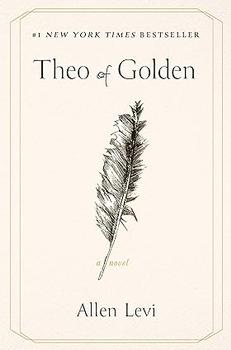
Theo of Golden by Allen Levi
One spring morning, a stranger arrives in the small southern city of Golden. No one knows where he has come from…or why…






Your guide toexceptional books
BookBrowse seeks out and recommends the best in contemporary fiction and nonfiction—books that not only engage and entertain but also deepen our understanding of ourselves and the world around us.

