
-
Your next favorite book
is waiting.
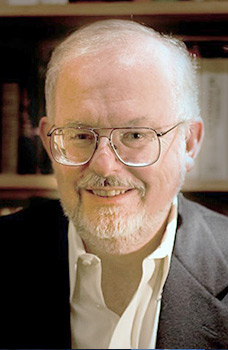
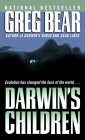
Greg Bear discusses the factual existence of Endogenous Retroviruses in almost all living things, how they serve a number of useful functions in humans, and whether such an ERV could lead to the substantial genetic changes he explores in Darwin's Radio and Darwin's Children. He also talks about his views on religion and politics.
Q: In Darwin's Radio, you wrote about the evolution of a new human
species that is triggered by an HERV, or Human Endogenous Retrovirus—which, if
I understand correctly, is a kind of ancient virus that has entered into human
DNA and persisted there in a dormant state for hundreds of thousands, if not
millions, of years. HERVs sound so much like pure science fiction that it's
rather shocking to discover they actually do exist inside us, although without
the evolutionary properties you ascribe to them . . . at least, so far. Can you
talk a little bit about HERVs, both in fact and in your fiction?
GB: Endogenous Retroviruses (ERV) are real and exist in various forms in
nearly all living things. ERVs appear to serve a number of functions; in humans,
a gene from an HERV (that is, a virus gene) helps human embryos implant in the
mother’s womb. So, they are no longer solely disease-causing (though
expression of ERV may lead to some autoimmune disorders).
Within our genes are many "mobile" genes that can copy themselves and
transport other genes from one position to another. These are called transposons,
or retrotransposons, and they may play a huge role in organizing and regulating
our genome. Interestingly, retroviruses bear a distinct resemblance to
retrotransposons. The question then becomes, which came first—jumping genes,
or viruses? And did one lead to the other?
Infectious retroviruses, such as HIV, which causes AIDS, may very well be
derived from ERV genes in other species, such as monkeys or chimps. In Darwin's
Radio, I postulated an HERV that acquires the ability to infect other
individuals and carry targeted genes from one person to another. No such HERV
has been discovered, but I suspect we’ll find something similar soon—though
perhaps not with such radical effects.
Q: We think of viruses as being harmful, parasitic. But what you're talking
about sounds more like symbiosis—I mean, especially the idea of a viral gene
helping human embryos implant in the womb. How common is that?
GB: It happens in all of us. It’s how we get born. As to how often
viral genes are used for constructive purposes, no one yet knows. Some
scientists theorize that embryos use ancient retroviral particles as part of a
campaign to prevent the mother from rejecting them as foreign tissue. This is
similar to the sort of immune system suppression found in HIV, the virus that
causes AIDS, but with a positive result.
Q: The specific HERV that causes the evolution in Darwin's Radio is known
as SHEVA. How does SHEVA work? How do SHEVA children differ from the human norm,
and how did you decide on these particular physical and psychological
differences?
GB: SHEVA children are the result of a programmed reshuffling of genes
induced by a transfer of coded genetic signals. Their characteristics are
largely determined by a kind of meta-evolutionary response. The genome is
capable of reacting to the outside environment through our immune system and
stress hormones and chemicals. (ERV and mobile genes are frequently activated by
stress hormones.) The immune system acts as a kind of radar, informing the
genome about environmental changes—and in SHEVA children, the stress of
changing social conditions determines the changes. In a sense, the genome is
making an "educated guess" based on past experience, giving the new variety
of humans a better statistical chance to succeed by mixing and matching and even
expanding upon varieties of past traits—smell, scent production, communication
abilities in both the brain and elsewhere. Writing about a new kind of teenager
in Darwin's Children was a real challenge!
Q: And yet it's not exactly as if they're more advanced than we are; it's
more like they're significantly different. In some respects, they actually seem
at a disadvantage. For example, they don't seem as interested in technology as
we are. There is a common idea that each new stage of evolution automatically
results in a superior species that will necessarily out-compete its
predecessor—indeed, that the two must be enemies in a struggle only one can
survive. You obviously don't think that's the case.
GB: The new children, once they come into their own, will be as interested
in technology as the rest of us—but for now, they live at a disadvantage.
Technology is human. The point of all the evolutionary changes in Darwin's
Radio and Darwin's Children is improving the speed and efficiency of
communication. When the children network, they do it ever so much better than we
do!
Q: What I found particularly fascinating was how the psychology of the SHEVA
kids seemed to follow from their physical attributes; it reminded me of Freud's
famous phrase, "biology is destiny." Do you believe that? Are human
beings going to be able one day to take control of our biology and, hence, our
destinies?
GB: There is no such thing as a fixed biological destiny. Identical twins
can lead very different lives. Biological systems are immensely complicated and
flexible; they have to be to produce complicated organisms such as humans. The
mix of genetic traits and developmental processes both before and after birth
help shape us for our future roles, but sometimes things go wrong. Thirty
percent of all pregnancies, roughly speaking, abort spontaneously because of
genetic or developmental errors. Perhaps ten percent of children who are born
and survive childhood are defective enough to face major problems later in life;
and all of us, one way or another, have small deficits. None of us are perfect,
but on the other hand, most of us overcome our deficits and become productive
(and reproductive!) members of society. The same is true of all other forms of
life. Mistakes happen, but we are designed to overcome them—most of the time.
Humans are proof positive that nature can control its own evolutionary course.
We’ll be doing a lot of that very soon now, with fascinating consequences.
We’re natural, and we’re controlling evolution . . . hmm!
Q: Darwin's Children is set a decade after the events of Darwin's Radio.
What has happened in that time? How does the world of Darwin's Children differ
from that of the first novel?
GB: It’s a harder, more frightened world. The school of biological hard
knocks since SHEVA has scared the bejesus out most of us, and opened up
potential new frontiers that are, if anything, even more frightening than the
atom bomb. As I was writing Darwin's Children, I found the real world doing my
research for me—changing in ways I did not like and becoming harder, more
conflicted, less secure. Much of what is in the novel was conceived of or
written before 9/11, and now seems more than a little prophetic.
Q: A related question: were there any significant advances or discoveries in
genetics that took place following publication of Darwin's Radio which
compelled you to revise the science of that novel as you were penning the
sequel? I imagine that must be an occupational hazard for a science fiction
writer telling a story about the near future!
GB: Not basically. In details, perhaps. I was a little worried that my
theories with regard to viral contributions to the genome, and the ability of
viruses to access and use us as a kind of gene library, might be way beyond the
cutting edge. But extensive criticism from scientist readers has yet to point to
any major goofs. I’m sure they’re there, but nobody yet knows quite what
they’ll turn out to be! That is, the theories are still interesting, but very
speculative. As for my evolutionary speculations, I’ve seen a fair number of
science books and articles published since Darwin's Radio which, to one extent
or another, make me believe I am still on the right track. I list some of them
in Darwin's Children and on my Web site, http://www.gregbear.com.
Q: Let me ask you the same question with respect to anthropology. In Darwin's
Radio, you speculated that an HERV had caused Neanderthal parents to
give birth to Homo sapiens offspring. Where does the jury now stand on
possible interbreeding between these two branches of the hominid family tree
and, thus, the potential presence of Neanderthal genes in the human genome?
GB: I don’t think anybody really knows. Some analysis of mitochondrial
DNA from Neanderthal specimens had been done even before publication of Darwin's
Radio, and those scientists reached the conclusion that Neanderthals
and humans could not be directly related; they may have had a common ancestor
500,000 or more years ago. But other scientists I’ve spoken to regard such
statistical analyses as highly speculative in themselves. We just don’t know
the extent to which DNA controls its own mutational processes, and that could
skew any and all statistical results that assume totally random mutation.
Biologists have made a lot of assumptions over the decades that are turning out
to not be true; it’s a hard time for older biologists, who have to relearn
much of what they were taught in school!
Q: Is something like genetic reverse-engineering theoretically possible? In
other words, if there were Neanderthal DNA in the human genome, could a future
technology recreate that species? Or, for that matter, activate any of the HERVs
that we carry around?
GB: Back-breeding of humans the way that some livestock has been
back-bred to early stock, or wild-type animals, could probably produce
Neanderthal-like individuals, but that may not be the same thing as actually
digging into the DNA and reconstructing a theoretical set of Neanderthal
chromosomes. We have to remember that our definitions of what is Homo sapiens
neanderthal and what is Homo sapiens sapiens (modern humans) is based
on bones alone, for the most part. All humans on Earth—from pygmies to
Vikings—can interbreed. What if every new generation includes largely
undetected, "silent" evolutionary mutations that adapt them to their
environment in specific ways that we barely understand? Much evolutionary change
may happen way below the level of what sticks around in bones!
Q: You've done a lot of anthropological research for both books; not to give
anything away, but Darwin's Children also features a revolutionary
anthropological discovery. Have you considered actually setting a novel back in
prehistoric times?
GB: If you mean challenging the Gears or Jean Auel at their game, no. But
dabbling is terrific fun.
Q: One of the most visceral reactions I had as I began to read the novel was
that the social and political setting you describe—in which the U.S.
government, under the control of a Republican administration, has clamped down
hard on civil rights following the appearance of the SHEVA children, forcibly
separating them from their parents and placing them into camps—was a criticism
of certain acts and tendencies of the current Republican administration as it
goes about fighting the war on terror, as well as of conservative media outlets,
especially FOX. Am I off base here? Do you think that this perception could lead
to controversy . . . or to the novel being read as an allegory?
GB: It’s not allegory. It’s unfortunately a barely exaggerated
description of hard political fact, written before the fact. I’ve worked with
smart and capable conservatives over the decades—Jerry Pournelle is a good
friend of mine—and what’s happening in Washington now is scary in the
extreme to civil libertarians of all political stripes. Fox News commentary is
rude, dishonest, corrupt, and very entertaining. Its news coverage is often
openly biased, "Fair and Balanced." I watch it often just to keep my blood
pumping. Many of their commentators are coiffed and talk like beady-eyed used
car salesmen, with a comparable grasp of the truth.
Trent Lott’s mistake was only proof of what I’ve known for some time—that
modern conservatism in America is dominated by old Southern culture. It’s the
Confederacy triumphantly reborn, hiding its origins as best it can and minus,
for the most part, Jim Crow and the urge to keep slaves. Everything
else—patriarchy, family and honor first, racism, hypocritical fundamentalism,
catering to the aristocracy, rampant sexual hypocrisy, challenges to the
constitution in the name of state’s rights (but going after states who don’t
tow the conservative federal line), is straight out of any history of the
Confederacy. And remember: with regard to Bush administration financial
strategies, consider how much Confederate money is now worth.
Why is John McCain so distrusted among southern conservatives? Because he’s
not a Confederate. Why was Bill Clinton so soundly hated by southern
conservatives? Because he was a southern boy who went Yankee, emulating a
Catholic Massachusetts fellow named JFK. Why do blue-collar men all around the
country vote Republican even when it’s against their own best interest?
Tradition? Hoodwinked by Confederate charm? Go figure.
And why was Trent Lott so conspicuously thrust into the Confederate attic?
Because he was so damned stupid as to show all his cards—including some real
Jokers—in a high-stakes poker game.
Q: I was also struck by the religious aspect in the novel; it's somewhat
unusual, I think, for a science fiction novel to interject God into the story as
a mystical presence. There are, of course, plenty of science fiction novels that
deal with God or gods, but usually as knowable entities, with much of the
mystery removed thanks to application of scientific methodology and advances in
technology. You don't take that route. When Kaye Rafelson has transcendent
experiences that she comes to equate with the presence of a higher power, the
mystery remains. Why did you bring God, or whatever name one chooses to call it,
into the novel in this way? Are you suggesting that an invisible hand shapes the
course of evolution?
GB: Without tipping my hand too much, I’ll say no: I fundamentally
reject creationism or intelligent design by God. I offer a solution that is
never heard in either scientific or religious circles: the mystery of God allows
for free will in both human behavior and in natural evolution. Nature is
thoughtful and creative and even willful—one might say soulful—top to
bottom, but even that doesn’t begin to describe the reality. In essence, what
Kaye experiences is what well over half of the human race experiences in some
form or another: pure epiphany, minus any overt theological girdles. It’s the
real thing.
Does God dabble in evolution? I doubt that anyone, scientist or theologian, will
ever know for sure. Does God exist? The phenomenon of epiphany exists, and
is—so far—completely outside the realm of scientific study. (Meditative
states are easier to reproduce; epiphany is spontaneous and unpredictable.) The
rest is faith, a very personal thing.
I’ll be curious to see how quickly the "fundamentalists" and atheists in
science, and the fundamentalists in the religious community, cotton on to this
logical solution to the supposedly unbreakable dilemma. In my opinion, there is
no dilemma—just a lack of creative and rational thinking on both sides.
Q: Does this story end with Darwin's Children, or do you have plans to
continue the series?
GB: There is very likely going to be a novel about Stella Nova and her
son, carrying us through the middle of this century.
Q: What are you working on now?
GB: A high-tech ghost story set in the telecom industry! But absolutely
no phone calls (or spam) from the dead. And about that, for now, enough said.
Unless otherwise stated, this interview was conducted at the time the book was first published, and is reproduced with permission of the publisher. This interview may not be reproduced or reprinted without permission in writing from the copyright holder.


Arthur C. Clarke is considered the greatest science fiction writer of all time and an international treasure in many other ways, including the fact that an article by him in 1945 led to the invention of satellite technology. ... (more)
If you enjoyed:
Star Wars: Episode 1: Rogue Planet
Try:
3001
by Arthur C. Clarke

John Twelve Hawks' books includeNew York Times bestseller, The Traveler, as well as The Golden City and The Dark River. "John Twelve Hawks" is a pseudonym and his real identity is unknown. He lives "off the grid." (more)
If you enjoyed:
Darwin's Children
Try:
The Traveler
by John Twelve Hawks
We recommend 7 similar authors
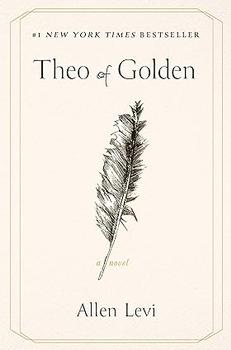
Theo of Golden by Allen Levi
One spring morning, a stranger arrives in the small southern city of Golden. No one knows where he has come from…or why…



Your guide toexceptional books
BookBrowse seeks out and recommends the best in contemporary fiction and nonfiction—books that not only engage and entertain but also deepen our understanding of ourselves and the world around us.

