
-
Your next favorite book
is waiting.
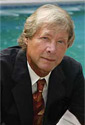
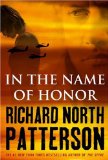
Richard North Patterson discusses Eclipse, set in a fictitious West African country, which is loosely based upon the life and death of Nigerian human rights and environmental activist Ken Saro-Wiwa.
You acknowledge in your afterword that Eclipse is
based loosely upon the life and death of Ken Saro-Wiwa, Nigeria's courageous
human rights and environmental activist who was hung by the country's brutal
dictator fifteen years ago. For those of us who don't remember that story,
please tell us a bit about him and why he remains an important figure.
Ken Saro-Wiwa was a gifted novelist who created a force unique to Nigeria: a
mass nonviolent movement among his ethnic group, the Ogoni, to fight the
environmental and human rights abuses caused by the alliance between the oil
industry and Nigeria's corrupt autocracy. While the extraction of oil from the
Niger delta enriched the government and the oil companies, it left the delta's
people more impoverished and their lands and water despoiled. Saro-Wiwa's
defiance ultimately led to his execution in 1994 by the country's kleptocratic
dictator, General Suni Abacha, after a trial based on dubious charges that
Saro-Wiwa had instigated the death of several Ogoni chiefs. A tragic coda is
that although Saro-Wiwa was widely admired in the West, the oil-dependent
democracies that profess their devotion to human rights did little to save him.
The tragedy of Saro-Wiwa is piercingly salient today. In the years since his
death, the industrialized nations have become more desperate for oil to preserve
their own power and wealth. Central to my story is that the oil-rich Niger delta
is ever more despoiled, and the protest movement of Saro-Wiwa has been replaced
by predatory militia who steal oil and siphon it to the black market, while
spreading violence throughout the region and maintaining corrupt but shadowy
alliances with the government. And our addiction to oil wholly marginalizes any
concern we have with the injustices Saro-Wiwa sacrificed his life to fight.
Finally, the courtroom drama that climaxes Eclipse is based on the show
trial in which Saro-Wiwa was condemned—a Kafkaesque perversion of the forms of
justice.
As America grapples with an energy and oil crisis, Eclipse could
not be more timely. Here is the vivid story of our lust for oil and its impact
on one of the most unstable oil-producing regions of the world—the Nigerian
delta. Why is the delta so important to us, what are the unique circumstances of
oil production in Nigeria, and what are the larger geopolitical ramifications?
Saro-Wiwa's death, 9/11, the quagmire in Iraq, and the hostility of
oil-producing nations like Iran has increased America's dependence on oil and
our preoccupation with securing access to new supplies of oil. Nigeria has
become a principal focus of this need, even as a state of semi-anarchy has
prevailed in the delta. Pervasive theft and sabotage by militia groups like MEND
(Movement for the Emancipation of the Niger Delta, the prototype for FREE in
Eclipse) have drastically cut the delta's oil production, further
contributing to the rising price of petroleum.
In the delta, the conditions I portray in Eclipse are very real:
violence, greed, corruption, kidnapping, and massive oil theft practiced in the
name of the causes advanced by Saro-Wiwa—environmental reparations and a
redistribution of oil wealth. And this toxic environment directly affects our
way of life. Eclipse uses the stories of Bobby Okari, Marissa Brand Okari,
and Damon Pierce to dramatize what it feels like to risk one's life in such a
treacherous place.
As part of your research for the book, you went to Nigeria. What were your
experiences? How do the American oil companies persuade anyone to go work for
them over there?
While the Nigerian people are astonishingly bright, resourceful, and
engaging, many aspects of their lives are close to dystopian. Kidnapping and
armed robbery are genuine concerns. On the urging of experts, I hired a security
firm: on my arrival in Lagos, the country's principal city, my security term
recruited four police to get me forty kilometers from the airport to the hotel,
sirens blaring, weaving through anarchic traffic in a chaotic trip akin to a
chase scene in a movie. One of the concerns of my security team was to never
stop in traffic which, they warned, would expose us to armed robbers. The hotel
was also selected for its security—in the month prior to arrival there had been
seventeen armed robberies in Lagos hotels.
As part of my itinerary, I had arranged to meet an expatriate American—living in
the Niger delta—a longtime Nigerian citizen who, among other things, could take
me into the maze of creeks to meet armed military groups. Shortly before my
arrival, my security advisers implored me not to go, asserting that conditions
in the delta were violent and anarchic; that they could not protect me from
kidnapping, a virtual industry that focuses on oil company employees; and that
the Nigerian Security Services might view my mission with suspicion. After some
argument, I acquiesced. Two weeks later, those security services arrested my
putative guide with two German documentary filmmakers, all of whom were jailed.
After three months in a Nigerian prison my contact was expelled from the
country.
Lagos itself defies easy description. A city built on islands, its uncontrolled
growth has raised its population to more than 15 million. Several million
residents live in makeshift boats, floating slums without electricity or potable
water that fester with crime, disease, and prostitution. Traffic is so congested
that one can be trapped for hours. The roads are rutted, often marked by open
sewers, and pass by homes surrounded by walls topped with barbed wire or
embedded shards of glass to repel intruders. For the Nigerian people, survival
is a daily struggle.
Nonetheless, one can sympathize with the oil industry and its employees. Preyed
on by a government that delivers few meaningful services to the people of the
delta, the oil companies cannot, by themselves, build or maintain schools,
hospitals, treatment plants, or roads. The government, insulated by oil wealth
from the necessity to please its people, too often exists to serve
itself—reformers in Nigeria face a road blocked by treachery and corruption. As
for the employees of oil companies, they often live in gated compounds, fearful
of their surroundings, serving out their time for excess pay. In the end, this
environment lessens Nigerians and foreigners alike.
Do Nigerians benefit in any way from all of the profits being made there from
oil?
The vast majority do not. The government is a kleptocracy, stealing or
distributing oil revenues among its members—the chief incentive to seek
political power. Years of uncontrolled oil exploration have led to the ruin of
land and water, destroying agriculture, fishing, and sources of drinking water.
An aging system of aboveground pipes hemorrhages oil and facilitates a system of
oil theft by "militias" sustained by a blatant web of bribery that includes the
army, navy, customs officers, state and federal officials, and oil company
employees who often facilitate the theft.
In short, oil has shriveled the promise and stained the soul of an entire
country, empowering autocrats who disdain human rights and are oblivious to the
misery of its people.
Eclipse draws attention to the humanitarian and security concerns—as
well as moral choices—that American oil executives must address in a country
like Nigeria. What is an oil company's role in a foreign country, whose laws do
they follow, and how much influence do they have?
It is easy to disdain the oil companies, which for many years trashed the
environment while enabling the corruption of the government. It is far harder to
argue that they are chiefly responsible for Nigeria's decline. The chief agent
of human misery is the state, which alone has the power to protect the
environment, build an infrastructure, and address the health, nutrition, and
educational needs of its people. Indeed, the corruption of the government is a
moral and physical hazard for oil companies and their employees, exposing them
to dangers while forcing them into complicity in governmental corruption.
Eclipse focuses on one aspect of this: the dependence of oil companies
for protection on a military and police which are often brutal and corrupt,
setting themselves up as mercenaries for hire. The central question that arises
is the degree to which oil companies, helpless to protect themselves, are
responsible for the violence perpetrated by military forces they are compelled
to pay and equip but do not fully control.
In Eclipse, your hero, Bobby Okari, tries to speak out against the
brutal dictator and the oil companies, only to be arrested and ultimately
executed. Is there anyone in Nigeria today giving voice to the needs of the
people and standing up for their rights?
Nigeria has a vital human rights community, including reformers,
journalists, educators, and others who speak out against injustice, abetted by
Americans and Europeans impelled by humanitarian concerns to come to Nigeria.
But I am aware of no major nonviolent movement like the Ogoni Movement led by
Saro-Wiwa. Instead, MEND and other militia groups have appropriated Saro-Wiwa's
cause to promote a program of kidnappings, theft, and violence which most
observers see as a criminal enterprise cloaked in popular grievances. Though
Nigeria is now technically a "democracy," the last national election was
blatantly rigged through violence, intimidation, bribery, and wholesale fraud—a
tradition in Nigeria. Thus the execution of Saro-Wiwa, like the facts of my
fictional Bobby Okari, may have marked a sad crossroads in national history.
No one can read Eclipse and not wish for Americans to become
independent from foreign oil. What, in your mind, are the best alternatives?
We need a national Marshall Plan: a concerted effort to gradually replace
petroleum with power sources such as wind, solar, natural gas, and biofuels,
while reinvigorating our mass transit, reengineering our vehicles to cut oil
consumption, and placing conservation practices at the center of our
consciousness. This is a daunting task that will take decades, and requires a
long-term focus for which our impatient country is not noted (which is why
politicians endorse the idea that more drilling will fix our problems). But the
alternative is to doom our economy, erode our security, and insure our national
decline.
Unless otherwise stated, this interview was conducted at the time the book was first published, and is reproduced with permission of the publisher. This interview may not be reproduced or reprinted without permission in writing from the copyright holder.

Chimamanda Ngozi Adichie grew up in Nigeria. Her work has been translated into more than fifty-five languages. She is the author of the novels Purple Hibiscus, which won the Commonwealth Writers' Prize; Half of a Yellow Sun, ... (more)
If you enjoyed:
Eclipse
Try:
Half of a Yellow Sun
by Chimamanda Ngozi Adichie
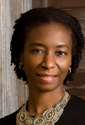
Sefi Atta was born in Lagos, Nigeria, in 1964 and currently divides her time between the United States, England and Nigeria. She qualified as a Chartered Accountant in England, a Certified Public Accountant in the United ... (more)
If you enjoyed:
Eclipse
Try:
A Bit of Difference
by Sefi Atta
We recommend 22 similar authors
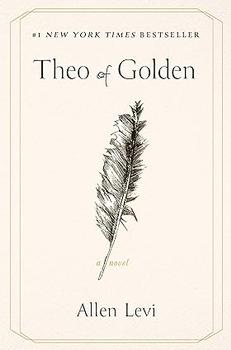
Theo of Golden by Allen Levi
One spring morning, a stranger arrives in the small southern city of Golden. No one knows where he has come from…or why…






Your guide toexceptional books
BookBrowse seeks out and recommends the best in contemporary fiction and nonfiction—books that not only engage and entertain but also deepen our understanding of ourselves and the world around us.

