
-
Your next favorite book
is waiting.
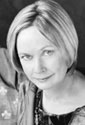
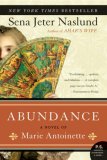
Sena Jeter Naslund explains why she chose Marie Antoinette as the focus of her latest novel, Abundance, and how it compares to her previous novels which often feature strong female protagonists.
What inspired you to write a novel about Marie Antoinette?
The story of Marie Antoinette has fascinated and frightened me since
I was a child. To me, it was a reverse fairy-tale not a story about a
deserving poor girl who became a princess but one about a princess who
lost her position and power. I knew that if such a reversal could occur
in the life of a queen, then no person was safe. For me, this
vulnerability represented the basic human condition. Then the question
became for me "How can we face adversity, even death?" I thought I
might learn something from imagining the Marie Antoinette story.
Also, the sheer splendor of her world fascinated me, both its
beautiful artificiality and its earthy realism. Like Marie Antoinette,
I too have loved flowers, music, theatre; like her, my family and
friends mean more to me than I can say.
Ahab's Wife was celebrated by scholars and critics as a kind of "feminist corrective." Is Abundance,
with its intimate portrait of one of the most maligned and arguably
misunderstood female figures in history, a similar act of revision or
reassessment?
Yes. I think the historical treatment of Marie Antoinette has been
motivated, in part, by the tendency to demonize women. She's been
depicted as a sort of sinful Eve, responsible if not for the fall of
humankind then for the fall of the French monarchy. Most people
associate her with heartless materialism, with the phrase "Let them eat
cake" if they have no bread but there's no historical evidence that she
ever said such a thing. She displayed many more acts of kindness and
compassion throughout her life than I had space to include in the novel.
With Ahab's Wife, I wanted to create a female fictive
character of intelligence and courage, one capable of sustaining an
epic quest for meaning that was both physical and metaphysical. When we
look at the American literary landscape, we see far too few such
creations. With Abundance, I wanted to explore the complexity of a woman who has been included in the historical picture but usually misrepresented.
How does Abundance, set during the French Revolution, relate to your most recent novel Four Spirits, which is set during the Civil Rights movement? In some ways, they seem worlds apart.
In Four Spirits
I wanted to affirm the value of every individual life (including four
unknown African-American school girls who were killed). I wanted to say
that the same principle applies to the well-known and the privileged,
even to a person who occupies a throne: all of us share a basic
humanity; we're born and we die. Every life is precious. Questions
about justice and the nature of government arise in both books.
Which of the secondary characters in the novel particularly interested you? Would you consider writing about any of them?
I wanted to know and understand Marie Antoinette's women friends
more the surprising Princess de Lamballe, the manipulative Duchess de
Polignac, the self-made portrait painter Elisabeth Vigee-Le Brun. In
all my novels the central women characters need and establish close
friendships with other women who often differ widely from one another.
We know of these historical women I've just named mainly because they
were the queen's friends, but they each had lives of their own and I'd
like to know more about them.
And of course Axel von Fersen is an endlessly intriguing character.
He liked American woman a lot while he was helping Washington with the
American Revolution, and I'd love to explore him more.
Is it fair to call your depiction of Marie Antoinette's relationship with Fersen deliberately ambiguous?
Yes, it is. I read a great deal about this relationship in various
biographies all of which disagreed some or completely with one another.
I don't think the historic record allows a conclusive reading at this
point.
Do you believe they ever had a physical relationship?
Actually, I'd rather not say. However, I would like to add this
information (not in the novel because the book is limited to Marie
Antoinette's point of view): historically, Fersen definitely did have
many sexual relationships with a great many women though his deepest
love and total loyalty also remained with the Queen. How can I make
this dual claim? I see his sensibility as basically that of an earlier
age: he is a chivalric knight devoted to his lady; this devotion is
like that of a medieval Christian who lives in the world yet profoundly
venerates the Virgin Mary.
I would love to write a novel about the paradoxical Axel von Fersen.
What are your ideas about what fiction can capture or reveal that biography or history cannot?
Every form has its own powers. Fiction takes us inside, through
imagination, in the way that an objective reporting or picturing of
external actions or behavior cannot. I have always seen the imagination
as a great spiritual and moral force because it helps to take us beyond
the bounds of ego. But all the ways of knowing are complementary to
each other. Lately Marie Antoinette has been the object of films: while
films picture appearances, novels augment those visual impressions by
transporting us inside the character. We can look out through the eyes
of another person and also know that person's secret thoughts and
feelings, which are beyond the reach of the camera. Fiction can make
history seem more alive and thus more kin to life as we know it.
An especially affecting element in your novel is the recurring
image of young Mozart in Marie Antoinette's memories and dreams. His
haunting, pleading refrain, "Now do you love me?" seems to inspire in
Marie Antoinette powerful feelings of identification and empathy. Talk
a bit about this thematic linking of Marie Antoinette and Mozart.
She did hear him play the harpsichord for her mother at court in
Austria; the two were the same age. In her subconscious, Mozart did
what she would have liked to have done to occupy her mother's lap and
to demand her mother's love and acceptance. Mozart had the audacity of
genius, even as a very young child. Marie Antoinette had the gifts of
great personal charm and grace, and she also truly loved music. It was
only at the end of her life that she became her own parent forgiving,
accepting, and affirming her own nature.
Abundance seems to be an ideal choice for book clubs,
as there are so many possible threads and directions to pursue. If you
were somehow able to participate anonymously in a group discussion of Abundance, what subjects and themes would you most want to explore?
I've already found that my readers vary widely in how sympathetic
they are to Marie Antoinette. In some ways, she is a kind of mirror
that reflects our attitudes toward ourselves. To what extent does she
deserve praise or blame? The idea of "goodness" expands for her as she
matures how have I evolved morally, spiritually, as a friend, as a
family member, in political awareness, she asks me. I'd like for
readers to tell me, if they trusted me enough to be that honest with
me, how the life of Marie Antoinette might illumine life as we live it.
I always like to learn which parts of my novels readers particularly enjoyed or found meaningful.
Where will you be taking your readers next?
So many novels I'd like to write! The question of time and place is
certainly a crucial one, more so than that of subject matter or
thematic material because my fiction always embodies ideas that are
important to me. I've worked so hard in researching the 18th century
that in some ways, I'd like to stay there, not necessarily to write
about Fersen. There are many other wonderful characters of that era. I
recently visited St. Petersburg and Moscow because Maire Antoinette's
friend and portrait painter Elisabeth Vigee-Le Brun considered Russia
to be her second home, after she fled the French revolution and
traveled through Europe. But I'd also like to draw on my own life and
times, as I did in Four Spirits,
set in Birmingham, but this time about the street where I live now,
literally, in Louisville, and about a woman of my own age and
experience. And in just the last few weeks, I've had yet a third idea,
one that would carry me very far back in time and yet partake of the
present. It's a riddle. I'm enjoying puzzling about my next project. I
love the act of imagining, the polishing, and the creating of an
artifact in words.
Unless otherwise stated, this interview was conducted at the time the book was first published, and is reproduced with permission of the publisher. This interview may not be reproduced or reprinted without permission in writing from the copyright holder.


An amateur cook, Martine Bailey won the Merchant Gourmet Recipe Challenge and was a former UK Dessert Champion, cooking at Le Meurice in Paris. Her recipes have appeared in many publications including Good Housekeeping, Olive... (more)
If you enjoyed:
Abundance
Try:
An Appetite for Violets
by Martine Bailey

Margaret Drabble was born June 5, 1939 in Sheffield, Yorkshire, England.
She attended the Mount School, York, a Quaker boarding-school, and was awarded a major scholarship to Newnham College, Cambridge, where she read ...
(more)
If you enjoyed:
Abundance
Try:
The Red Queen
by Margaret Drabble
We recommend 11 similar authors




The good writer, the great writer, has what I have called the three S's: The power to see, to sense, and to say. ...
Click Here to find out who said this, as well as discovering other famous literary quotes!

Can you name the title?
Test your book knowledge with our daily trivia challenge!
Your guide toexceptional books
BookBrowse seeks out and recommends the best in contemporary fiction and nonfiction—books that not only engage and entertain but also deepen our understanding of ourselves and the world around us.
