
-
Your next favorite book
is waiting.
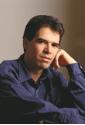
Turing's Delirium combines many disparate elements - Latin American hackers, cryptanalysis, social protests against globalization; Paz Soldán talks about how he developed these ideas and wove them into his latest book.
Latin American hackers, cryptanalysis, social protests
against globalization . . . Your novel has a lot of disparate elements thrown
in. Tell us how the idea of the project came about.
I love codes. I was reading books on cryptanalysis, and there were so many
wonderful anecdotes about how this arcane science had affected historical
events. I thought about trying to work these anecdotes into a novel. At first, I
conceived of a very intellectual novel, heavily indebted to Borges. You know, a
struggle between a codemaker and a codebreaker. I wrote about seventy pages and
realized that the novel was becoming too abstract. I needed something to anchor
it. That is when I decided to put the cryptanalysis plot into the context of
what was happening in my country of birth, Bolivia, when I started to write the
novel five years ago: the social unrest brought about by the crisis of
neoliberalism and the protests against globalization. I thought, then, about
codebreakers confronted against activist hackers. The novel got fleshed out;
suddenly instead of two main characters I had seven. I did not know much about
hackers, so I started reading a lot about them. The most difficult part was to
try to turn into literature all the technical jargon I was learning. So, you
see, one thing led to another.
The novel is set in the present, but it also deals with the
last thirty-five years of Latin American history and with American involvement
in Latin America.
My three previous novels—one of which, The Matter of Desire, was published by
Houghton Mifflin in 2004—are concerned with the relationship between the
dictatorship period of the seventies in Latin America and our democracies today.
I am interested in investigating the connections between both periods, how we
went from one to another and how today many Latin American societies are
undergoing traumatic revisions of their past. Our democracies are built on the
walls erected by dictatorships. In the novel, set in the present, the
Intelligence Service uses some methods developed thirty years ago, thanks to the
aid of the American intelligence services. The Service—the Black Chamber, as it
is called in the novel—was created in the seventies to root out left-wing
people, but today its functions are different. In some cases, like Miguel Sáenz—nicknamed
Turing, the main character—there is still today the same personnel from the
seventies.
You are dealing with issues of guilt and personal
responsibility.
I like to analyze what I call the “guilt of the guiltless.” In order for a
dictatorship to survive, it needs a strong bureaucracy and a strong support from
the middle class. In the novel, people like Miguel Sáenz and his wife, Ruth,
represent this middle class, who also were part of the bureaucracy. Thirty years
later, Ruth is coming to terms with her responsibility as part of a
dictatorship, while Sáenz is having a hard time doing so. He worked in an
office, his codebreaking work was instrumental in arresting people in the
opposition who were later tortured and killed, but since he did not see the
blood it was easy for him to imagine himself doing only office work and not
feeling responsible for what happened in the seventies. The question, then, is
one of personal responsibility: not only the military, who shot and tortured
people, are the guilty ones; many other good law-abiding citizens are as well.
The novel explores issues of guilt and trauma, selective memory, personal and
collective responsibility.
America is present throughout the novel in different ways.
Yes. You have American influence in setting up the Black Chamber. Albert, the
legendary creator of the Black Chamber, used to be a C.I.A. agent who went to
Bolivia on a mission and then decided to stay. Albert feels that in the enormous
world of the C.I.A. he will be only one more agent, but in Bolivia he gets to
call the shots. There is also Ramírez-Graham, the new director of the Black
Chamber. He is a Bolivian-American, born in Arlington, Virginia, who used to
work in the N.S.A.; he is hired to do improve the Black Chamber, make it
relevant for the challenges of the twentieth-first century, but he finds himself
in alien territory: Bolivia is the land of his dad, but Ramírez-Graham is
American.
Bolivia has been in the news lately. How does your novel
connect with the events taking place there today?
In April 2000 there was a huge antiglobalization protest in Cochabamba, Bolivia.
A transnational company, Bechtel, which was in charge of providing water to the
city, decided unilaterally to raise its monthly rates, sometimes doubling them.
There was a massive outcry, people took to the streets, set some public
buildings on fire. The government was caught off-guard. At the end of a
three-day protest, the government had to ask Bechtel to leave the country. This
was seen as the first victory of the antineoliberalism, antiglobalization
movement in Bolivia. From then on until December 2005, when the leftist Evo
Morales was elected president, there were lots of protests, two presidents had
to resign, and so on. I used Cochabamba as the basis for the city in the novel,
Río Fugitivo (something I had already done in my two previous novels) and set
the main events during three days of protest very similar to the ones that
actually took place. The main difference is that instead of a water company I
decided to use a power company, which worked better with my main themes.
There is a lot of technology in the novel . . .
It is the technology that one finds in a very undeveloped country. The Black
Chamber uses old computers donated by the American government; the hackers’
computers are better than the ones the government has. There are blackouts all
the time. The middle class dreams of modernity, of progress, and is always
looking up to America, to Europe. As a symbol of these dreams and aspirations,
the people who work at the Black Chamber use nicknames of important people in
the Western world: Sáenz is called Turing. And the main hacker is called
Kandinsky. Modernity, of course, never arrives.
Tell us about the formal structure.
My previous novel, The Matter of Desire, was a first-person narration. I wanted
a change, so I decided to write a polyphonic novel, a story with seven main
characters whose paths crisscross in the course of events taking place during
three days. I used a different narrative voice for each character. There is a
first-person narration, a second-person narration, a third-person account . . .
The seven tales seem at first disjointed, but the main threads of the plot
eventually converge.
One last question: What about the Playground?
I had read Neal Stephenson’s novel, Snow Crash, set in a virtual universe called
the Metaverse. And then I read an article about how in South Korea pretty much
everybody plays an online game like The Sims. Everybody has an avatar online, a
virtual identity. So I created the Playground as my own version of a virtual
universe. Almost all characters in the novel spend some time in the Playground.
That is the place where the hackers get together and start thinking of making
things happen in the real world. I did not want to use the virtual world only as
an escape from the real world. I thought it would be an interesting twist to
write about people who feel emboldened by the changes they achieve in the
virtual world—and then decide to see if they can change the real world.
Unless otherwise stated, this interview was conducted at the time the book was first published, and is reproduced with permission of the publisher. This interview may not be reproduced or reprinted without permission in writing from the copyright holder.
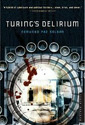
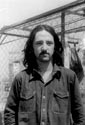
Roberto Bolaño was born in Chile on April 28, 1953. For much of his life he lived a nomadic existence, living in Chile, Mexico, El Salvador, France and Spain. During the 1970s, he formed an avant-garde group ... (more)
If you enjoyed:
Turing's Delirium
Try:
The Savage Detectives
by Roberto Bolano

T.Coraghessan Boyle is the author of twenty-eight books of fiction, including, most recently, After the Plague (2001), Drop City (2003), The Inner Circle (2004), Tooth and Claw (2005), The Human Fly (2005), Talk Talk (2006), ... (more)
If you enjoyed:
Turing's Delirium
Try:
Talk Talk
by T.C. Boyle
We recommend 8 similar authors

Theo of Golden by Allen Levi
One spring morning, a stranger arrives in the small southern city of Golden. No one knows where he has come from…or why…





Your guide toexceptional books
BookBrowse seeks out and recommends the best in contemporary fiction and nonfiction—books that not only engage and entertain but also deepen our understanding of ourselves and the world around us.

