
-
Your next favorite book
is waiting.
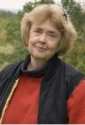
Gail Godwin discusses her novel Queen of the Underworld, and her memoir The Making of a Writer, both published in early 2006.
Your twelfth novel, Queen of the Underworld, is based on some of your own
experiences as a young journalist just out of college. How much is Emma Gant
like you?
What was it like to re-live that time when you were writing the novel? Is it
easier or harder to write a novel based on personal experiences?
Two incidents from my reporting days on the Miami Herald lurked in my
imagination for decades before they finally bubbled up into Emma Gant's
determined pursuit of Ginevra Snow, the young ex-madam known as "Queen of the
Underworld."
The first incident was a routine story the Herald assigned me in 1959.
After the famous New York trial of her boyfriend and pimp Mickey Jelke, "the
oleo-margarine heir," the former call girl Pat Ward had quietly married an
osteopath and they lived in Hollywood, Florida. My bureau chief in Hollywood
asked me to phone the husband and see what I could get out of him about Pat's
latest suicide attempt. Well, the husband answered the phone and when I
identified myself, he said in a really kind but crushed voice, "I wish you could
understand how hard this is for us. I don't want to say anymore. Please leave us
alone." That's probably when it began to dawn on me that I might not be destined
to be a crack reporter. I said, "I'm so sorry for your pain, and please give
your wife my best wishes." And I hung up. Hardly a determined pursuit! But Emma
is more ferocious because Ginevra's story in some way offers her knowledge about
herself. Ginevra appeals to her as a doppelganger figure. Also I gave Emma the
chance to meet the former madam in person–without her husband's protection. Or
rather, Emma earned her chance by being at the right place–a hospital corridor
after a tornado–at the right time.
The second, more haunting, incident from the Miami of 1959 was a certain evening
in an exclusive Miami Beach supper club. Everything very low-lit and quiet and
super-elegant. My date said, "You see those two girls over there? They look like
sorority girls, don't they, with their good posture and their cashmere sweater
sets and pearls. They're _____ girls. He makes them dress like that and sends
them to charm school to polish their manners. They are VERY expensive." And I
said, "You mean they're...?" He nodded. For years I have wanted to put those
girls and that charm school into a novel. And I'm tempted to do still more with
them in a future novella, written by Emma Gant.
During the two years I was writing Queen of the Underworld, I could
hardly wait to get to my computer. I loved being 22 and hungry again, with a
22-inch waistline, so desperate to succeed and equally terrified I might fail.
The tension was a stimulant. And I loved re-locating myself in the seductive
Miami scene. People said, "Don't you think you ought to fly down to Miami and
sort of brush up on the locale?" I said, "That's the last thing in the world I
want to do: I want the Miami of 1959 and how I felt, and all those people coming
into town who thought they would be back home in Cuba by the end of the summer."
How has time altered your perspectives on that first job? Journalism was,
obviously, not the right career path for you (as Al Neuharth realized). Was it
hard to let go of that ambition or was it just a cover for what you really
wanted to do–write fiction?
The newsroom of 1959 is now historical fiction. Romantic fiction. The noise, the
cigarette smoke, the lack of privacy. Everyone clacking and yakking away in one
big room. The feeling of being part of a vast organism. The smell of copy paper
and paste. If you wanted a copy of your story, you made a carbon. There were no
copying machines and no Googling. You went to the morgue and looked up your
information–if there was any–in old clippings alphabetically filed in envelopes.
Everything was so physical. There was a whole sensual element about the news
room, and I'm glad I got to partake of it before it became extinct.
I would not have made a good investigative reporter. I'm not pushy enough, as
you can see from my Pat Ward anecdote in the answer above. I'm a classic
introvert who has managed to teach myself sociable manners. I always wanted to
write fiction. Fiction and drawing were my main loves, but I also had not a
penny of my own and I needed a regular job with a salary if I planned to eat.
That's why I chose to get a BA in Journalism rather than Literature. However, if
things had turned out differently, I could see myself writing a syndicated
column or maybe even being a book critic or book review editor on a newspaper.
And also writing novels.
You have kept a journal your entire adult life and a portion of it is in The
Making of a Writer. Why is journal writing important to you and how has it
helped you as a writer?
Do you refer back to your old journals? Have you found inspirations for stories
in their pages?
I have always liked to keep track of things. To write something down is to
preserve as closely as possible the unique moment. Memory makes unique moments
into generic moments. You know, you think you're remembering a certain sunset
that changed your life, but the memory is alloyed with other sunsets or sunsets
in poetry and so on. Or you remember the gist of a conversation, but not all the
delightful specifics. Such as Isabel, the Spanish boarder, [in The Making of
a Writer] bringing down a London dinner party with her comment on the comparative
freedom of Anglo-Saxon bachelors: "In Es-pain, the man, he come out from his
mother and go under his wife." Excavating that sort of treasure in an old
journal has given me new stories: my novella "Mr. Bedford," about a young
American living in a London boarding house was completely the gift of my
journals from the early 1960's. Yes, I do re-read them, selectively. Dipping
into eras I want to revisit. Both to look up things and inspire myself.
My journals also allow me to keep track of myself, to trace the repetitions and
the back-slidings, the underlying passions and the occasional growth spurts.
They're my way of dressing and undressing the soul, as the poet George Herbert
advises us to do. To be a true journal keeper, (true to yourself and your
journal, I mean), you have to have a confidential relation to yourself. A
diarist divides herself into two. One confides in the other, warns the other,
strengthens the other. Once, when I was in love with a very unsuitable man, I
decided to write a dialogue between me and God. I said I don't care, I want him
and God said, "Okay, I'll give you a sneak preview of what life will be with
him." And before I finished writing out the dialogue I was aware of things I had
been keeping from myself. I was also laughing.
The Making of a Writer
reveals an ambitious young woman who is working
intently to be a writer and get her work published. And yet it took six years
after this journal ends before your first novel was published. Tell us about
those intervening years and what transformed you from a wanna-be writer to one
with a novel that was snapped up by a publisher based on 50 pages.
"Those intervening years" (1963-1970) will be in Volume Two of The
Making of a Writer which Random House will publish next year, along with the novel I am currently
writing, The Red Nun.
The novel you speak of, The Perfectionists, went through three drafts
while I was studying at the Iowa Writer's Workshop and taking literature
courses. One agent gave up on me, and my next and present agent John Hawkins
thought the 50 pages I had done of the third draft were strong enough to submit
on their own. So actually, after I had my contract for The Perfectionists,
I spent a full year writing the rest of draft three.
Unless otherwise stated, this interview was conducted at the time the book was first published, and is reproduced with permission of the publisher. This interview may not be reproduced or reprinted without permission in writing from the copyright holder.

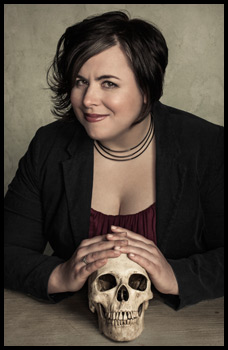
Cristin O'Keefe Aptowicz (b. 1978) was born and raised in Philadelphia. In 1996, she graduated from Central High School of Philadelphia, and moved to New York City to attend NYU's Tisch School of the Arts.
...
(more)
If you enjoyed:
Flora
Try:
Dr. Mütter's Marvels
by Cristin O'Keefe Aptowicz
John Banville, the author of seventeen novels, has been the recipient of the Man Booker Prize, the James Tait Black Memorial Prize, the Guardian Fiction Award, the Franz Kafka Prize, a Lannan Literary Award for Fiction, and ... (more)
If you enjoyed:
Queen of the Underworld
Try:
The Sea
by John Banville
We recommend 11 similar authors

L.A. Women by Ella Berman
Two ambitious writers in 1960s LA face betrayal when one writes a novel based on the other's life.






Your guide toexceptional books
BookBrowse seeks out and recommends the best in contemporary fiction and nonfiction—books that not only engage and entertain but also deepen our understanding of ourselves and the world around us.

