
-
Your next favorite book
is waiting.
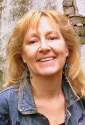
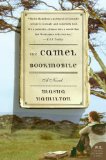
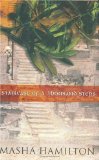
In two separate essays Masha Hamilton discusses the inspiration behind her novel, The Camel Bookmobile (2007); and the necessity for journalists to suppress their emotions in order to objectively cover a conflict - a subject she explores in The Distance Between Us (2004).
The Camel Bookmobile made its first run almost a decade ago. Three
dromedaries trudged through dusty, arid northeastern Kenya near the border with
Somalia to bring a library to settlements so tiny and far-flung they’d become
nearly invisible; places lacking roads and schools, where most people had never
held a book between their hands and where they lived daily with drought, hunger
and disease.
I first heard about the project from my daughter one autumn afternoon as I drove
my three children to the Bear Canyon Library in Arizona’s Tanque Verde valley.
One detail in particular piqued my interest. Because books were rare and
precious in the reaches of Africa far from the safari vacationers, the
camel-powered library initiated a severe fine. If even one person lost a book,
the bookmobile would boycott that entire village, choosing another to visit
instead.
The fine was intended both to protect books so literacy could spread, and to
encourage a wandering people to adopt the practices of a more settled world. But
reality, as always, would be more complex than theory, I knew.
As I listened, the entire arc of a story came to me in one gulp. I imagined an
American librarian who travels to Africa to give meaning to her own life, and
ends up losing a piece of her heart. I saw a scarred African boy, once mauled
nearly to death by a hyena, who finds an extraordinary way to enlarge his narrow
world. I saw a huddle of mud and dung huts where a few books go missing, and
where people who fear for their way of life turn their anger on the disfigured
boy.
Through it all, I envisioned books – Dr. Seuss, Homer, vegetarian cookbooks, Tom
Sawyer, Hemingway novels, Zen meditations, short stories about modern love –
traveling through the remote desert on the arched backs of camels, like notes
from another world sealed in a bottle and tossed into a sea.
It was the first time I’ve ever experienced a story in that way, and it was
intoxicating. I began to share parts of it with my children, my voice rising as
we pulled into the library parking lot. But then I stopped abruptly. I didn’t
want to spend the story’s energy yet, I told them.
Why have my novels been set in foreign countries? I’ve been asked this question.
I’ve been told Americans only like to read about themselves. But like Fi
Sweeney, the librarian in the novel, I’m convinced that the chance to see
ourselves through another’s prism is important – perhaps more than ever. One
theme the novel explores that may be particularly crucial right now is the idea
that American generosity, deeply rooted in our national character, can also
sometimes inadvertently cause harm.
I had more to learn about the book’s characters and their world, of course, and
bringing them to life on the page still took years after that initial swell of
story. But because I knew so much of the story so quickly, I had company during
the writing process. Fi Sweeney, Scar Boy, the village teacher Matani, his
alluring wife Jwahir and her lover, the drummaker Abayomi: from the first, their
voices joined together to narrate a tale I could not ignore.
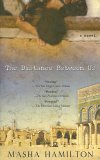
The Distance Between Us - The Story Behind The Book
It was the summer of 1994 and I was back in the states after a decade spent
covering bloody clashes in the Middle East and the turbulent collapse of
Communism in the Soviet Union when I first heard the news about Kevin Carter. I
already knew him as a member of the Bang
Bang Club – a group of photojournalists based in South Africa and
notorious for their often-reckless coverage of apartheid’s final deadly days.
I’d seen his Pulitzer-winning
photograph, published by the New York Times, which personified the
heartbreak of the Sudanese famine with the image of a tiny girl squatting on
scrawny knees, head drooping heavily to the ground, a vulture lurking behind.
The image haunted me, in part, because the girl was close to the age of my own
daughter. Close to the age of Carter’s daughter, as well.
I wasn’t prepared for the news of that July. Two months after he’d
collected what he’d called the highest acknowledgment possible of his work,
and had been feted and praised, Carter parked his red pickup truck near a small
river where he used to play as a boy, attached a garden hose to the exhaust pipe
and gassed himself to death. "The pain of life overrides the joy to the
point that joy does not exist," he wrote in a note he left on the passenger
seat.
Word of his suicide came just as I was realizing for myself what covering a
lesser degree of violence had cost me, so I understood pretty quickly that what
might at first seem inexplicable, if examined for a moment longer, was not.
Journalists who regularly cover war pay a price. Stepping around those
pointlessly killed in warfare, or interviewing someone who has just lost the one
closest him, takes a toll. The typical penalty is a repression of emotions that
begins, by necessity, in the field. This isn’t initially a bad thing; in fact,
at the time, it’s crucial. The aftermath of combat often leads to the most
profound moments in people’s lives. In order to be fully present, journalists
must shove their own shock or fear or revulsion into an inaccessible corner and
ignore it – at least long enough to cover the story, maybe longer.
I remember the first time I came face-to-face with a body – a policeman
sprawled in the middle of the road, killed during a domestic quarrel that turned
into a triple homicide. I sneaked past police barricades, found myself standing
next to another cop who turned out to be the victim’s brother, and listened as
he poured out his anguish – or, put another way, I exclusively collected the
quotes that would land the story on front pages across the country the next day.
As the congratulations rolled in, I felt nauseous and ashamed. I left town for
the weekend, holed up with another journalist friend, and then decided I had to
accept the predatory, voyeuristic aspect to the job I loved, or quit. So I
suppressed my emotions, and kept smothering them as I witnessed bloodshed in
Lebanon, the West Bank and the Gaza Strip, and interviewed victims of horrendous
crimes.
The difficulty is that this skill of suppression, once honed, can impose
itself on one’s personal life. Those who have spent long months in war zones
may find themselves reluctant to invest too fully in other arenas as well, shy
about emotional involvement, stingy with their feelings. Then, the act of
covering war can turn into what social critic Christopher Lasch has called
"a refuge from the terrors of inner life."
Another repercussion of war coverage is a strange and growing compulsion to
witness violence – the lust of the eye, as the Bible puts it – as well as a
craving for the rush of risk-taking. It may seem contradictory, but it makes a
mad kind of sense. In the midst of that death and destruction, the journalist
can begin to feel invincible – in fact, maybe has to feel invincible in order
to keep on – and that feeling is addictive. In my own experiences, I never
really believed the fighting would claim me, even when the shooting was right
there, even when I was stepping over spent bullets, swimming in tear gas or
accosted by a furious, drunken Soviet soldier. I never bought the cliché about
one’s number eventually coming up. Yet sometimes I found myself palm-damp
scared. And maybe that signaled an intuition I should have listened to, but I
usually didn’t have time, and I survived anyway, and there’s an
unparalleled, heady victory in that.
Of course, it requires more suppressing of emotions – in this case, fear.
The effects of covering war and near-war are not all negative; there is an
almost ecstatic camaraderie in the shared experience of moments that those
"back home" can never know. "We had shared something together in
Sarajevo so intimate and incommunicable, a humility and compassion among
individuals unconnected by blood tie, which I have never found elsewhere," Anthony
Loyd wrote in his book My War Gone By, I Miss It So. In addition,
covering conflict can offer a journalist a glimpse at a deeper humanity, one in
which trivial concerns are recognized for what they are, and people pressed up
against the wall really do the right thing.
Then there are the other times, when it seems no one is doing the right thing
– not the participants, and not the watching journalists. Two months before he
claimed the Pulitzer, Carter was among the photojournalists in South Africa who
witnessed, from only feet away, the summary execution of white right-wingers by
a black policeman. The photographers captured the fear on the victims’ faces
right before they crumpled and died. Then the photographers turned and ran.
"Inside something is screaming, "My God,'" Carter said. "But
it is time to work. Deal with the rest later. If you can't do it, get out of the
game."
Deal with it. Dull your emotions. Carter didn’t, in the end. This novel is
dedicated to him, and other journalists like him who cover war and give up
pieces of themselves to do so.
Unless otherwise stated, this interview was conducted at the time the book was first published, and is reproduced with permission of the publisher. This interview may not be reproduced or reprinted without permission in writing from the copyright holder.
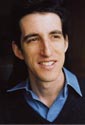
Mischa Berlinski is the author of Fieldwork, a finalist for the National Book Award, and Peacekeeping. He has written for the New York Review of Books, Men's Journal, and Harper's Magazine, and his writing has appeared in ... (more)
If you enjoyed:
The Camel Bookmobile
Try:
Fieldwork
by Mischa Berlinski
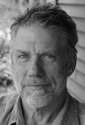
John Colman Wood teaches at the University of North Carolina at Asheville. His field research with Gabra nomads of northern Kenya and southern Ethiopia has been funded by the Wenner-Gren Foundation, the National Geographic ... (more)
If you enjoyed:
The Camel Bookmobile
Try:
The Names of Things
by John Colman Wood
We recommend 22 similar authors

L.A. Women by Ella Berman
Two ambitious writers in 1960s LA face betrayal when one writes a novel based on the other's life.






Your guide toexceptional books
BookBrowse seeks out and recommends the best in contemporary fiction and nonfiction—books that not only engage and entertain but also deepen our understanding of ourselves and the world around us.

