
-
Your next favorite book
is waiting.
Summary | Excerpt | Reviews | Read-Alikes | Genres & Themes | Author Bio
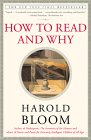
Bloom's engaging prose and brilliant insights will send you hurrying back to old favorites and entice you to discover new ones. His ultimate faith in the restorative power of literature resonates on every page of this infinitely rewarding and important book.
"Information is endlessly available to us; where shall wisdom be found?" is the crucial question with which renowned literary critic Harold Bloom commences this impassioned book on the pleasures and benefits of reading well. For more than forty years, Bloom has transformed college students into lifelong readers with his unrivaled love for literature. Now, at a time when faster and easier electronic media threaten to eclipse the practice of reading, Bloom draws on his experience as critic, teacher, and prolific reader to plumb the great books for their sustaining wisdom.
Shedding all polemic, Bloom addresses the solitary reader, who, he urges, should read for the purest of all reasons: to discover and augment the self. Always dazzling in his ability to draw connections between texts across continents and centuries, Bloom instructs readers in how to immerse themselves in the different literary forms.
Probing discussions of the works of beloved writers such as William Shakespeare, Ernest Hemingway, Jane Austen, Walt Whitman, Emily Dickinson, Charles Dickens, and William Faulkner highlight the varied challenges and delights found in short stories, poems, novels, and plays. Bloom not only provides illuminating guidance on how to read a text but also illustrates what such reading can bring -- aesthetic pleasure, increased individuality and selfknowledge, and the lifetime companionship of the most engaging and complex literary characters.
Bloom's engaging prose and brilliant insights will send you hurrying back to old favorites and entice you to discover new ones. His ultimate faith in the restorative power of literature resonates on every page of this infinitely rewarding and important book.
Contents and Prologue
CONTENTS
Preface
Prologue: Why Read?
I. Short Stories
Introduction
Ivan Turgenev, "Bezhin Lea"
Anton Chekhov, "Kasyan from the Beautiful Lands"
Guy de Maupassant,
"The Kiss",
"The Student",
"The Lady with the Dog"
"Madame Tellier's Establishment"
"The Horla"
Ernest Hemingway,
"Hills Like White Elephants"
"God Rest You Merry, Gentlemen"
"The Snows of Kilimanjaro"
"A Sea Change"
Flannery O'Connor, "A Good Man Is Hard to Find" "Good Country People" "A View of the Woods"
Vladimir Nabokov, "The Vane Sisters"
Jorge Luis Borges, "Tlön, Ugbar, Orbis Tertius"
Tommaso Landolfi, "Gogol's Wife"
Italo Calvino, Invisible Cities
Summary Observations
II. Poems
Introduction
Housman, Blake, Landor, and Tennyson
A. E. Housman, "Into My Heart an Air That Kills"
William Blake, "The Sick Rose"
Walter Savage Landor, "On His Seventy-fifth Birthday"
Alfred Lord Tennyson, "The Eagle",
"...

If you liked How To Read And Why, try these:
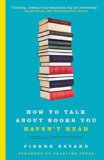
How to Talk About Books You Haven't Read
by Pierre Bayard
Published 2009
The runaway French bestseller hailed by the New York Times as “a survivor’s guide to life in the chattering classes.”
by Gabriel Zaid
Published 2003
'An appealing, meditative collection of thoughts and observations on the book industry and the state of literature in the early 21st century. Book lovers of all stripes will enjoy this light piece of cultural criticism' -- Publishers Weekly
by Ronald B. Shwartz
Published 2000
More than one hundred famous writers have contributed original essays in response to the question: What books have left the greatest impression on you and why?


In war there are no unwounded soldiers
Click Here to find out who said this, as well as discovering other famous literary quotes!

Can you name the title?
Test your book knowledge with our daily trivia challenge!
