
-
Your next favorite book
is waiting.
Summary | Excerpt | Reading Guide | Reviews | Beyond the book | Read-Alikes | Genres & Themes | Author Bio
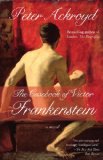
A Novel
by Peter Ackroyd Book Reviewed by:
When two nineteenth-century Oxford students—Victor Frankenstein, a serious researcher, and the poet Percy Bysshe Shelley—form an unlikely friendship, the result is a tour de force that could only come from one of the world's most accomplished and prolific authors.
This haunting and atmospheric novel opens with a heated discussion, as Shelley challenges the conventionally religious Frankenstein to consider his atheistic notions of creation and life. Afterward, these concepts become an obsession for the young scientist. As Victor begins conducting anatomical experiments to reanimate the dead, he at first uses corpses supplied by the coroner. But these specimens prove imperfect for Victor's purposes. Moving his makeshift laboratory to a deserted pottery factory in Limehouse, he makes contact with the Doomsday men—the resurrectionists—whose grisly methods put Frankenstein in great danger as he works feverishly to bring life to the terrifying creature that will bear his name for eternity.
Filled with literary lights of the day such as Bysshe Shelley, Godwin, Lord Byron, and Mary Shelley herself, and penned in period-perfect prose, The Casebook of Victor Frankenstein is sure to become a classic of the twenty-first century.
One
I was born in the alpine region of Switzerland, my father owning much territory between Geneva and the village of Chamonix where my family resided. My earliest memories are of those glistening peaks, and I believe that my spirit of daring and ambition was bred directly from the vision of altitudes. I felt the power and grandeur of nature there. The ravines and the precipices, the smoking waterfalls and the raging torrents, had always the effect of sanctifying my life until one white and shining morning I felt compelled to cry out to the Maker of the Universe, "God of the mountains and the glaciers, preserve me! I see, and feel, the solitude of your spirit among the ice and snow!" As if in response to my voice I heard the cracking of the ice and thunder of an avalanche, on a distant peak, louder than the bells of the cathedral St. Pierre in the narrow streets of old Geneva.
I exulted in storms. Nothing entranced me more than the roaring of the wind among the upright masses of rock, ...
Under Ackroyd's romantic, rapid pen, Frankenstein becomes accessible, easy to absorb, and light. He continues to prod the original tale's questions of creation and death, but does so at a modern pace. Needless to say, the tale has morphed considerably since its roots in Paradise Lost. Satisfied readers of Ackroyd's text will not find the truest, purest rendition of Frankenstein, but they will delight in a nineteenth-century tale of terror that still captures our attention in a twenty-first-century form...continued
Full Review
 (724 words)
(Reviewed by Elizabeth Whitmore Funk).
Mary Shelley was born Mary Wollstonecraft Godwin in London in 1797. As the daughter of the feminist philosopher Mary Wollstonecraft, author of A Vindication of the Rights of Woman, and William Godwin, a political philosopher and an early anarchist proponent, Mary was born into a family that challenged social norms and encouraged innovative thinking. For much of her life she was haunted by the memory of her mother, who died soon after giving birth to her daughter. For Mary, her mother's death was a burden, and a source of blame and resentment by her father.
 When Mary was sixteen years old she was introduced to Percy Bysshe Shelley, a poet, philosopher, and political disciple of Mary's father. Though Percy was already married at the time, ...
If you liked The Casebook of Victor Frankenstein, try these:
by Marie Benedict
Published 2021
A master storyteller whose clever mind may never be matched, Agatha Christie's untold history offers perhaps her greatest mystery of all.
by Gill Hornby
Published 2021
For fans of Jo Baker's Longbourn, a witty, poignant novel about Cassandra Austen and her famous sister, Jane.
by Jeanette Winterson
Published 2020
What will happen when homo sapiens is no longer the smartest being on the planet? In fiercely intelligent prose, Jeanette Winterson shows us how much closer we are to that future than we realize. Funny and furious, bold and clear-sighted, Frankissstein is a love story about life itself.
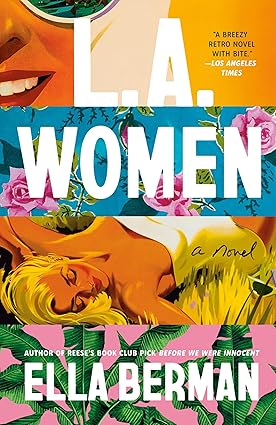
L.A. Women by Ella Berman
Two ambitious writers in 1960s LA face betrayal when one writes a novel based on the other's life.






