
-
Your next favorite book
is waiting.
Summary | Excerpt | Reading Guide | Reviews | Beyond the book | Read-Alikes | Genres & Themes | Author Bio
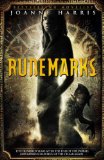
 Book Reviewed by:
Master storyteller Joanne Harris has created a magical and epic romp– a fresh, funny, and wonderfully irreverent new take on the old Norse tales, sure to be enjoyed by readers young and old.
Seven o’clock on a Monday morning, five hundred years after the end of the world, and goblins had been at the cellar again. . . . Not that anyone would admit it was goblins. In Maddy Smith’s world, order rules. Chaos, old gods, fairies, goblins, magic, glamours – all of these were supposedly vanquished centuries ago. But Maddy knows that a small bit of magic has survived. The “ruinmark” she was born with on her palm proves it – and makes the other villagers fearful that she is a witch (though helpful in dealing with the goblins-in-the-cellar problem). But the mysterious traveler One-Eye sees Maddy’s mark not as a defect, but as a destiny. And Maddy will need every scrap of forbidden magic One-Eye can teach her if she is to survive that destiny.
Seven o'clock on a Monday morning, five hundred years after the End of the World, and goblins had been at the cellar again. Mrs. Scattergood-the landlady at the Seven Sleepers Inn-swore it was rats, but Maddy Smith knew better. Only goblins could have burrowed into the brick-lined floor, and besides, as far as she knew, rats didn't drink ale.
But she also knew that in the village of Malbry-as in the whole of the Strond Valley-certain things were never discussed, and that included anything curious, uncanny, or unnatural in any way. To be imaginative was considered almost as bad as giving oneself airs, and even dreams were hated and feared, for it was through dreams (or so the Good Book said) that the Seer-folk had crossed over from Chaos, and it was in Dream that the power of the Faerie remained, awaiting its chance to re-enter the world.
And so the folk of Malbry made every effort never to dream. They slept on boards instead of mattresses, avoided heavy evening meals, and as for telling ...
In Runemarks, the Norse gods come alive in all their bickering glory, but not until quite late in the tale, after we've had time to get to know Maddy and her strange itinerant friend, One-Eye, who turns up for a few days each year and trains her in the use of glamours (an archaic word for magic spells or enchantments). What starts as a potentially simple story, quickly builds to one of considerable complexity when Maddy leaves the Middle World of men for the goblin-infested tunnels that lead to World Below.
A great choice for almost any young reader who enjoys fantasy, but also with great 'cross-over' potential for adult readers. We read Runemarks as a family (it's a great book to read aloud!), and all of us from 12 to 48 enjoyed it immensely...continued
Full Review
 (819 words)
(Reviewed by BookBrowse Review Team).
Norse mythology is the best preserved version of Germanic paganism,
sharing the same essential pantheon with Anglo-Saxon mythology. Both have
their roots in a hypothetical Indo-European mythology that is believed to be at
the root of most pre-Christian religions in Europe and India (including
Hinduism, Jainism and Zoroastrianism) because they all share significant
commonalities. For example, Zeus, Jupiter, Thor and Indra are all thunder-gods
and all are associated with the same day of the week - Thursday: English derives
Thursday from Thor, while the French Jeudi and Italian Goivedi
come from the Latin Jovis (or Iovis) Dies meaning Jupiter
Day.
Norse mythology is a collection of beliefs, not a set doctrine. Originally ...
If you liked Runemarks, try these:
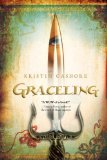
by Kristin Cashore
Published 2009
Katsa has been able to kill a man with her bare hands since she was eight - she’s a Graceling, one of the rare people in her land born with an extreme skill. And now she is forced to work as the king’s thug. But she never expects to fall in love with beautiful Prince Po...
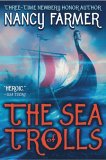
by Nancy Farmer
Published 2006
The year is A.D. 793; Jack and his sister have been kidnapped by Vikings and taken to the court of Ivar the Boneless and his terrifying half-troll wife; but things get even worse when Jack finds himself on a dangerous quest to find the magical Mimir's Well in a far-off land, with his sister's life forfeit if he fails.
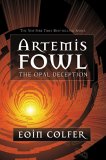
Artemis Fowl: The Opal Deception
by Eoin Colfer
Published 2006
Criminal mastermind Artemis Fowl is back . . . and so is his brilliant and dangerous enemy, Opal Koboi. For ages 9+.




We have to abandon the idea that schooling is something restricted to youth...
Click Here to find out who said this, as well as discovering other famous literary quotes!

Can you name the title?
Test your book knowledge with our daily trivia challenge!