Book Club Discussion Questions
In a book club? Subscribe to our Book Club Newsletter!
Please be aware that this discussion guide will contain spoilers!
About This Book
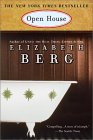
In this superb novel by the beloved author of Talk Before Sleep, The Pull of the Moon, and
Until the Real Thing Comes Along, a woman re-creates her life after divorce by opening up her house and her heart.
Samantha's husband has left her, and after a spree of overcharging at Tiffany's, she settles down to reconstruct a life for herself and her eleven-year-old son. Her eccentric mother tries to help by fixing her up with dates, but a more pressing problem is money. To meet her mortgage payments, Sam decides to take in boarders. The first is an older woman who offers sage advice and sorely needed comfort; the second, a maladjusted student, is not quite so helpful. A new friend, King, an untraditional man, suggests that Samantha get out, get going, get work. But her real work is this: In order to emerge from grief and the past, she has to learn how to make her own happiness. In order to really see people, she has to look within her heart. And in order to know who she is, she has to remember--and reclaim--the person she used to be, long before she became someone else in an effort to save her marriage. Open House is a love story about what can blossom between a man and a woman, and within a woman herself.
For Discussion
- In the beginning of the book, Samantha is unusually obsessed with Martha Stewart. Why do you think this is? What do Martha Stewart and her products seem to offer Samantha? When they finally speak to each other over the phone, Samantha asks Martha Stewart if she fell apart after her divorce. Martha responds, " I didn't fall apart. I spent one evening with Bernstein's Kaddish and a bottle of 'eighty-six Montrachet. And then I got busy. Try it," (166). What do you think of this advice? Does Samantha end up taking it?
- Why does Samantha go on a shopping spree at Tiffany's with David's credit card? Do you think she was only motivated by revenge? Why would spending money be a good way to get back at David, as opposed to another means of revenge? Samantha says, "I don't know why I bought the bracelet--. But I don't like fancy jewelry; I never have," (33). Why do you think she bought it, and if the bracelet was so expensive, why do you think she gave it away to the woman on the street? She goes on to say, "And the things I really like aren't fancy at all: old aprons and hankies. Butter wrappers from the one-pound blocks. Peony bushes, hardback books of poetry. And I like things less than that; the sticky remains at the bottom of the apple-crisp dish." What do all of these things have in common, and how do they help to understand what has real value and worth to Samantha?
- Samantha spends most of the novel wanting her husband back. In the end, she is the one who chooses to remain separated. Why do you think she changes her mind? At what point in the novel do you think she would rather remain alone than get back together with him? Do you think she is making the right decision? What do you think causes her to change her mind?
- Samantha posts a card on the community bulletin board that reads, ROOMMATE WANTED Large bedroom for rent in very nice house with single Woman and eleven-year-old son. No smoking. Pets or kids Okay. Must be employed and responsible. $500/mo. What picture does this advertisement paint of her life? Is it accurate? What things are missing from the description? What do you really think Samantha is looking for in a roommate? What is the significance of her opening her house to make ends meet? Does she do it for only monetary reasons?
- Samantha imagines Travis one day saying, "My mother changed wonderfully when my father left us. Our circumstances actually improved," (9). Do you think that Samantha changes in the novel? If so, how? Do you think their circumstances actually improve? Do you think Samantha would say about her changes? Do you the Samantha we read about in the beginning of the story would say about the Samantha we read about at the end? How does Samantha's conception of herself change?
- Samantha experiences many different types of love in the novel, both platonic and romantic. How would you describe the love she has for David? Compare this with the love she has for King? How are they different and which one is more ideal? What elements do you think are lacking in her relationship with David that King is able to provide? What lessons in love do you think Samantha learns from Lydia and her boyfriend? How would you describe Samantha's relationship with her son Travis, and how is it different from the relationship she has with her own mother? Are there any examples of ideal love in the novel?
Reproduced with the permission of Random House Inc. Page numbers
refer to the USA trade paperback edition, and may vary in other editions.
Unless otherwise stated, this discussion guide is reprinted with the permission of Ballantine Books.
Any page references refer to a USA edition of the book, usually the trade paperback version, and may vary in other editions.

.png)


