Book Club Discussion Questions
In a book club? Subscribe to our Book Club Newsletter and get our best book club books of 2025!
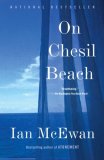
For supplemental discussion material see our Beyond the Book article, Selected Events from the early 1960s (from a British perspective) and our BookBrowse Review of On Chesil Beach.
Please be aware that this discussion guide will contain spoilers!
About This Guide
Unfolding with the mesmerizing, deeply human storytelling that has made Ian
McEwan one of the most beloved authors of his generation,
On Chesil Beach
captures one night and two lifetimes, wound into a stunning turning point. In
taut yet poignantly written scenes, newlyweds Florence and Edward navigate their
wedding night, coping with their greatest fears and wishes. The year is 1962;
they have been steeped in a culture whose expectations for composure and
maturity are high, with roles clearly defined and information about the
mysteries of marriage—sexual or otherwise—rarely shared. As we watch husband and
wife experience their first nuptial hours,
On Chesil Beach illuminates
the fragile dance of intimacy, a haunting ode to the true selves we so often
refuse to reveal.
The questions and topics that follow are designed to enhance your reading of
On Chesil Beach . We hope they will enrich your experience of this
provocative novel.
Reader's Guide
- What do the novel's opening lines tell us about Edward and Florence? How
did your perceptions of them change throughout the subsequent pages? What
details did you eventually know about them that they never fully revealed to one
another?
- Is Edward's libido truly the primary reason he proposes marriage, or were
other factors involved (perhaps ones he did not even admit to himself)? Are
relationships harmed or helped by cultural restrictions against sex before
marriage? Would this marriage have taken place if the couple had met when
birth–control pills were no longer just a rumor?
- Edward replays the words “with my body I thee worship” in his mind. What
might have been the intention in including that line when this version of the
marriage ceremony was written? How does it make Edward feel?
- Ian McEwan describes the novel's time period as an era when youth was not
glorified but adulthood was. We are also told that Edward was born in 1940,
while his parents contemplated possible outcomes of the war with Germany. At
what point did Edward and Florence's solemnity become viewed as old–fashioned?
What contributed to that shift? What are your recollections, or those shared by
relatives who lived it, of the emerging youth culture of the late 1960s and
'70s?
- Were Florence and Edward incompatible in ways beyond sexual ones? What do
their difficulties in bed say about their relationship altogether? Or is sex an
isolated aspect of a marriage?
- Chapter two describes how Florence and Edward met; the first paragraph
tells us that they were too sophisticated to believe in destiny. How would you
characterize the kind of love they developed? What made them believe they were
perfect for one another? Are any two people perfect for one another?
- What did Edward's decision to go to London for college indicate about his
goals? What was Florence's dream for her future? Was marriage a greater social
necessity for her, as a woman? Would her career as a classical musician
necessarily have been sacrificed if she had remained with Edward?
- Compare Edward's upbringing to Florence's. How did their parents affect
their attitudes toward life? How did the limitations of Edward's mother shape
his feelings about responsibility and women? Was Florence drawn to her mother's
competitiveness?
- To what extent was the financial gulf between Edward and Florence a source
of trouble? How might the relationship have unfolded, particularly during this
time period, if Edward, not Florence, had been the spouse with financial
security?
- Chapter four recounts the moment when Edward tells Florence he loves her
because she's “square,” not in spite of it. Are their opposing tastes the
product of their temperaments or the episodes in their young lives? What is your
understanding of her revulsion to sex?
- Discuss the novel's setting, which forms its title. What is the effect of
the creaky hotel McEwan creates, and the crashing permanent waves on a beach
where the temperatures are still chilly in June? What does it say about the
newlyweds that this is the scene of their wedding night?
- In the end, Edward explores various “what ifs.” Would their marriage have
lasted if he had consented to her request for platonic living arrangements? What
are the best ways to predict whether a couple can sustain a marriage?
- How would Edward and Florence have fared in the twenty–first century? Has
the nature of love changed as western society has evolved?
- The author tells us that the marriage ended because Edward was callous,
and that as Florence ran from him, she was at the same time desperately in love
with him. Why did Edward respond the way he did? Why was it so difficult for
them to be honest about their feelings? How would you have reacted that night?
- Discuss the structure of On Chesil Beach . What is the effect of
reading such a compressed storyline, weaving one night with the years before and
after it? How did it shape your reading to see only Edward's point of view in
the end? What might Florence's perspective have looked like?
- In what ways does On Chesil Beach represent a departure for Ian
McEwan? In what ways does it enhance the themes in his previous fiction?
Unless otherwise stated, this discussion guide is reprinted with the permission of Anchor Books.
Any page references refer to a USA edition of the book, usually the trade paperback version, and may vary in other editions.

 Book Reviewed by:


.png)