Look What You Made Me Do: A Novel
by John Lanchester
Whose Fault Is It …. Anyway? (5/18/2026)
Often times, readers uncover meaning within a novel or short story or poem that the writer never expected although the author — surprised by what the reader found — understands how that could be. I don't know if John Lanchester intended his novel, Look What You Made Me Do, as a comment on today's American political theater but that's the way I took it. Actually, I doubt he did — him being English and all. And besides, the novel is placed in London and words like judgment are spelled the English way — judgement.
Anyway, his novel works on two levels — as an addictive, black comedy and, when you think about it, as a glance at the underbelly of those inhabiting Washington today. I can't say more about the major theme of Lanchester's work without ruining the story. (So I won't.)
Well-drawn characters populate his novel but none of them likable. Well, maybe one is. Interestingly, the women wear the blacks hats and each tells the story each from her point of view. Kate goes first then Phoebe gets her turn and they alternate throughout the book. Both are self-centered, connivers concerned with controlling the narrative of their intersecting lives.
While Look What You Made Me Do is a good read, I was bothered by two major plot devices, questioning whether what the characters did was realistic. One of my writing instructors often pointed out that story elements don't have to pass a real-world test, they just have to be plausible for the novel's characters. They are for Kate and Phoebe and besides Lanchester's writing is so good that it's easy to read right past the could-that-really-happen parts.
When I first began reading the novel, I figured the release timing was perfect because it was a good beach read. But less than half way through I realized Lanchester was slowly, painfully pulling off the bandage concealing a wound infecting the human condition. And he was forcing us to look. Lanchester was longlisted for the Booker prize and has won other majors awards, doesn't write fluff, he doesn't write summer beach reads. His latest novel underscores that.
Whose Fault Is It … Anyway?

Son of Nobody: A Novel
by Yann Martel
Son of Nobody Delivers (1/26/2026)
The Life of Pi caught me and wouldn't let go — and I'm not someone who normally reads what I originally thought was a fantasy-like novel. But Pi was different. It was a thought-provoking good read. Yann Martel explored the concept of story, forcing us to examine why we believe one story but not another. Stories central to religious traditions came in for consideration. So when I saw the chance to submerge myself in another book by Martel, I grabbed it.
He didn't disappoint. Son of Nobody, his latest, heads in a somewhat different direction in content and definitely in style. Initially, it reads more like a monograph than a novel but stick with it and you'll be rewarded. From the start, the physical style appears off putting. Each page is split horizontally with his retelling of the Trojan War story up top and "footnotes" below.
Those "footnotes" violate the dictates of most writing coaches — no information dumps. But in this case, those "footnotes" prove to be immensely engaging with Harlow Donne, the main character, offering a running commentary of the epic and in the process casting light on the ancient Greeks . He does this without being too much of a lecture hall professor. And it's in the "footnotes" that he intersperses the story of his family's dissolve.
Donne, a professor of Greek at a Canadian college, gets a chance to study for a year at Oxford. Accepting the offer, however, would mean leaving his wife, Gail, and daughter, Helen, for a year. He opts to go anyway and as she drops him at the airport, Gail tells him to not come back.
At Oxford, he comes across shreds of papyrus that he assembles into The Psoad, a previous unknown version of the Trojan War story told from a commoner's view point. The son of nobody is The Psoad's central character..
The value of Son of Nobody comes in Martel's use of The Psoad's characters to question the why of war, to examine who — if anybody — benefits, to explore what — if anything — war changes.
He uses Donne's commentary to scrutinize the value of story, whether historical accuracy counts, whether stories should be seen as literature probing our lives rather than journalistic accounts. In doing so, he references Homer's The Iliad and The Odyssey as well as Jesus and the Gospels.
That's what gets you thinking. Couple of final points: you don't have to have read Homer's works to grasp the richness of Son of Nobody; second, I confess that about 50 pages in I was ready to give up. Too academic. Author showing off how much research he did. But then I though, this is Martel I'm missing something . So I went back and started over. Boy I'm glad I did.

When the Cranes Fly South: A Novel
by Lisa Ridzén
Dying .....Getting There (7/19/2025)
"When Cranes Fly South," a compelling meditation on relationships, death and legacy, lays hold of your emotions and your long-held life tenets and refuses to relinquish its grip, forcing you to think deeply about what has gone before and what is yet to come. And it accomplishes this rather complicated goal with gentleness, without any lecturing from on high.
Rather Lisa Ridzen utilizes the daily routine of a dying man, Bo, to make her points. Details carefully sowed in the telling of how day-to-day Bo loses control of his life and, more important, realizes he can't rewrite his life narrative yield a story well-stocked with emotion and understanding of life's chapters.
The novel centers on Bo as he experiences his final days when just about everything he had either slips away or is yanked from him. He remains in his childhood home that he got when his parents died and where he and his wife raised their son, Hans. Only now Bo lives there alone, his dignity long surrendered to carers who tell him when and what to eat and strip him down for showers. His wife suffers from dementia and is living in nursing facility. Sometimes she remembers and sometimes she doesn't. Throughout the novel he talks to her as he relives moments of their life together. Then there is his dog, Sixten, who provides him with comfort. But his son insists Bo can no longer care for the dog and must give him up. And then there is Bo's longtime best friend who also approaches the end of life.
Patch together, the various chapters of Bo's final days present a rather morbid story. Yet, in the end "When Cranes Fly South" proves to be reassuring and generates in each of us a reexamination of our life stories.
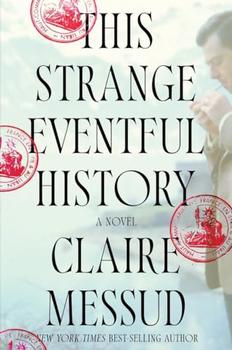
This Strange Eventful History: A Novel
by Claire Messud
An Unmoored Clan (4/27/2024)
This Strange Eventful History is the latest novel to find a place on Claire Messud's crammed bookshelf. Strange/History follows generations of the Cassar clan, as its members — each lugging a steamer trunk of personal shortcomings — roam the world unmoored seeking to live a fulfilling life. Messud packs the four hundred plus pages with literary sentences/paragraphs that initially prove engaging but become tiresome, forcing the reader on unnecessary detours down story side streets.
The main characters are well developed and evolve nicely throughout the chapters, but none of them elicit empathy and that proved to be a problem. I simply didn't care what happened to them. As a result, when I got to page 257 I asked myself why should I continue reading. I didn't.