
-
Your next favorite book
is waiting.
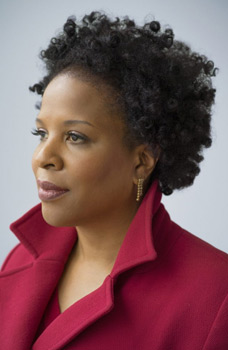
Tayari Jones on Her New Novel Kin: Inside Her Writing Process
Interview by By Tia Guerrier
In her new novel Kin, critically acclaimed author Tayari Jones traces the life-altering bond between two girls growing up in the South in the 1950s. What begins with shared loss deepens into a friendship sustained by devotion, shaped by community, and marked by the ache and mythology of motherhood. We spoke with Tayari about writing Vernice and Annie, the truths that challenge stereotypes, and why she believes every story is ultimately about relationships.
Tia Guerrier: I want to jump right in with Vernice and Annie. Their lives are shaped by loss, and I felt the care you put into informing their characters. What inspired you to begin the novel with their bond, and how did you decide where to place the emotional weight in their early years?
Tayari Jones: I agree their lives are shaped by loss, but they are also shaped by love, right? Their love for each other. The fact that they both lost their mothers is the catalyst for their relationship. That's where it starts. But everything in their lives is maintained by their love, because friendship is a relationship that we have to re-up on constantly.
With family, people say you can't choose your family. That's true. But friendship involves so much agency because you're constantly saying, "I want to continue this." Society lets you opt out, and you decide to opt in, and they decide to opt in and opt in deeper.
And every story is a story of a relationship. No matter what the story is, it's about a relationship. The central relationship here is between Vernice and Annie, and I really enjoyed delving into their friendship.
I lost a close friend suddenly about five years ago, and then one of my childhood friends died suddenly during the pandemic. I felt like I was losing friends left and right. It made me think about closeness and connection. Part of the way I navigated my own sense of loss was to think about my own sense of love and put that on the pages.
TG: You're reframing the book toward love, and that really struck me. Were you thinking at all about the modern language around "trauma bonds," or the ways people sometimes connect through pain?
TJ: People can bond over shared trauma or tragedy. But there's also an assumption in African American literature that Black literature is always the story of a trauma. I've talked to people who haven't read the book; they see "two girls growing up in the South in the '50s," and they assume it's a book about racial violence.
The truth necessarily challenges stereotypes. I never set out to challenge a stereotype. I set out to tell the truth. And the challenge to the stereotype is the byproduct of that truth.
The truth is, people connect in a healthy way because of love. Connecting over trauma isn't healthy. But they help each other heal, or at least they try to.
TG: Motherhood and motherlessness are such powerful undercurrents in Kin. How did you approach writing Vernice and Annie's wounds around motherhood, and the ways they try to heal each other?
TJ: Motherless children are an old standard for storytelling, even going back to fairy tales. It's an old sadness. There's that spiritual, "Sometimes I feel like a motherless child," and people think of motherlessness literally, but also metaphorically, that feeling of being without comfort or without knowledge of your origins.
Even if you aren't literally motherless, many of us know that feeling, particularly as Black people, of not having what we imagine as the unconditional embrace of motherhood.
But then there's Annie. Annie is determined: "I'm going to find my mother." And everyone who has a mother is trying to tell her there's more to mothers than unconditional embraces. Annie understands "mother" as a symbolic condition, a symbolic entity.
What Annie and Vernice come to understand is that mothers are people. They're human beings, complicated. And mother-daughter relationships are complicated. A mother isn't just someone waiting to give you a hug.
TG: That made me think, too, about how, as Black Americans, our relationship with the country is similar to the feeling of being unmothered or unheld on a larger scale.
TJ: Yes. We feel like we're orphans. We feel like we have no nation. This country is not our mother, right? It does not embrace us. And there's a feeling that when you are a citizen, you should be embraced. This is your home, and you should be embraced, and we're not. So we feel that on a macro level, although the characters feel it on a micro level.
TG: Friendship and sisterhood, and the ways women form connections across generations, are a central thread. How did you see those connections evolving across the novel?
TJ: I have to give you a little backstory. This was not the novel I was contracted to write. I was supposed to write a novel about gentrification in modern Atlanta. I tried, but it just wasn't happening. My students would say, "The book was not booking."
So I went old school. Pencil and paper. And I met Annie and Vernice, and I saw they were living in the '50s. And I thought, no, I don't contain a historical novel. That's not what I do. But I had to follow it. It became clear to me that this is what I was being called to write.
I moved back to Atlanta because I wanted to get to know my parents differently, as adults. I wanted that "talk like two grown women" moment. And I realized my fantasy isn't my mama's fantasy. She's like, "No. I'm your mother. You're my child."
So I was drawn to intergenerational relationships: Aunt Irene and Niecy, Niecy and the older women around her, Lulabelle and Annie. What is it to connect across generations? And because it's set in the '50s, it's also my own attempt to connect with another generation.
TG: The title Kin suggests both familiarity and connection beyond blood. How do you think about chosen family versus inherited family, in the story and in your own life?
TJ: My feeling about chosen family has changed as I've gotten older. I understand how vital the relationships we choose are, and the agency we have in choosing them.
I've also put less value on biology. Not that I dismiss it, but I don't love my daddy because he's my biological father. I love my daddy because he's my daddy. If I found out I was switched at the hospital, I don't think I'd say they weren't my parents.
Biology is only as important as we think it is, because what we think determines how we behave.
And in the book, look at Babydoll, Clyde, Bobo, and Annie. Don't you think they're a family? They have family dynamics, which means connection and complications. There's drama. It's not a family if it doesn't have drama.
Someone once told me: annoyance is the price you pay for community.
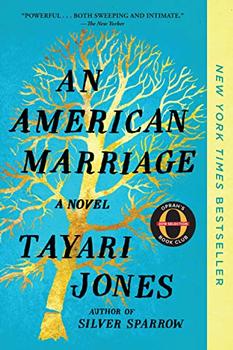
TG: Looking back from writing Leaving Atlanta to An American Marriage and now to Kin, how has your approach to writing the nuance of relationships evolved?
TJ: As I get older, my compassion for all my characters grows. When I wrote An American Marriage, it was the first time I wrote characters in a way that sometimes put me on the wrong side of readers. Some readers wanted me to punish characters more, to make them suffer for their choices.
But I lean abolitionist. And if you're going to be an abolitionist, it has to show up in your life and in your art. It's not my job to make sure everybody gets theirs.
I also try to end every book with a sense of hope. I imagine someone reading who is living through what I'm writing about, and I don't want them to walk away feeling worse than when they started. I needed a way forward for everyone.
And I'm not writing sequels because to have a sequel, your characters need book-level problems. I hope when I'm done with them, they just have regular problems.
TG: What do you hope readers take away from Kin and the lingering ties that persist in our lives?
TJ: I hope people take away a truer sense of the '50s. It's romanticized, and we forget it was populated by people with hopes, dreams, sexuality, conflict, all of it. We act like certain issues were invented in our lifetime. There were queer people in the '50s. What was that like?
I also want a wake-up call. We're living in a period where rights are being rolled back. While writing Kin, I realized how much women's lives before contraception and reproductive justice were shaped by constant anxiety about pregnancy. You can't control your life if you can't control your fertility.
I was born in 1970. The birth control pill came into wide usage around 1968. I've never known a world where women were rolling the dice every time. And because our mamas didn't talk to us, we don't understand what is at stake.
I want people to enjoy the book. I think it's funny. I love these characters. This book befriended me. But I can't ignore the warning bells ringing throughout.
TG: Thank you again. This was such a wonderful conversation.
TJ: Thank you for reading. Reading is a gift. And I will say my Black women readers have always sustained me. There was a time when I was told my career was over, and a reader found me at my job and mailed me a knitted blanket to put on my lap when I write. I'll never forget it.
Nikki Giovanni once told me, "Take care of your reader. Those Black women will take care of you for the rest of your life."
2/5/2018:
This Is a Love Story, an essay by Tayari Jones in which she explains the backstory to her novel An American Marriage
All my life I have lived in a world where the men are under siege. When I was a little girl, there was a serial killer in Atlanta who killed thirty black children, most of them boys, two from my school. I was so shaken by this experience that it became the subject of my first novel. When I was in high school, it was fashionable for adults to refer to the boys of my generation as an "endangered species." There are lulls in this fear. But then, as regular as a solar eclipse, there will be a reminder. Maybe it will be personal, like riding in a car with a boyfriend and suddenly blue lights strobe from the car behind us. Sometimes it will be more symbolic than deadly, like the arrest of decorated Harvard University professor Henry Louis Gates because he was thought to be burglarizing his own home. Other times, there is a shooting at the hands of police, a neighbor, or a total stranger. No matter where I am, the threat looms — either right in front of me or hiding in my peripheral vision.
In 2011 I was awarded a research fellowship at Harvard. I was a woman on a mission to make a difference. I wanted to write a novel about the tribulations of the innocent men who languish in America's prisons. I watched documentaries, read oral histories, and studied up on the law. I was horrified and angered by a justice system that criminalizes black men and destroys families. Outrageous statistics troubled my sleep. But when I sat down to write, my old-fashioned Smith Corona was silent. I had the facts, but not the story. When I was a very young writer, my mentor cautioned me that I should always write about "people and their problems, not problems and their people." After a year of research, I felt that I understood the problem, but what about the people?
I wasn't sure how to go forward. Novels, like love, can't be forced. But also like love, novels can enter your life in an instant.
One year when I went home to visit my parents in Atlanta, I overheard a couple arguing in the food court of Lenox Square mall. The young woman was wearing a cashmere knit dress, cinched at the waist with a beautiful leather belt. Her beau wore a pair of inexpensive khakis and a polo shirt that was a little too tight for him. He wore a wedding ring, but she didn't. "Roy," she said with a sigh, seeming more exhausted than angry. "You know you wouldn't have waited on me for seven years." The man was obviously aggravated, but also (or it seemed to me) hurt. "This wouldn't have happened to you in the first place," he shot back. His voice was loud, and people turned and gawked. "Answer me," she said. "Tell the truth. Would you have waited for me?" The man was too frustrated to respond.
At the time, my sympathies were squarely with him. It was clear that he had suffered — I could see it from the strain on his face to the scuffs on his shoes. She, on the other hand, was pretty, poised, and prosperous. Her face and body language transmitted complicated emotions. She was sad, but not crying. She was annoyed, but not shouting. She stroked his arm. At some point, they caught me looking and I turned away, embarrassed to have glimpsed something so painful and intimate.
When I returned home, I wrote down everything I could remember about that encounter. I was intrigued mostly by her, as she reminded me of the women I went to college with — independent yet vulnerable, reserved and passionate all at once. I knew this woman. In many ways, she was a younger version of myself. I named her Celestial. I remembered she called him Roy. My imagination filled in the gaps. I decided that my characters were married and that Roy had been in prison those seven years — for a crime he did not commit.
When I write a novel, I like to think of a conflict in which both parties have a legitimate point. The couple in the mall would probably agree that he likely would not have waited patiently and chastely for seven years, and they might also agree that she would not likely be the one incarcerated in the first place. But I imagine that they would disagree about the implications of these agreed-upon truths. He felt that his suffering entitled him to fealty, if love alone was not enough. She seemed tired, like she had discussed this with him more than just once. He would probably say that she didn't love him, and she would likely counter that this is not a grade-school love letter where you check YES or NO. Or at least this is what I imagined.
I wrote this novel three times. The first time, I wrote it all from the point of view of Celestial — the wrongful incarceration of her husband is the creeping fear made real. She struggles under the pressure to stand by her man, which is exacerbated by the fact that he is innocent. She's talented and independent, and not cut out to be dutiful. These are the attributes that intrigue Roy, and me. For some reason, this approach just didn't work. After a frustrating year, I rewrote it from the point of view of Roy, the ambitious young man robbed of his liberty. This approach worked a little better — after all, a man's heroic journey is the bedrock of Western liter¬ature. Roy was like Odysseus, coming home from battle hoping to find a faithful wife and a gracious house. But this story seemed a bit too easy, fa¬miliar in a way that didn't address the questions in my mind.
Finally, I realized that this story is neither his nor hers. It is theirs. Roy says to Celestial, "This wouldn't have happened to you in the first place." But it did happen to her, in that it changed her life. He loves her because she is headstrong and resourceful, but can he ever forgive her for surviving? Can she be excused for finding happiness despite this tragedy? In his letters, Roy says, "I'm innocent." Celestial replies, "I'm innocent, too."
Who is to blame, then, when everyone is innocent? And what is the value of blame at all?
The epigraph of the novel is taken from Claudia Rankine's book Citizen: "What happens to you doesn't belong to you, only half concerns you. It's not yours. Not yours only." Does this novel have a "main" character? Is Roy more important because of how he struggles? Is Celestial's happiness with her new life illegitimate because of the shadow of Roy's distress? And then there is Andre, who has loved Celestial since they were babies bathing together in the kitchen sink. If she is his true love, should he give up fighting for her out of respect for Roy's predicament?
After six years of wrestling with the characters' points of view and sympa¬thies, I don't presume to know the answers to these questions. I can only say that survival is a human instinct. To survive, Roy had to hold on to his mem¬ories of his marriage, fanning the embers to keep himself warm. In order for Celestial to survive, she tries to extinguish these same flames. Once Roy is freed, I can't say what they "should" do, nor will I spoil the ending for you. But, as Celestial says, "You can never un-love someone."
As I survey the final draft of this novel, my mind reels with the paradoxes in these pages. How did I do so much research for so little of it to make it into the book itself? This is not to say that the real-life statistics and policies I studied didn't affect the trajectories of my fictional characters. Never dur¬ing the composition of this work did I forget the dead boys of my youth, the humiliated professor on campus, or the men killed in the streets. But when writing about Celestial and Roy and Andre, I had to look past their plight to understand their plight.
My characters are three people in love — with home, family, freedom, and each other. They are also three people in pain. Some of their problems they brought upon themselves, and others were dropped upon them. Some of their worries are recent and others are brittle as history. But today, they find themselves at a crossroads, and like every human being on earth, they walk their paths, heart-first.
Unless otherwise stated, this interview was conducted at the time the book was first published, and is reproduced with permission of the publisher. This interview may not be reproduced or reprinted without permission in writing from the copyright holder.

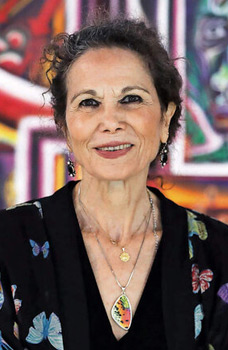
Julia Alvarez left the Dominican Republic for the United States in 1960, at the age of ten. She is the author of numerous works of fiction, nonfiction, and poetry, including her beloved first novel, How the García Girls ... (more)
If you enjoyed:
An American Marriage
Try:
Afterlife
by Julia Alvarez
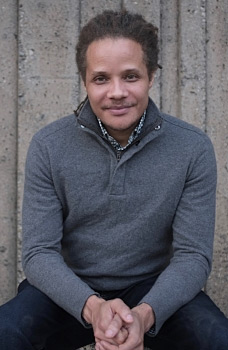
Jamel Brinkley is the author of Witness: Stories, published in August 2023 from Farrar, Straus and Giroux (US)/4th Estate (UK), and A Lucky Man: Stories (2018, Graywolf Press), which was a finalist for the National Book Award... (more)
If you enjoyed:
An American Marriage
Try:
A Lucky Man
by Jamel Brinkley
We recommend 16 similar authors



If there is anything more dangerous to the life of the mind than having no independent commitment to ideas...
Click Here to find out who said this, as well as discovering other famous literary quotes!

Can you name the title?
Test your book knowledge with our daily trivia challenge!
Your guide toexceptional books
BookBrowse seeks out and recommends the best in contemporary fiction and nonfiction—books that not only engage and entertain but also deepen our understanding of ourselves and the world around us.
