
-
Your next favorite book
is waiting.
Summary | Excerpt | Reading Guide | Discuss | Reviews | Beyond the book | Read-Alikes | Genres & Themes | Author Bio
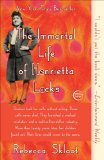
 Book Reviewed by:
Winner of BookBrowse's 2010 Best Book Award
Intimate in feeling, astonishing in scope, and impossible to put down, The Immortal Life of Henrietta Lacks captures the beauty and drama of scientific discovery, as well as its human consequences.
Winner of BookBrowse's 2010 Best Book Award
Her name was Henrietta Lacks, but scientists know her as HeLa. She was a poor Southern tobacco farmer who worked the same land as her slave ancestors, yet her cells—taken without her knowledge—became one of the most important tools in medicine. The first “immortal” human cells grown in culture, they are still alive today, though she has been dead for more than sixty years. If you could pile all HeLa cells ever grown onto a scale, they’d weigh more than 50 million metric tons—as much as a hundred Empire State Buildings. HeLa cells were vital for developing the polio vaccine; uncovered secrets of cancer, viruses, and the atom bomb’s effects; helped lead to important advances like in vitro fertilization, cloning, and gene mapping; and have been bought and sold by the billions.
Yet Henrietta Lacks remains virtually unknown, buried in an unmarked grave.
Now Rebecca Skloot takes us on an extraordinary journey, from the “colored” ward of Johns Hopkins Hospital in the 1950s to stark white laboratories with freezers full of HeLa cells; from Henrietta’s small, dying hometown of Clover, Virginia — a land of wooden slave quarters, faith healings, and voodoo — to East Baltimore today, where her children and grandchildren live and struggle with the legacy of her cells.
Henrietta’s family did not learn of her “immortality” until more than twenty years after her death, when scientists investigating HeLa began using her husband and children in research without informed consent. And though the cells had launched a multimillion-dollar industry that sells human biological materials, her family never saw any of the profits. As Rebecca Skloot so brilliantly shows, the story of the Lacks family — past and present — is inextricably connected to the dark history of experimentation on African Americans, the birth of bioethics, and the legal battles over whether we control the stuff we are made of.
Over the decade it took to uncover this story, Rebecca became enmeshed in the lives of the Lacks family—especially Henrietta’s daughter Deborah, who was devastated to learn about her mother’s cells. She was consumed with questions: Had scientists cloned her mother? Did it hurt her when researchers infected her cells with viruses and shot them into space? What happened to her sister, Elsie, who died in a mental institution at the age of fifteen? And if her mother was so important to medicine, why couldn’t her children afford health insurance?
Intimate in feeling, astonishing in scope, and impossible to put down, The Immortal Life of Henrietta Lacks captures the beauty and drama of scientific discovery, as well as its human consequences.
PROLOGUE
The Woman in the Photograph
There’s a photo on my wall of a woman I’ve never met, its left corner torn and patched together with tape. She looks straight into the camera and smiles, hands on hips, dress suit neatly pressed, lips painted deep red. It’s the late 1940s and she hasn’t yet reached the age of thirty. Her light brown skin is smooth, her eyes still young and playful, oblivious to the tumor growing inside her—a tumor that would leave her five children motherless and change the future of medicine. Beneath the photo, a caption says her name is “Henrietta Lacks, Helen Lane or Helen Larson.”
No one knows who took that picture, but it’s appeared hundreds of times in magazines and science textbooks, on blogs and laboratory walls. She’s usually identified as Helen Lane, but often she has no name at all. She’s simply called HeLa, the code name given to the world’s first immortal human cells—her cells, cut from her ...
What’s the best nonfiction book you read in 2025?
Two stands outs for me - The Soul of an Octopus by Sy Montgomery and The Immortal Life of Henrietta Lacks by Rebecca Skloot.
-Mari_A
Name three nonfiction books you absolutely loved and would recommend
The Warmth of Other Suns by Isabelle Wilkerson is one of the best NF books I've ever read. The Immortal Life of Henrietta Lacks, by Rebecca Skloot More recently– All the Beauty in the World by Patrick Bringley
-Paula_M
All time favorite book club books?
...he-immortal-life-of-henrietta-lacks BookBrowse.com https://www.bookbrowse.com/reviews/index.cfm/book_number/2383/the-immortal-life-of-henrietta-lacks The Immortal Life of Henrietta Lacks by Rebecca Skloot: Summary and Reviews Summary and Reviews of The Immortal Life of Henrietta Lacks by Rebecca Skloot, an excerpt, and author biography of Rebecca Skloo...
-Ann_Beman
Good nonfiction books for book clubs?
...few. *Nickled and Dimed by Barbara Ehrenreich *The Devil in the White City by Erik Larson *Catherine the Great: Portrait of a Woman by Robert Massie The Immortal Life of Henrietta Lacks by Rebecca Skloot *The Boys in the Boat by Daniel Brown *Being Mortal by Atul Gawande *The River of Doubt by Candice Millard *A Woman of No Importance by Sonia Purnell...
-Patricia_Williams
Here are some of the comments posted about The Immortal Life of Henrietta Lacks in our legacy forum.
You can see the full discussion here.
Do you always thoroughly read consent forms before signing them?
I don't understand the reluctance of some people to agree to the use of their tissue samples, whether for research purposes or just for diagnostic purposes. If anything from my tissues can be used to help someone else, then why not? The samples are... - kageeh
Do you own your own tissue samples?
I never really thought about it. I wouldn't mind my tissue samples being used for the benefit of all but do have a problem with them being used for greed. I think I would want to know if they were being used for commercial purposes. There can be a ... - bettyt
Henrietta's story is divided into three parts by theme (Life, Death and Immortality), how would the story have been different if told chronologically?
The complexity and depth of "Immortal Henrietta" is one of the things that appealed to me most. I saw four distinct stories within the story and each could stand on their own as a subject of a novel. Obviously, first and foremost is Henrietta's story... - paulak
How do you think you would react if you discovered hidden family secrets similar to the ones Deborah learns?
Discovering family secrets were one thing but the Lacks felt used and were very angry. Hopefully the emotions they felt didn't make objectivity impossible for them. Accepting Henrietta's horrific death and the helplessness of science to save her ... - marcias
How does religious faith help frame the Lacks' response to and interpretation of the scientific information they receive about HeLa?
This is a great question and Diane L. answers it so well above. Somehow the faith of the Lacks family iluminates all that is good in the scientific story, and what is admirable in the history of the Lacks family. Deborah's costant intuiton of her ... - jop
.png)
BookBrowse Awards
2010
Skloot strikes a tricky balance between inserting herself into the narrative and stepping back to let the Lacks family, the heart and soul of the book, tell their stories. For the most part she succeeds... Just as she brings dignity to the individuals who make scientific investigation possible, she also expertly lays out the pros and cons of the current tissue research debate... an engaging introduction to these issues, one that hooks the reader with its emphasis on the real people behind the controversy...continued
Full Review
 (683 words)
(Reviewed by Marnie Colton).
 Eric Schlosser, author of Fast Food Nation
The Immortal Life of Henrietta Lacks brings to mind the work of Philip K. Dick and Edgar Allan Poe. But this tale is true. Rebecca Skloot explores the racism and greed, the idealism and faith in science that helped to save thousands of lives but nearly destroyed a family. This is an extraordinary book, haunting and beautifully told.
Eric Schlosser, author of Fast Food Nation
The Immortal Life of Henrietta Lacks brings to mind the work of Philip K. Dick and Edgar Allan Poe. But this tale is true. Rebecca Skloot explores the racism and greed, the idealism and faith in science that helped to save thousands of lives but nearly destroyed a family. This is an extraordinary book, haunting and beautifully told.Cervical cancer, the disease that killed Henrietta Lacks, strikes 11,000-13,000 women in the United States every year, killing 4,000. While the Pap smear (developed by Greek scientist Georgio Papanikolaou) remains the most widely used and effective method for detecting pre-cancerous cells on the cervix, a new vaccine protects women from developing certain kinds of human papillomavirus (HPV), the condition that causes most cervical cancers. Yet controversy swirls around this vaccine in the United States, raising ethical issues such as whether to require mandatory vaccination for girls entering school and sparking fears that vaccinations might reduce the practice of safer sex methods or even lead to promiscuity. Others worry that the vaccine ...
If you liked The Immortal Life of Henrietta Lacks, try these:

The Salmon Cannon and the Levitating Frog
by Carly Anne York
Published 2025
A brilliant new voice in science writing—"witty, whip-smart, truly one of our best" (Mary Roach)—shows why playfulness and curiosity are the key to science.
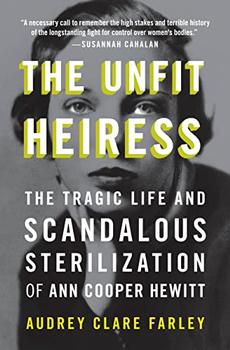
by Audrey Farley
Published 2023
For readers of The Immortal Life of Henrietta Lacks and The Phantom of Fifth Avenue, a page-turning drama of fortunes, eugenics and women's reproductive rights framed by the sordid court battle between Ann Cooper Hewitt and her socialite mother.

by Dolen Perkins-Valdez
Published 2023
Inspired by true events that rocked the nation, a profoundly moving novel about a Black nurse in post-segregation Alabama who blows the whistle on a terrible wrong done to her patients, from the New York Times bestselling author of Wench.




When a true genius appears in the world, you may know him by this sign...
Click Here to find out who said this, as well as discovering other famous literary quotes!

Can you name the title?
Test your book knowledge with our daily trivia challenge!