Summary | Excerpt | Reviews | Beyond the book | Read-Alikes | Genres & Themes | Author Bio
Critics' Opinion:
Readers' Opinion:
First Published:
Jun 2005, 240 pages
Paperback:
May 2006, 311 pages
 Book Reviewed by:
BookBrowse Review Team
Buy This Book
Throughout human history. certain drinks have done much more than just quench thirst. Six of them have had a surprisingly pervasive influence on the course of history, becoming the defining drink during a pivotal historical period from the Stone Age to the 21st century.
From beer to Coca-Cola, the six drinks that have helped shape human history.
Throughout human history. certain drinks have done much more than
just quench thirst. As Tom Standage relates with authority and
charm, six of them have had a surprisingly pervasive influence on
the course of history, becoming the defining drink during a
pivotal historical period.
A History of the World in 6 Glasses tells the story of
humanity from the Stone Age to the 21st century through the lens
of beer, wine, spirits, coffee, tea, and cola. Beer was first made
in the Fertile Crescent and by 3000 B.C.E. was so important to
Mesopotamia and Egypt that it was used to pay wages. In ancient
Greece wine became the main export of her vast seaborne trade,
helping spread Greek culture abroad. Spirits such as brandy and
rum fueled the Age of Exploration, fortifying seamen on long
voyages and oiling the pernicious slave trade. Although coffee
originated in the Arab world, it stoked revolutionary thought in
Europe during the Age of Reason, when coffeehouses became centers
of intellectual exchange. And hundreds of years after the Chinese
began drinking tea, it became especially popular in Britain, with
far-reaching effects on British foreign policy. Finally, though
carbonated drinks were invented in 18th-century Europe they became
a 20th-century phenomenon, and Coca-Cola in particular is the
leading symbol of globalization.
For Tom Standage, each drink is a kind of technology, a catalyst
for advancing culture by which he demonstrates the intricate
interplay of different civilizations. You may never look at your
favorite drink the same way again.
Introduction
Vital Fluids
There is no history of mankind, there are only many
histories of all kinds of aspects of human life.
—Karl
Popper, philosopher of science (1902–94)
Thirst is deadlier than hunger. Deprived of food,
you might survive for a few weeks, but deprived of
liquid refreshment, you would be lucky to last more
than a few days. Only breathing matters more. Tens of thousands
of years ago, early humans foraging in small bands had
to remain near rivers, springs, and lakes to ensure an adequate
supply of freshwater, since storing or carrying it was impractical.
The availability of water constrained and guided humankind’s
progress. Drinks have continued to shape human history
ever since.
Only in the past ten thousand years or so have other beverages
emerged to challenge the preeminence of water. These
drinks do not occur naturally in any quantity but must be
made deliberately. As well as offering safer alternatives to contaminated,
disease...
Full Review
(268 words)
This review is available to non-members for a limited time. For full access,
become a member today.
(Reviewed by BookBrowse Review Team).
The current wave of history books written from the point of view of one, often seemingly unimportant product, whether it be salt, coal, spices, plants, or in the case of this book, drinks, sends me into positive paroxysms of happiness, because they present history in a form that I actually enjoy! My dusty old school history books were enough to turn off all but the most inspired historian, and especially unappealing to girls with their emphasis on battles. The only light relief came in the form of 1066 and All That by W. C. Sellar and R. J. Yeatman. - but even that was intended for an adult audience of a previous era (it was first serialized in Punch in...
This "beyond the book" feature is available to non-members for a limited time. Join today for full access.

If you liked A History of the World in 6 Glasses, try these:
by Nicholas A. Basbanes
Published 2014
A consideration of all things paper: Entertaining, illuminating, irresistible, a book that masterfully guides us through paper's inseparability from human culture.

by Jill Lepore
Published 2013
Renowned Harvard scholar and New Yorker staff writer Jill Lepore has composed a strikingly original, ingeniously conceived, and beautifully crafted history of American ideas about life and death from before the cradle to beyond the grave.




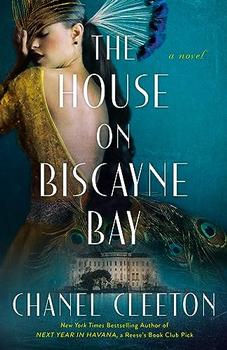
The House on Biscayne Bay
by Chanel Cleeton
As death stalks a gothic mansion in Miami, the lives of two women intertwine as the past and present collide.
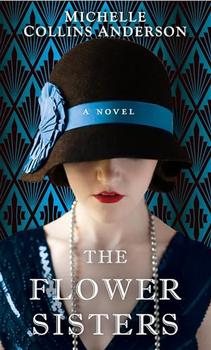
The Flower Sisters
by Michelle Collins Anderson
From the new Fannie Flagg of the Ozarks, a richly-woven story of family, forgiveness, and reinvention.

The Funeral Cryer by Wenyan Lu
Debut novelist Wenyan Lu brings us this witty yet profound story about one woman's midlife reawakening in contemporary rural China.
Your guide toexceptional books
BookBrowse seeks out and recommends the best in contemporary fiction and nonfiction—books that not only engage and entertain but also deepen our understanding of ourselves and the world around us.