Summary | Excerpt | Reading Guide | Reviews | Beyond the book | Read-Alikes | Genres & Themes | Author Bio
Critics' Opinion:
Readers' Opinion:
First Published:
Dec 2004, 575 pages
Paperback:
Jan 2006, 592 pages
 Book Reviewed by:
BookBrowse Review Team
Buy This Book
Brilliant, illuminating, and immensely absorbing, Collapse is destined to take its place as one of the essential books of our time, raising the urgent question: How can our world best avoid committing ecological suicide?
In his million-copy bestseller Guns, Germs, and Steel, Jared Diamond
examined how andwhy Western civilizations developed the technologies and
immunities that allowed them to dominate much of the world. Now in this
brilliant companion volume, Diamond probes the other side of the equation: What
caused some of the great civilizations of the past to collapse into ruin, and
what can we learn from their fates?
As in Guns, Germs, and Steel, Diamond weaves an all-encompassing
global thesis through a series of fascinating historical-cultural narratives.
Moving from the Polynesian cultures on Easter Island to the flourishing American
civilizations of the Anasazi and the Maya and finally to the doomed Viking
colony on Greenland, Diamond traces the fundamental pattern of catastrophe.
Environmental damage, climate change, rapid population growth, and unwise
political choices were all factors in the demise of these societies, but other
societies found solutions and persisted. Similar problems face us today and have
already brought disaster to Rwanda and Haiti, even as China and Australia are
trying to cope in innovative ways. Despite our own society's apparently
inexhaustible wealth and unrivaled political power, ominous warning signs have
begun to emerge even in ecologically robust areas like Montana.
Brilliant, illuminating, and immensely absorbing, Collapse is destined
to take its place as one of the essential books of our time, raising the urgent
question: How can our world best avoid committing ecological suicide?
A substantial excerpt from the prologue follows the
Index.
Index
Prologue A Tale of Two Farms
Two farms
Collapses, past and present
Vanished Edens?
A five-point framework
Businesses and the environment
The comparative method
Plan of the book
Part One: MODERN MONTANA
Chapter 1: Under Montana's Big Sky
Stan Falkow's story
Montana and me
Why begin with Montana?
Montana's economic history
Mining
Forests
Soil
Water
Native and non-native species
Differing visions
Attitudes towards regulation
Rick Laible's story
Chip Pigman's story
Tim Huls's story
John Cook's story
Montana, model of the world
Part Two: PAST SOCIETIES
Chapter 2: Twilight at Easter
The quarry's mysteries
Easter's geography and history
People and food
Chiefs, clans, and commoners
Platforms and statues
Carving, transporting, erecting
The vanished forest
Consequences for society
Europeans and explanations
Why was Easter fragile?
...
Diamond's bottom line is clear - for all our technology and electronic widgets, we are still bound to nature and reliant on it. As always, you can judge this book for yourself by reading a substantial excerpt at BookBrowse, which will give you an understanding of the book's overall premise sufficient to hold your own in conversation on the subject with most people!..continued
Full Review
(323 words)
This review is available to non-members for a limited time. For full access,
become a member today.
(Reviewed by BookBrowse Review Team).
"I've set myself the modest task of trying to explain the broad pattern
of human history, on all the continents, for the last 13,000 years. Why did
history take such different evolutionary courses for peoples of different
continents? This problem has fascinated me for a long time, but it's now ripe
for a new synthesis because of recent advances in many fields seemingly remote
from history, including molecular biology, plant and animal genetics and
biogeography, archaeology, and linguistics....." - Jared Diamond
Read the full text of Diamond's talk to
The Edge Foundation
- an interesting looking organization that 'seeks to promote inquiry into and
discussion of intellectual, philosophical, artistic, and ...
This "beyond the book" feature is available to non-members for a limited time. Join today for full access.

If you liked Collapse, try these:
by Tim Flannery
Published 2006
The Weather Makers is both an urgent warning and a call to arms, outlining the history of climate change, how it will unfold over the next century, and what we can do to prevent a cataclysmic future. Along with a history of climate change, Tim Flannery offers specific suggestions for action for both lawmakers and individuals.
by Frances Moore Lappe, Anna Lappe
Published 2003
Join one of our country's foremost activist thinkers, Frances Moore Lappé, and her daughter, Anna, on a trip around this small planet. This follow up to The Next Diet For A Small Planet helps each of us find new courage to trust ourselves and choose the world we want.




The Flower Sisters
by Michelle Collins Anderson
From the new Fannie Flagg of the Ozarks, a richly-woven story of family, forgiveness, and reinvention.
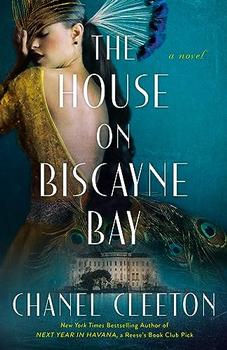
The House on Biscayne Bay
by Chanel Cleeton
As death stalks a gothic mansion in Miami, the lives of two women intertwine as the past and present collide.

The Funeral Cryer by Wenyan Lu
Debut novelist Wenyan Lu brings us this witty yet profound story about one woman's midlife reawakening in contemporary rural China.
Your guide toexceptional books
BookBrowse seeks out and recommends the best in contemporary fiction and nonfiction—books that not only engage and entertain but also deepen our understanding of ourselves and the world around us.